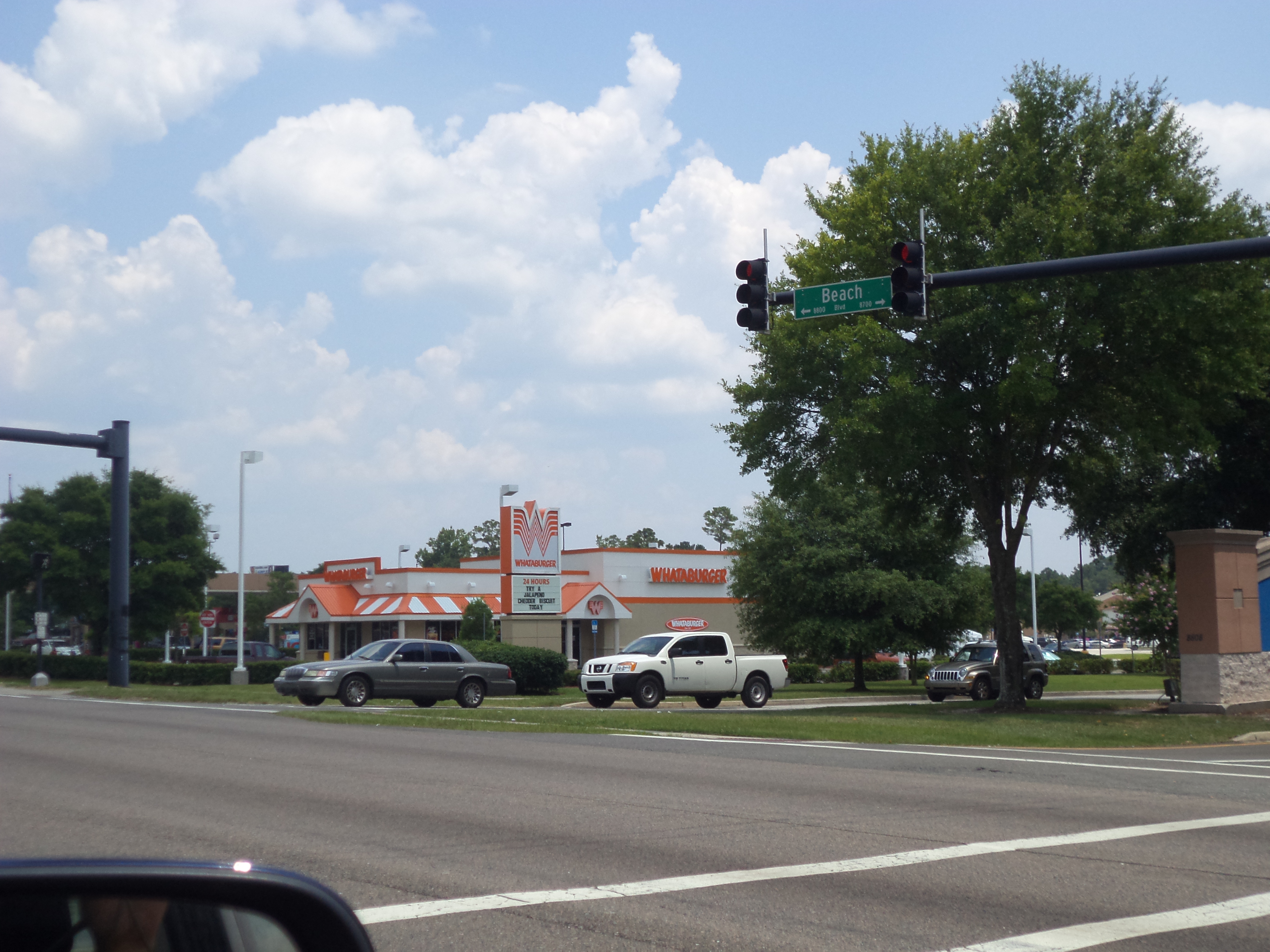
 Guides
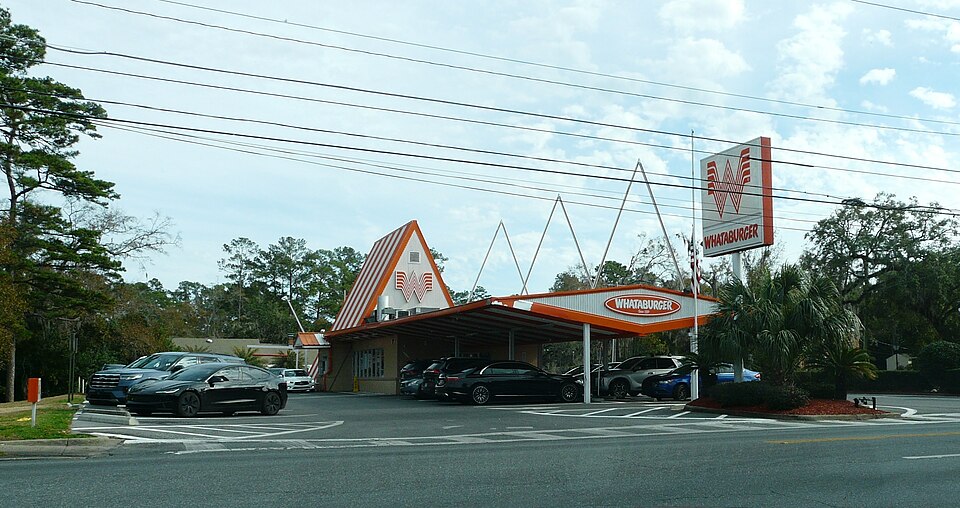
Licensed Whataburger photograph; historical image, not evidence of current recipes, portions or prices.Whataburger on Thomasville Road, Tallahassee, Florida.jpg. Photo: The Bushranger · Source · CC BY-SA 4.0 · Display cropped to fit.
Whataburger · At a glance
Compare real orders, not just single items
Classic burger, medium fries & unsweet tea (Estimate)
- Whataburger
- Medium French Fries
- Medium Unsweet Tea (32 fl oz)
Estimate
Price: Varies
Double Jr. & small fries (Estimate)
- Double Meat Whataburger Jr.
- Small French Fries
Estimate
Price: Varies
Bacon breakfast bun, hashbrowns & coffee (Estimate)
- Breakfast On A Bun with Bacon
- Hashbrowns
- Small Coffee (12 fl oz)
Estimate
Price: Varies
Patty Melt & medium fries (Estimate)
- Whataburger Patty Melt
- Medium French Fries
Estimate
Price: Varies
What changes between these orders?
| Nutrient | First | Second | Change |
|---|---|---|---|
| Calories | 1000 cal | 690 cal | -310 cal |
| Protein | 33 g | 26 g | -7 g |
| Carbs | 116 g | 71 g | -45 g |
| Fat | 46 g | 34 g | -12 g |
| Sodium | 1510 mg | 1040 mg | -470 mg |
Historical Estimate · official 2021 figures· Data checked 2026-11-16Whataburger official nutrition PDF (published March 29, 2021; current recipe confirmation unavailable)
Well.now example orders, not official combo recipes. Each listed item counts once; drinks, sauces and extras are excluded unless named. Actual servings and availability can vary.
Inside the first order
| Item / published serving | Calories | Protein | Carbs | Fat | Sodium |
|---|---|---|---|---|---|
| Whataburger | 590 cal | 29 g | 62 g | 25 g | 1220 mg |
| Medium French Fries | 400 cal | 4 g | 51 g | 21 g | 260 mg |
| Medium Unsweet Tea (32 fl oz) | 10 cal | 0 g | 3 g | 0 g | 30 mg |
Classic burger, medium fries & unsweet tea (Estimate) totals 1000 calories and 33 g protein. The difference above includes every listed serving, not just the main item.
Check the price where you order
Choose the US restaurant
Use your exact address and pickup or delivery method.
Match each serving
Check sizes, sides, sauces and paid extras against these examples.
Separate fees and offers
Read the item subtotal, taxes, delivery fees and discounts separately.
Available item prices are dated San Antonio delivery estimates, not confirmed current checkout prices. Orders with unpriced servings show an incomplete cost rather than a full meal quote. Price sources, location and dates
What this guide covers
- Customization begins with a clear request
- Use the official examples as vocabulary
- Read the base item before changing it
- A precise example for tomato and pickle preferences
- A precise example for jalapeños and bacon
- Three slices means a total, not three additional slices
- Confirm price without treating extras as free
- Use historical ingredient arithmetic cautiously
- Cheese size shows why exact labels matter
- Keep preferences separate from allergy requirements
- Make a reusable order note
- FAQ: Do I need a secret-menu name?
- FAQ: Can I calculate every removal and addition?
- Source notes for a realistic custom order
Customization begins with a clear request
Whataburger’s official history page describes its burgers as made to order and gives concrete examples: grilled jalapeños, extra bacon, three slices of cheese, no tomatoes, and extra pickles. Those examples support a practical approach to customization without requiring an unofficial secret menu. Start with a named burger, explain what you want changed, and confirm the resulting order. The history page is brand storytelling, not a restaurant-specific inventory list or fee schedule. Its examples are therefore not a promise that every modification is offered everywhere or without charge. A good custom order is both expressive and specific: it tells the restaurant what to prepare while leaving price and feasibility to the actual ordering process.
Use the official examples as vocabulary
Each example describes a different kind of instruction. No tomatoes is an omission. Extra pickles asks for a larger amount of an existing topping. Grilled jalapeños specifies both an ingredient and a preparation. Extra bacon adds an amount request, while three slices of cheese gives a total count that needs clarification against the base recipe. These distinctions matter because vague phrases such as loaded or extra everything leave room for interpretation. You do not need to combine all five examples to make an order personal. Choose the change that addresses your preference, then state it plainly. The source establishes examples of customization, not a standardized named burger containing every example together.
Read the base item before changing it
A modification is meaningful only relative to the item you start with. Review the selected burger’s displayed ingredients and name before asking for additions or omissions. If cheese or bacon is already included, an extra request may mean more than the standard amount rather than simply adding an ingredient that was absent. Similarly, asking for no tomatoes is most useful after confirming that tomatoes belong to the selected build. This is an order-reading method, not a claim about the recipe of every Whataburger sandwich. The supplied history page does not enumerate all current builds. Use the restaurant’s menu or ordering interface to establish the starting point, then describe the difference you want.
A precise example for tomato and pickle preferences
Suppose you like the burger you normally order but prefer it without tomatoes and with more pickles. A clear request is: “I would like this burger with no tomatoes and extra pickles, please.” Those two modifications come directly from the official page’s examples. Review the order summary or listen to the readback for both instructions. Do not assume that asking for extra pickles automatically removes tomatoes, or that a topping preference changes the side or drink in a meal. Keeping the request narrow makes it easier to notice a missed detail. It also avoids assigning a nutritional benefit to the change when the source does not provide ingredient-level tomato or pickle amounts.

Illustrative licensed food photograph, not an official Whataburger product or evidence of its portions or prices.Times have changed - panoramio.jpg. Photo: AudreyIski · Source · CC BY-SA 3.0 · Display cropped to fit.
A precise example for jalapeños and bacon
For a different preference, ask whether the selected burger can be prepared with grilled jalapeños and extra bacon. Both appear in the history page’s examples, so they are better-supported language than an invented off-menu nickname. Still, ask about the actual order rather than presenting the page as a guarantee. Confirm whether the restaurant can make the request and what the final price will be. If you care about the amount of bacon, ask what extra means for that item; do not silently translate it into an assumed slice count. The historical nutrition file has a per-slice bacon entry, but it does not define the restaurant’s current extra-bacon portion or its current price.
Three slices means a total, not three additional slices
The official example says three slices of cheese. When adapting that idea, say whether you mean three slices total or three additional slices. For instance: “Could this be made with three slices of cheese total? Please confirm the cheese type and price.” That is a proposed ordering script, not a promise that the request will be accepted. The distinction prevents an avoidable misunderstanding if the base burger already includes cheese. It also matters for nutrition estimates because the historical dataset distinguishes small and large American cheese slices. Counting slices without knowing which entry applies can produce a seemingly exact but inappropriate total. Establish the food first and calculate only after its portion is clear.
Confirm price without treating extras as free
The provided history text celebrates flexibility but does not publish modification charges. None of its examples establishes a free-add-on policy. Check the displayed price after making changes or ask the restaurant for the total before completing the order. This is especially important when an extra request could increase the quantity of an ingredient already included. Do not infer pricing from a friend’s receipt, a different location, or a historical menu image. The historical nutrition record also has null price fields, so it cannot fill that gap. If the cost is more than you want to spend, revise the order explicitly instead of assuming the team will interpret your preference as a price limit.
Use historical ingredient arithmetic cautiously
The retained historical nutrition record cites the official PDF dated March 29, 2021, and states that current recipes are unconfirmed. Its bacon entry is 25 calories and 85 milligrams sodium per slice: Historical Estimate. If exactly two additional slices matched that historical entry, their calculated contribution would be 50 calories and 170 milligrams sodium. That is a conditional ingredient calculation, not a measured change to today’s burger. It does not tell you how many slices the restaurant provides for extra bacon, and it should not be attached to an order unless that amount is established. Keep the condition visible whenever you use the number; otherwise a helpful planning example becomes an unsupported current-menu claim.

Licensed Whataburger photograph; historical image, not evidence of current recipes, portions or prices.Whataburger 2.jpg. Photo: Kurt Kaiser · Source · CC0 · Display cropped to fit.
Cheese size shows why exact labels matter
The same 2021 dataset lists Small American Cheese at 45 calories and 220 milligrams sodium per slice, versus Large American Cheese at 90 calories and 430 milligrams sodium per slice: Historical Estimate. For three slices total, the respective calculated ingredient totals would be 135 calories and 660 milligrams sodium, or 270 calories and 1290 milligrams sodium. These are alternative historical scenarios, not interchangeable estimates. They are also total cheese contributions, not necessarily additions to the burger’s published nutrition. If the base nutrition already includes cheese, adding the full three-slice total would double-count some of it. Without the appropriate slice type and baseline quantity, a customized burger total is not reliably calculable from these entries alone.
Keep preferences separate from allergy requirements
A request for no tomatoes communicates a preference or omission, but it is not evidence of an allergen-control procedure. If the reason for a modification is an allergy or another medical requirement, explain that directly and seek current ingredient and preparation information from the restaurant. The history page does not establish cross-contact safeguards, and the nutrition JSON does not provide a complete allergen matrix. Do not infer that removing visible cheese, bread, or sauce makes a food safe for a particular allergy. Likewise, a made-to-order description is not a guarantee of a separate preparation area. The appropriate question is whether the restaurant can meet the specific requirement, not whether customization exists in principle.
Make a reusable order note
Once you find a combination you enjoy, record the base item and each accepted change in ordinary language. A useful note separates omissions, additions, and preparation requests rather than compressing them into a nickname. For example, record no tomatoes and extra pickles as distinct instructions; record grilled jalapeños separately from any bacon request. Keep the confirmed price with the date and restaurant if you want a budgeting reference, but do not treat that price as universal. When ordering again, compare the note with the current menu and order summary. This makes a favorite easier to repeat while acknowledging that the available options, base recipe, and charges can change.
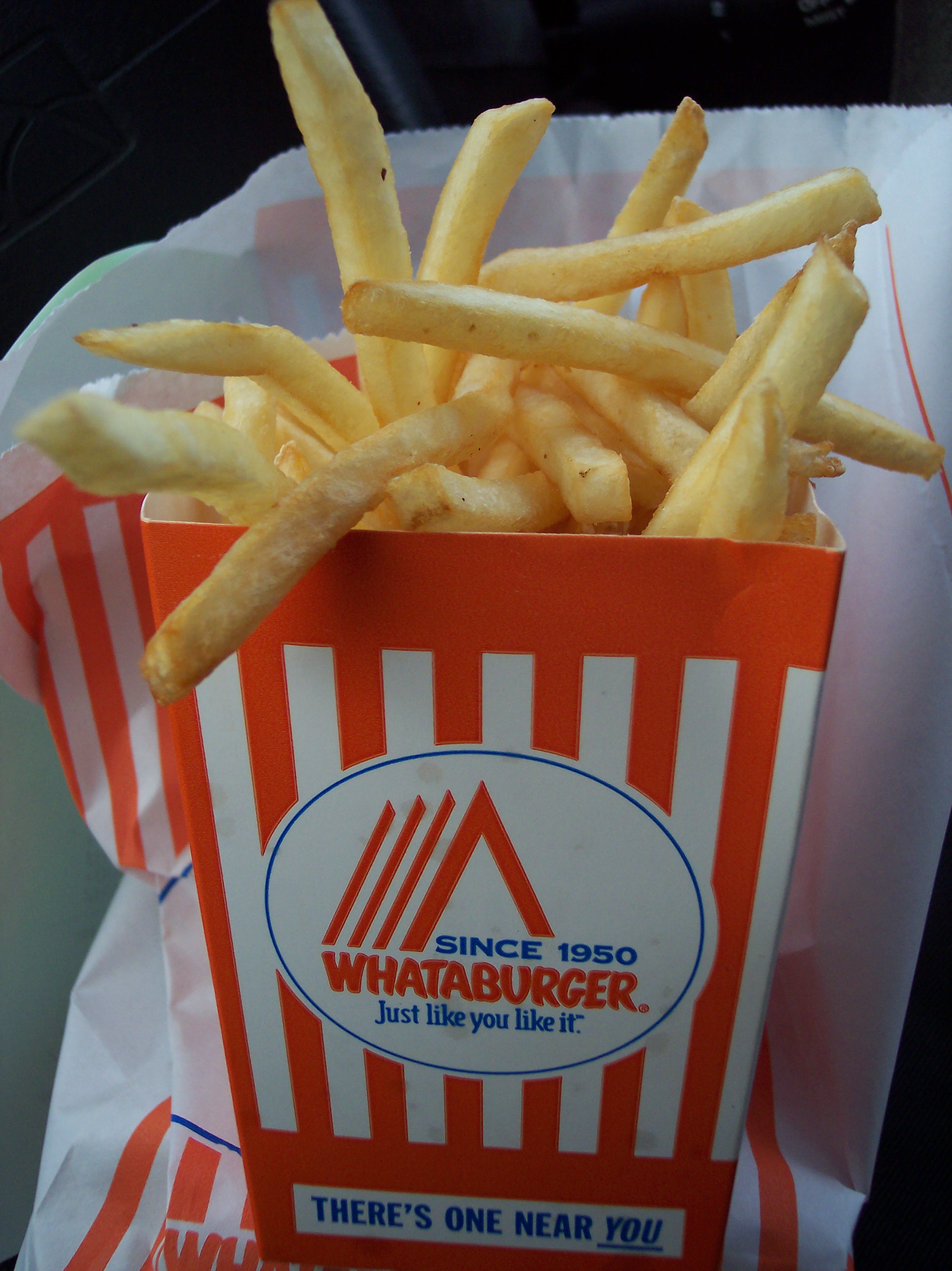
Licensed Whataburger photograph; historical image, not evidence of current recipes, portions or prices.Whataburgerfries.jpg. Photo: CMBJ · Source · CC BY-SA 2.5 · Display cropped to fit.
FAQ: Can I calculate every removal and addition?
Only when the relevant baseline and ingredient quantities are established. The historical file supplies some add-on entries but does not give usable amounts for every possible topping change. It therefore cannot support an exact calorie saving for no tomatoes or a precise total for extra pickles. Do not substitute a general food database and present the result as official Whataburger nutrition. If you need a rough personal estimate, keep its assumptions separate from the official historical figures. For editorial purposes, leaving a custom total uncalculated is better than manufacturing precision. A complete named-item entry is not automatically a component list that can be taken apart with confidence.
Source notes for a realistic custom order
The customization examples come from Whataburger’s Our History page, specifically its made-to-order description. Ingredient numbers come from the retained historical nutrition record derived from the official nutrition PDF, dated March 29, 2021, and remain Historical Estimate values. Neither source verifies current customization prices, universal option availability, or allergy accommodation. The most reliable workflow is to name the base burger, state each requested change, ask about feasibility and cost, and review the result before paying. That approach preserves the appeal of a personal order without turning brand examples into promises the supporting sources do not make.
See the full Whataburger menu
Prices, calories and macros for every item, or build a meal in the calculator.
Sources and corrections
Nutrition figures on Well.now come from official US restaurant sources, linked on each brand page with a last-checked date. Prices use verified local amounts first, then clearly labeled sourced estimates; Varies appears when neither is available. See our sources and methodology, or email be@well.now with a correction.
Reviewed November 16, 2026. Nutrition is a historical Estimate from the March 29, 2021 official PDF, not verified current recipes. Prices are independent delivery estimates from July 26, 2026 for one San Antonio restaurant. New recipes and conflicting rows remain unavailable.
About the Well.now Editorial Team
This article was written and fact-checked by the Well.now Editorial Team. We check nutrition claims against each chain's official US information and never publish prices we cannot confirm. Well.now is independent and not paid by any restaurant. Read our editorial policy.