 Guides
Illustrative licensed food photograph, not an official Golden Corral product or evidence of US portions, current availability or prices.Felt Steak Dinner. Photo: TinyApartmentCrafts · Source · CC BY 2.0 · Display cropped to fit.
Golden Corral sources and plate planning
Official US nutrition database checked 2026-11-15. No separate nutrition effective date confirmed. These are published recipe servings, not weighed buffet portions or guaranteed local offerings. Plate totals are calculated estimates. Blank allergen records do not mean allergen-free. Unconfirmed admission prices remain Varies.
Golden Corral official nutrition database ↗What this guide covers
- Define what the family needs from the outing
- Verify the restaurant, meal period, and price
- Choose timing around your household’s rhythm
- Ask about seating and accessibility in practical terms
- Explain the buffet process before children serve
- Survey choices before filling a child’s plate
- Support selective eaters without making the meal a test
- Coordinate adults so supervision is continuous
- Handle dietary requirements before the first plate
- Let different appetites produce different meals
- Set dessert expectations without making bargains
- Use nutrition information without monitoring everyone’s plate
- Agree on payment and celebration details early
- Measure success by the people, not the plates
Define what the family needs from the outing
A family buffet visit works best when the goal is clear. You may be trying to feed people with different tastes, gather relatives who rarely see one another, celebrate a milestone, or simplify dinner after a busy day. Each purpose suggests different priorities. A quick meal emphasizes timing and convenience, while a multigenerational gathering may depend on seating and accessibility. Golden Corral describes a broad buffet with options across meal periods, but that variety does not settle every family’s practical needs. Start with the people attending and identify the few details that would make the visit difficult if left unresolved. Address those first rather than assuming a large menu automatically makes the outing effortless.
Verify the restaurant, meal period, and price
Confirm the exact location and the meal period you plan to attend before discussing the outing as a fixed family plan. Local schedules and offerings can differ, and an old receipt is not a reliable quote for a future visit. Ask the restaurant about current meal prices, beverage charges, and the age categories relevant to your children. Do not assume universal child ages, senior eligibility, or discount conditions. The official FAQ explains how to find restaurant contact details, while the Golden Corral menu and prices guide can help organize the questions. A realistic family budget should reflect the whole purchase rather than the adult buffet price alone.
Choose timing around your household’s rhythm
The best arrival time is not necessarily the earliest or the quietest. Consider naps, school schedules, medication routines, travel, and how long children or older relatives are comfortable waiting. Ask the restaurant what it expects for your intended day, while understanding that staff cannot guarantee a particular crowd level. If the group is likely to arrive hungry and impatient, a small amount of advance coordination can prevent the meal from beginning under pressure. Share the correct address and a clear meeting point with relatives traveling separately. If some people will be late, decide whether everyone will wait or whether households will enter independently, since assumptions about that can create confusion before anyone has picked up a plate.
Illustrative licensed food photograph, not an official Golden Corral product or evidence of US portions, current availability or prices.Steak Dinner. Photo: thelesleyshow · Source · CC BY 2.0 · Display cropped to fit.
Ask about seating and accessibility in practical terms
Explain what your family needs rather than asking only whether the restaurant is accessible. You might need space for a wheelchair, a route that is easier for someone using a walker, a high chair, or seating that reduces repeated long walks to the buffet. Ask what arrangements are possible and whether arriving together affects the ability to sit as one party. Do not assume a booth, private room, or particular table can be guaranteed without confirmation. For guests who cannot comfortably carry a plate, agree within the family on who will help. A little planning preserves independence and dignity better than waiting until someone is standing in a busy aisle with food and no practical assistance.
Explain the buffet process before children serve
Children may not know which utensils belong to which food, how hot the pans can be, or why walking slowly matters when others are carrying plates. Explain the basics in simple language before the first trip. Show them that serving tools stay with their containers and that they can ask an adult for help rather than reaching across hot equipment. Very young children may need an adult to serve and carry food according to the restaurant’s procedures and the child’s abilities. Avoid turning the explanation into a long lecture that delays a hungry child unnecessarily. A brief preview of what will happen helps the visit feel predictable and lets adults focus on the meal rather than correcting surprises at every station.
Survey choices before filling a child’s plate
Walk with a child past the available foods before deciding what to serve. This helps prevent a full plate of the first familiar item followed by frustration when a preferred food appears farther along. Ask the child to choose a familiar option and, if interested, something new to taste. Small initial portions make it easier to learn whether a preparation is appealing without creating pressure to finish a large amount. Do not promise a specific favorite before confirming it is available that day. The purpose of the survey is not to negotiate an ideal plate according to adult expectations. It is to help the child make a manageable choice from a display that can otherwise feel overwhelming.
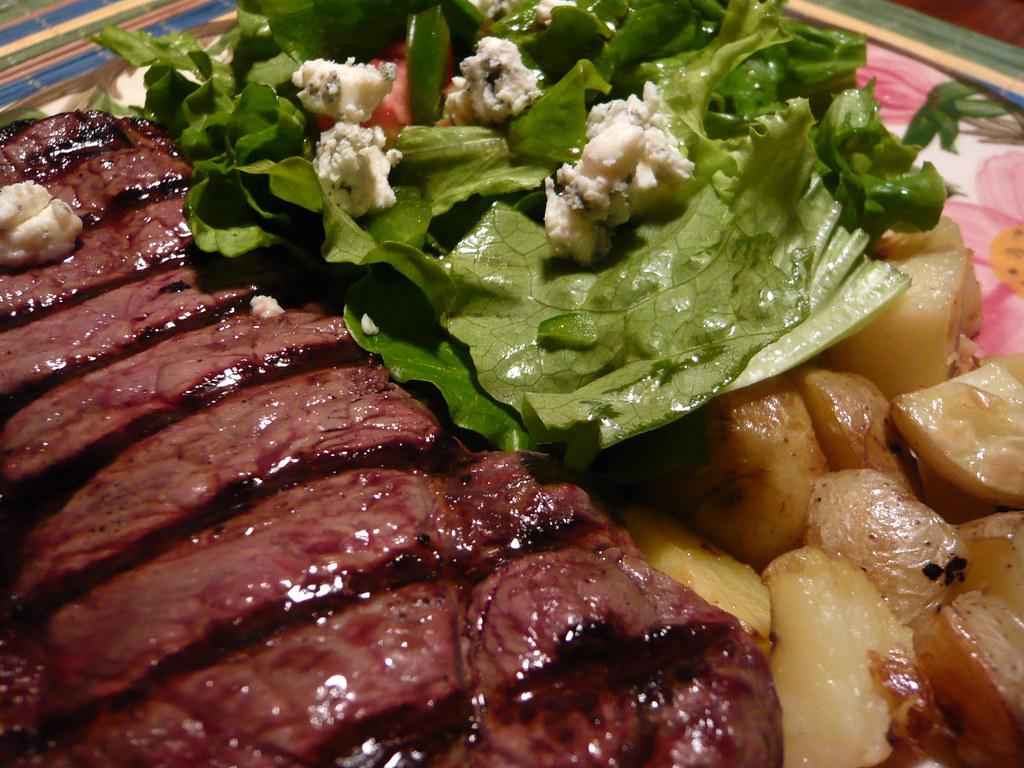
Illustrative licensed food photograph, not an official Golden Corral product or evidence of US portions, current availability or prices.Steak dinner. Photo: WordRidden · Source · CC BY 2.0 · Display cropped to fit.
Support selective eaters without making the meal a test
A buffet can offer useful flexibility for selective eaters, but the number of choices can also be stressful. Keep the first plate simple and avoid mixing foods if that makes eating harder for the person involved. Let a familiar item provide a starting point rather than insisting that variety must be demonstrated immediately. If someone wants to explore, a separate small taste can feel less disruptive than placing an unfamiliar sauce over an entire serving. Do not frame the outing as a challenge to overcome food preferences in public. The restaurant is one meal, not a treatment setting. A calm, predictable approach often supports a more pleasant family experience than bargaining over bites while everyone else waits.
Coordinate adults so supervision is continuous
When several adults are present, agree on who is accompanying children and who is staying at the table. Otherwise, everyone may leave for the buffet at once while assuming another person is watching. Taking turns also helps when a child needs food cut up, a drink adjusted, or help settling into a high chair. For a family member who needs assistance carrying food, designate help without making that person repeatedly ask. This is especially valuable during a celebration, when conversation and greetings can distract from basic logistics. The goal is not to create a rigid rotation. It is to make sure the adults share responsibility clearly enough that everyone eventually gets to eat their food while it is enjoyable.
Handle dietary requirements before the first plate
If anyone has a food allergy, celiac disease, or another strict ingredient requirement, speak with a manager before that person begins serving. Ask about the exact dishes, ingredients, shared utensils, fryers, and preparation surfaces relevant to the need. Vegetarian or plant-based descriptions do not establish allergen suitability. Explain the family plan so children and relatives do not offer tastes or move food onto the person’s plate without checking. If suitable conditions cannot be verified, have an alternative arrangement rather than expecting the person to improvise from the buffet. This discussion deserves its own attention and should not be squeezed into a rushed conversation while the rest of the family is already selecting desserts.

Illustrative licensed food photo, not an official Golden Corral product, portion or price.Our basket of bread (Black Bread and White Rolls) - Marco Prime. Photo: Haydn Blackey · Source · CC BY-SA 2.0 · Display cropped to fit.
Let different appetites produce different meals
Family members do not need matching plates or the same number of buffet trips to share a good meal. A growing teenager, a young child, and an older adult may want very different portions and combinations. Avoid turning the buffet price into pressure for anyone to eat beyond comfort. Equally, do not comment on another person returning for more food simply because your own appetite is satisfied. Encourage people to start with what they want and reassess as they go. This respects individual needs while reducing the sense that there is one correct way to get value. The shared experience comes from eating together, not from proving that everyone consumed an equivalent quantity.
Set dessert expectations without making bargains
If dessert timing is likely to become a point of conflict, explain the family’s plan before arriving rather than negotiating beside the sweets. You might decide to have the main meal together before visiting the dessert area, or use another routine that fits your household. Avoid promising a specific cake, frozen flavor, or topping before confirming the selection. When children choose dessert, smaller initial portions can help them discover what they enjoy without a crowded plate. Adults can follow the same principle without presenting it as a rule only for children. Dessert does not need to become a reward for eating a prescribed amount of another food, and the outing does not need to revolve around bargaining over every bite.
Use nutrition information without monitoring everyone’s plate
The official nutrition database and Golden Corral nutrition calculator can help family members who want to compare meals or track particular nutrients. Use the exact preparation and serving description, and include substantial toppings or beverages where relevant. Self-served amounts remain estimates. Keep the information supportive and private rather than reading out someone else’s totals at the table or labeling a child’s choices in moral terms. People with individualized medical nutrition needs should follow their own professional guidance. A family meal can accommodate informed decisions without becoming a group audit of calories, portions, or body size. The tools are there to assist the diner who needs them, not to police everyone attending.

Illustrative licensed food photo, not an official Golden Corral product, portion or price.Assortment of bread. Photo: Markus Spiske · Source · CC CC0 1.0 · Display cropped to fit.
Agree on payment and celebration details early
If several households are sharing the outing, decide who is paying and whether checks will be separate before reaching the register. Ask the restaurant how it handles your preferred arrangement, especially if rewards, gift cards, or promotional offers are involved. Do not assume a discount or account benefit can be shared across the whole group. For birthdays or other celebrations, ask about any outside-food, decoration, room, or group procedures that matter to your plan instead of arriving with expectations the restaurant has not approved. Keep gifts and personal belongings clear of walkways and serving areas. Resolving those details early lets the gathering feel social rather than turning the beginning or end of the meal into a prolonged financial or logistical discussion.
Measure success by the people, not the plates
After the visit, notice what worked: the timing, seating, foods each person enjoyed, and any arrangements worth repeating. If something was difficult, identify the practical cause rather than blaming a child, a selective eater, or a family member with a dietary need. Perhaps the group arrived too hungry, the location was inconvenient, or an essential question was left unanswered. Those are planning issues that can guide the next outing. Golden Corral’s variety can be useful for a mixed-age family, but a successful visit still depends on accurate local information and shared expectations. The best result is not that everyone tried everything. It is that people had a manageable meal and enough comfort to enjoy being together.
See the full Golden Corral menu
Prices, calories and macros for every item, or build a meal in the calculator.
Sources and corrections
Nutrition figures on Well.now come from official US restaurant sources, linked on each brand page with a last-checked date. Prices use verified local amounts first, then clearly labeled sourced estimates; Varies appears when neither is available. See our sources and methodology, or email be@well.now with a correction.
About the Well.now Editorial Team
This article was written and fact-checked by the Well.now Editorial Team. We check nutrition claims against each chain's official US information and never publish prices we cannot confirm. Well.now is independent and not paid by any restaurant. Read our editorial policy.