 Nutrition
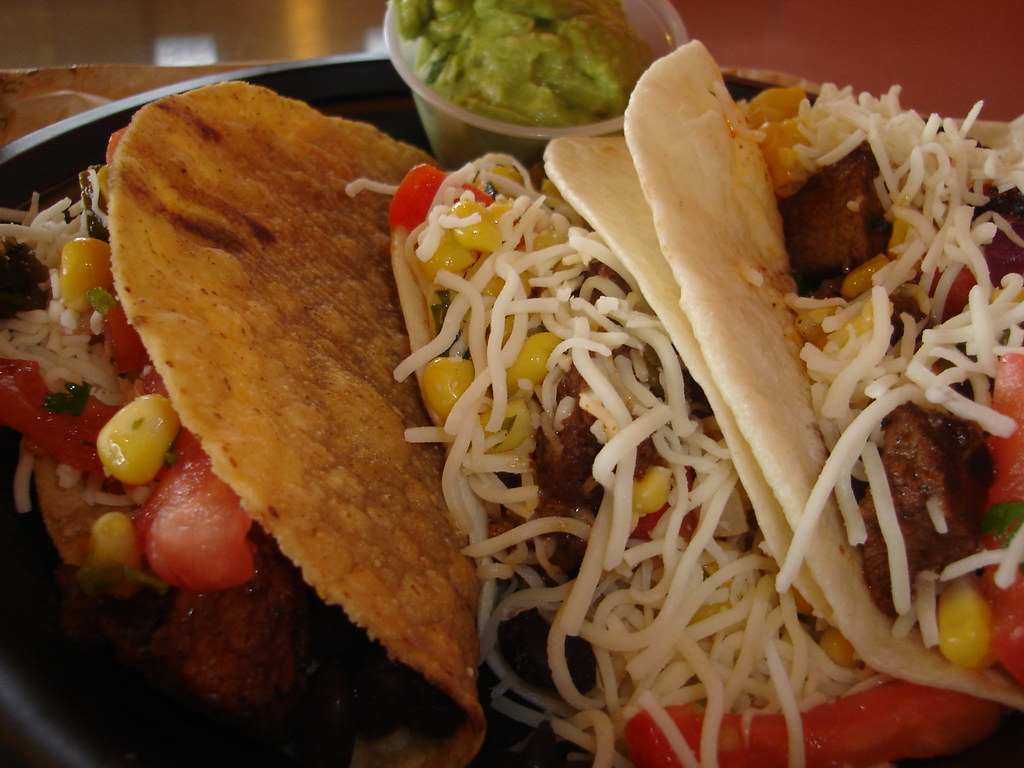
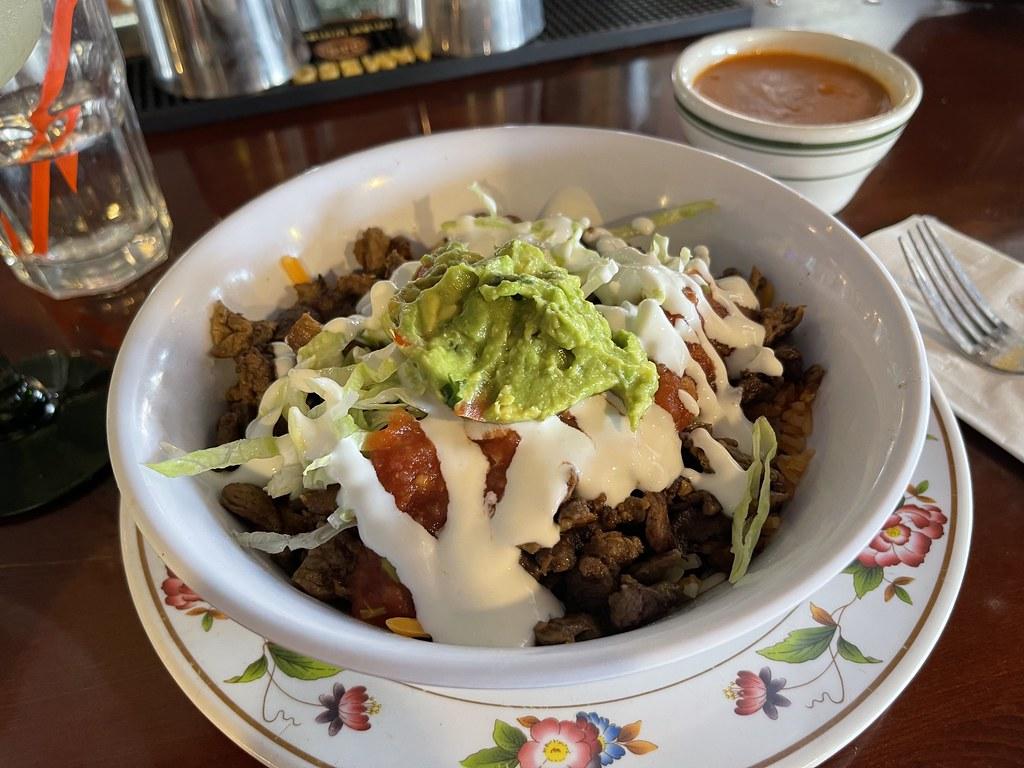
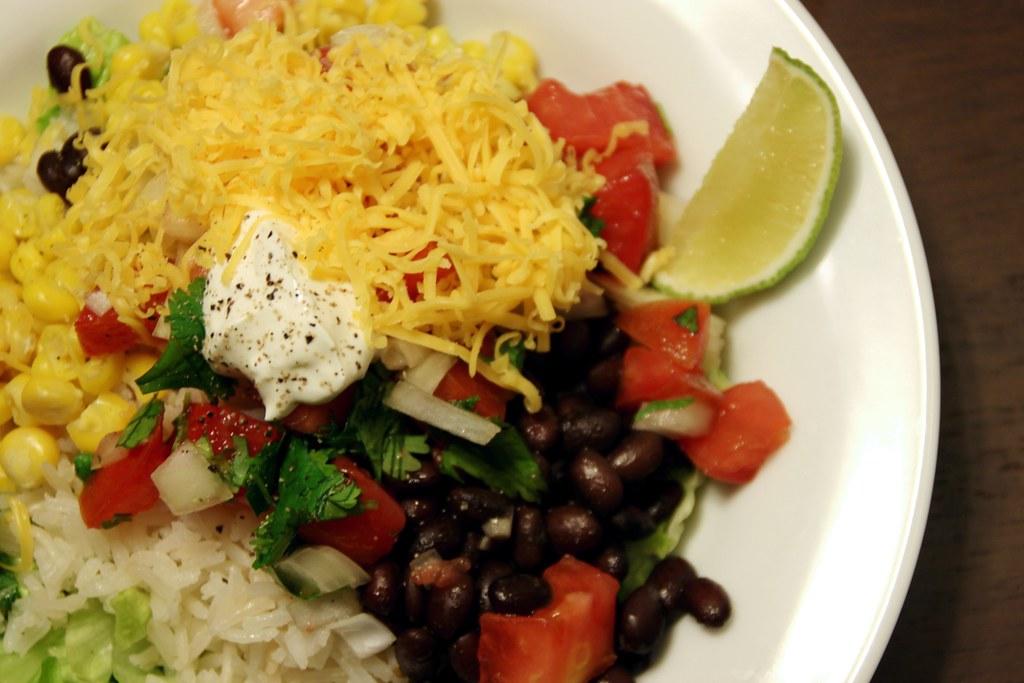
Illustrative licensed food photograph, not an official QDOBA product or evidence of current US portions, availability or prices.late-night burrito bowls. Photo: Stacy Spensley · Source · CC BY 2.0 · Display cropped to fit.
Official portions for this comparison
| Item / serving | Calories | Protein | Carbs | Fat | Sodium |
|---|---|---|---|---|---|
| Pork Carnitas (3.5 oz.) | 110 | 14 g | 0 g | 4.5 g | 560 mg |
| Grilled Adobo Chicken (3.5 oz.) | 190 | 19 g | 2 g | 12 g | 440 mg |
Ingredient portions are not complete entrées. Standard-portion combinations are calculated totals; changed portions are estimates. US source published February 26, 2026, checked November 8, 2026. Prices remain Varies without a verified local amount.
Official nutrition brochureWhat this guide covers
- The direct answer for QDOBA pork carnitas
- Understand the 3.5-ounce pork entry
- Compare the pork itself with other QDOBA meats
- Calculate a full carnitas rice-and-bean bowl
- Removing rice and removing beans are different decisions
- Black beans versus pinto beans with carnitas
- Build a lower-carbohydrate meal without calling it carb-free
- Salsa can change sodium without changing calories much
- Queso and cheese make the sodium total more visible
- Tortillas and chips determine much of the meal's carbohydrate
- Extra pork and the official carnitas taco entry
- FAQs: zero carbs, sodium and the best comparison
The direct answer for QDOBA pork carnitas
QDOBA Pork Carnitas lists 110 calories, 14 grams of protein, 0 grams of carbohydrate, 4.5 grams of fat and 560 milligrams of sodium per 3.5-ounce serving. The zero-carbohydrate figure applies to that prepared pork portion, not to every meal made with it. Add rice, beans or a flour tortilla and the complete order gains their carbohydrates. Sodium also deserves separate attention: the carnitas serving has fewer calories than several other listed meats, but it is not the lowest-sodium choice among the proteins compared here. For a practical baseline, carnitas with brown rice, black beans and pico de gallo produces a calculated 425-calorie bowl with 61 grams of carbohydrate and 1,210 milligrams of sodium. That combination is an ingredient-based example, not an official signature recipe. It shows why the meat label alone cannot describe the finished meal.
Understand the 3.5-ounce pork entry
The figures come from the QDOBA US Nutrition Brochure published February 26, 2026, checked November 8, 2026. Its Pork Carnitas entry describes a 3.5-ounce serving of the prepared menu ingredient. It does not describe 3.5 ounces of raw pork, one taco, a whole burrito or an entire side container of unspecified size. Use the listed weight when comparing it with another documented protein. If you request extra pork, the resulting quantity needs its own assumption rather than being silently treated as the standard serving. The source also does not establish an exact pork cut, supplier or preparation process from the nutrition numbers alone. Those details should not be invented to explain why the calories differ from a generic carnitas recipe found elsewhere.
Compare the pork itself with other QDOBA meats
At the documented 3.5-ounce serving, carnitas has 110 calories and 14 grams of protein. Brisket birria lists 140 calories and 15 grams of protein, grilled adobo chicken lists 190 calories and 19 grams, and grilled steak lists 360 calories and 20 grams. These comparisons use the prepared QDOBA products, not assumptions about pork, chicken or beef in general. Carnitas has fewer calories than each of those particular entries, but it also supplies less protein per listed serving. Its sodium figure of 560 milligrams is higher than adobo chicken's 440 and birria's 450, while lower than steak's 600. No single ranking captures all those differences. Choose the pork because you want that product, then review the complete meal rather than treating its calorie position as proof that it is automatically preferable for every nutrition goal.
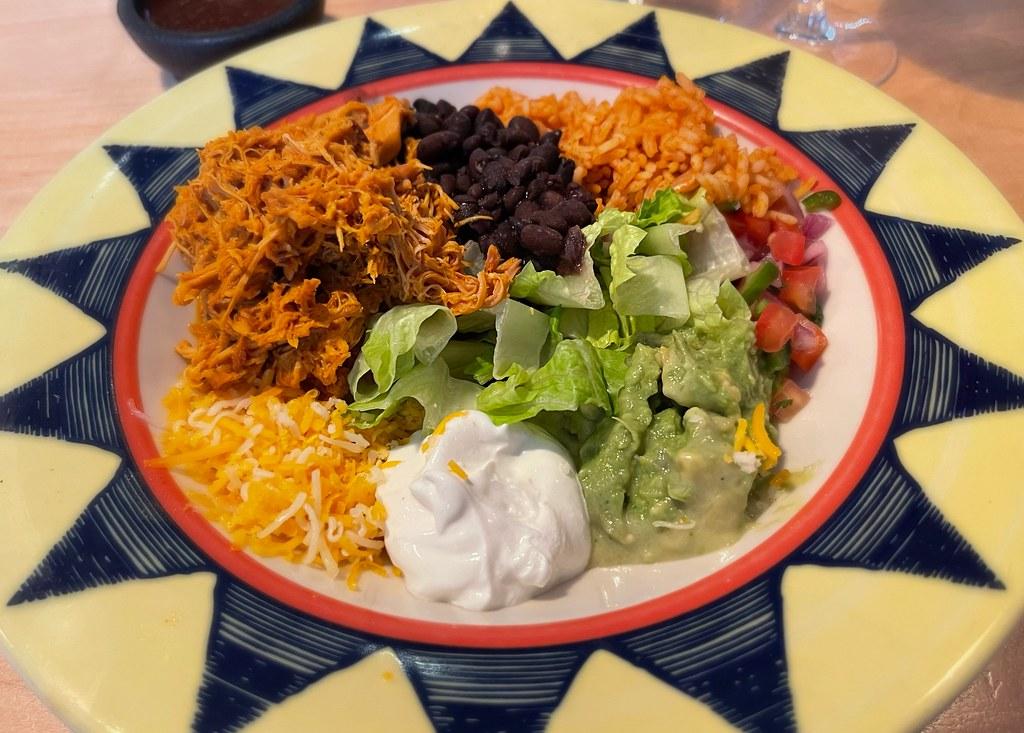
Illustrative licensed food photograph, not an official QDOBA product or evidence of current US portions, availability or prices.Chicken burrito bowl. Photo: sarahstierch · Source · CC BY 2.0 · Display cropped to fit.
Calculate a full carnitas rice-and-bean bowl
Combine 3.5 ounces of carnitas with 4 ounces of seasoned brown rice, 4 ounces of black beans and 1 ounce of pico de gallo. The calculated total is 425 calories, 27 grams of protein, 61 grams of carbohydrate, 7 grams of fat and 1,210 milligrams of sodium. The carbohydrate comes from the rice, beans and pico, even though the pork entry lists zero. Replacing brown rice with 4 ounces of cilantro lime rice changes the bowl to 445 calories, 26 grams of protein, 63 grams of carbohydrate, 8 grams of fat and 1,350 milligrams of sodium. The pork remains identical in both versions. This controlled comparison is useful when deciding between rice options because it does not also change the bean type, salsa or meat portion. The totals describe your constructed combinations, not two official carnitas bowl listings.
Removing rice and removing beans are different decisions
Starting with the 425-calorie brown-rice bowl, removing rice leaves carnitas, black beans and pico at 255 calories, 23 grams of protein, 25 grams of carbohydrate, 5.5 grams of fat and 960 milligrams of sodium. Removing black beans instead leaves carnitas, brown rice and pico at 285 calories, 18 grams of protein, 37 grams of carbohydrate, 6 grams of fat and 880 milligrams of sodium. Both versions are smaller than the baseline, but they are not nutritionally equivalent. Keeping beans preserves more protein in these particular examples, while keeping rice produces a different carbohydrate and sodium total. If you want both textures, a modeled smaller rice portion is another comparison, but it introduces a portion assumption. A request for light rice does not by itself establish a weighed amount or a separate official nutrition entry.
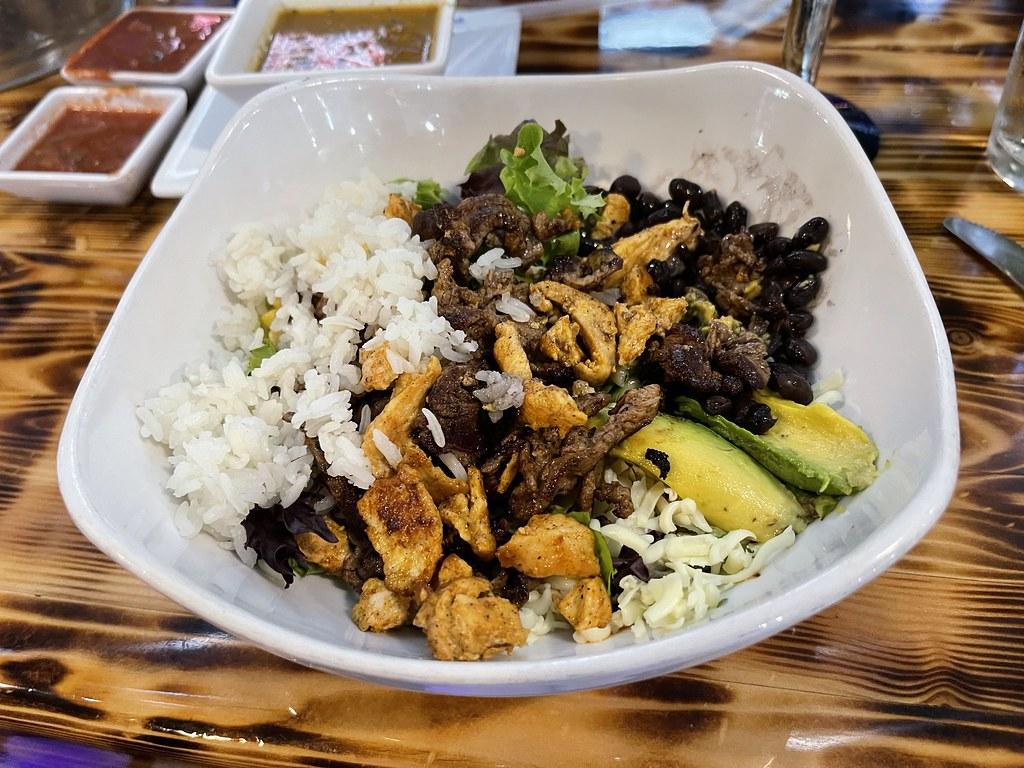
Illustrative licensed food photograph, not an official QDOBA product or evidence of current US portions, availability or prices.Chicken & steak burrito bowl. Photo: sarahstierch · Source · CC BY 2.0 · Display cropped to fit.
Black beans versus pinto beans with carnitas
The documented 4-ounce black bean serving provides 140 calories, 9 grams of protein, 24 grams of carbohydrate, 1 gram of fat and 330 milligrams of sodium. Pinto beans at the same listed weight provide 130 calories, 8 grams of protein, 23 grams of carbohydrate, 1 gram of fat and 350 milligrams of sodium. Substituting pinto beans in the brown-rice carnitas baseline produces 415 calories, 26 grams of protein, 60 grams of carbohydrate, 7 grams of fat and 1,230 milligrams of sodium. It is a modest calorie and macro change, with sodium moving in the opposite direction. Choose the bean you prefer rather than exaggerating a 10-calorie difference. If you order both beans, count both actual portions. Two full servings should not be logged as one serving merely because they occupy the same part of the bowl.
Build a lower-carbohydrate meal without calling it carb-free
A combination of carnitas, 2 ounces of fajita vegetables, 2 ounces of guacamole and 1 ounce of pico de gallo totals a calculated 235 calories, 16 grams of protein, 9 grams of carbohydrate, 15.5 grams of fat and 905 milligrams of sodium. This is lower in carbohydrate than the rice-and-bean examples because their carbohydrate-containing base components are absent. It is not carbohydrate-free, and it is not an official named diet meal. Add 1 ounce of sour cream and the total becomes 285 calories, 17 grams of protein, 12 grams of carbohydrate, 20.5 grams of fat and 915 milligrams of sodium. That single topping adds only 10 milligrams of sodium in the published entry, but it still adds calories and fat. Looking across all columns gives a more useful picture than assuming every creamy topping has the same nutritional effect.
Salsa can change sodium without changing calories much
One ounce of pico de gallo lists 5 calories and 70 milligrams of sodium. One ounce of roasted tomato salsa also lists 5 calories, but 190 milligrams of sodium. Replacing pico with roasted tomato salsa therefore adds 120 milligrams of sodium without changing the listed calorie total. Salsa verde lists 10 calories and 240 milligrams of sodium per ounce, so the same substitution adds 5 calories and 170 milligrams of sodium. These comparisons are particularly useful with carnitas because the pork already contributes 560 milligrams. Several salsas mean several portions unless you actually divide a single total amount among them. If you add pico and salsa verde to a bowl, count both rather than choosing whichever entry has fewer calories. Flavor combinations can be worth keeping; the calculation should simply reflect the portions you plan to eat.
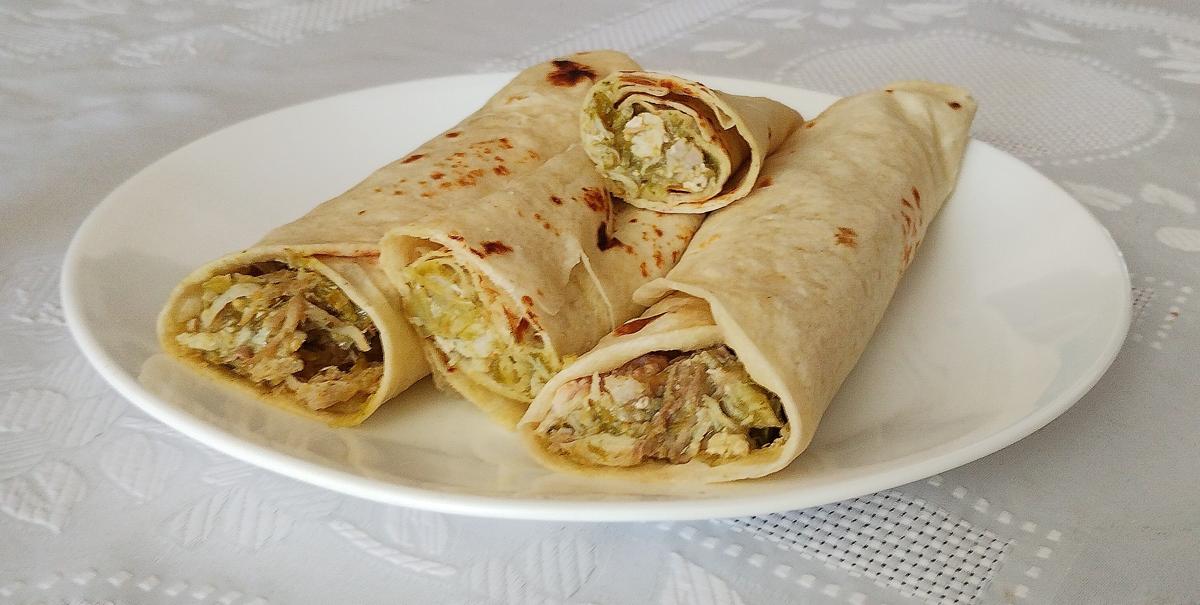
Illustrative licensed food photograph, not an official restaurant product or evidence of serving size, availability or prices.Burrito chihuahuense de chile verde.jpg. Photo: Levi bernardo · Source · CC BY-SA 4.0 · Display cropped to fit.
Queso and cheese make the sodium total more visible
Adding 2 ounces of Three Cheese Queso to the 425-calorie carnitas baseline produces 505 calories, 30 grams of protein, 64 grams of carbohydrate, 15 grams of fat and 1,550 milligrams of sodium. Add 1 ounce of shredded cheese as well and the meal reaches 615 calories, 37 grams of protein, 65 grams of carbohydrate, 24 grams of fat and 1,730 milligrams of sodium. The extra sodium comes from identifiable ingredients: 340 milligrams from queso and 180 from cheese. This is more actionable than describing the meal as vaguely salty or warning against every topping. If queso is your priority, calculate the bowl with queso alone before deciding whether cheese also adds something you want. For a personal sodium limit, compare the full order with your own guidance rather than assuming the pork's relatively low calorie count answers that separate question.
Tortillas and chips determine much of the meal's carbohydrate
Put the 425-calorie brown-rice carnitas filling into a 12.5-inch flour tortilla and the calculated burrito becomes 725 calories, 35 grams of protein, 113 grams of carbohydrate, 14 grams of fat and 1,970 milligrams of sodium. The wrapper alone supplies 52 of those carbohydrate grams. Alternatively, keep the bowl and add the documented 4-ounce tortilla chip serving: the food total becomes 985 calories and 136 grams of carbohydrate before dip. These are not contradictions of the pork's zero-carbohydrate entry. They are the result of counting the other food. If you share chips, calculate an estimated share separately. Do not transfer the carnitas ingredient's carbohydrate label to a taco, burrito or bowl, and do not assume a side disappears from the meal calculation because it arrives outside the main container.
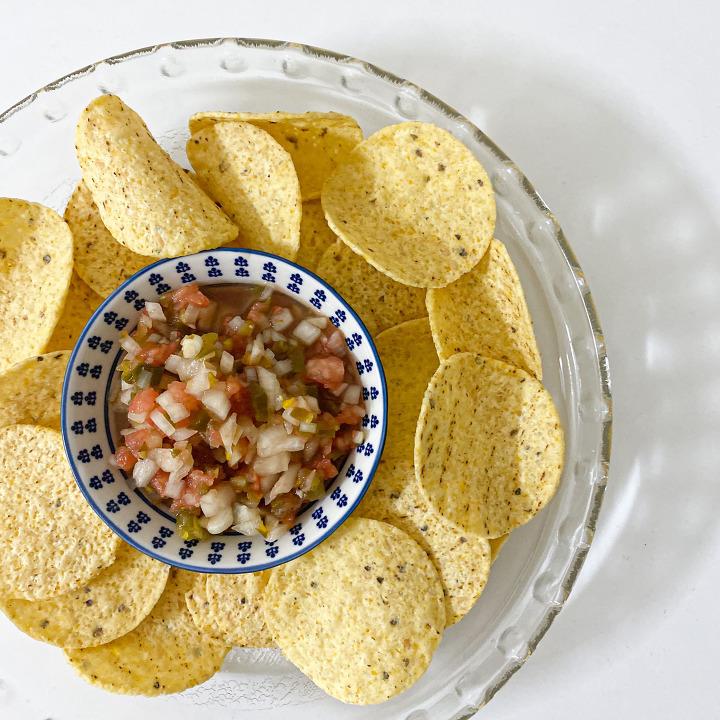
Illustrative licensed food photograph, not an official restaurant product or evidence of serving size, availability or prices.Homemade salsa with nachos 1.jpg. Photo: 에그란 · Source · CC BY 4.0 · Display cropped to fit.
Extra pork and the official carnitas taco entry
Two source servings of carnitas would provide 220 calories, 28 grams of protein, 0 grams of carbohydrate, 9 grams of fat and 1,120 milligrams of sodium from 7 ounces of pork. Adding that modeled second serving to the brown-rice baseline produces a 535-calorie bowl with 41 grams of protein and 1,770 milligrams of sodium. Confirm the restaurant's extra portion before treating this model as the amount actually served. A separate official reference is Street Style Pork Carnitas Tacos (3) Flour, listed at 370 calories, 23 grams of protein, 38 grams of carbohydrate, 13 grams of fat and 1,500 milligrams of sodium. Those numbers describe the complete three-taco recipe, not three full pork servings. Do not multiply the standalone meat entry by three simply because the order contains three tacos. Our estimated typical QDOBA price is about $10.95 for a chicken burrito or bowl and $12.45 for steak (checked November 15, 2026; see the QDOBA menu prices page), and your restaurant's checkout may differ slightly.
FAQs: zero carbs, sodium and the best comparison
Does QDOBA carnitas have carbs? Its documented 3.5-ounce ingredient serving lists 0 grams, but the completed meal can contain carbohydrates from many other ingredients. Is carnitas lower in calories than adobo chicken? Yes, for these listed portions: 110 versus 190 calories, alongside 14 versus 19 grams of protein. Is it lower in sodium? No. Carnitas lists 560 milligrams and adobo chicken 440. Are the three carnitas tacos equivalent to three meat servings? No. Use the official three-taco meal entry for that recipe. What is the simplest way to compare my usual order? Keep the pork portion and all toppings fixed, then change rice, beans or format one at a time. Can a calculated bowl establish exact counter portions? No. It provides a transparent ingredient-based reference, while nonstandard amounts such as light rice or extra pork remain separate portion assumptions.
See the full QDOBA menu
Prices, calories and macros for every item, or build a meal in the calculator.
Sources and corrections
Nutrition figures on Well.now come from official US restaurant sources, linked on each brand page with a last-checked date. Prices use verified local amounts first, then clearly labeled sourced estimates; Varies appears when neither is available. See our sources and methodology, or email be@well.now with a correction.
About the Well.now Editorial Team
This article was written and fact-checked by the Well.now Editorial Team. We check nutrition claims against each chain's official US information and never publish prices we cannot confirm. Well.now is independent and not paid by any restaurant. Read our editorial policy.