 Nutrition
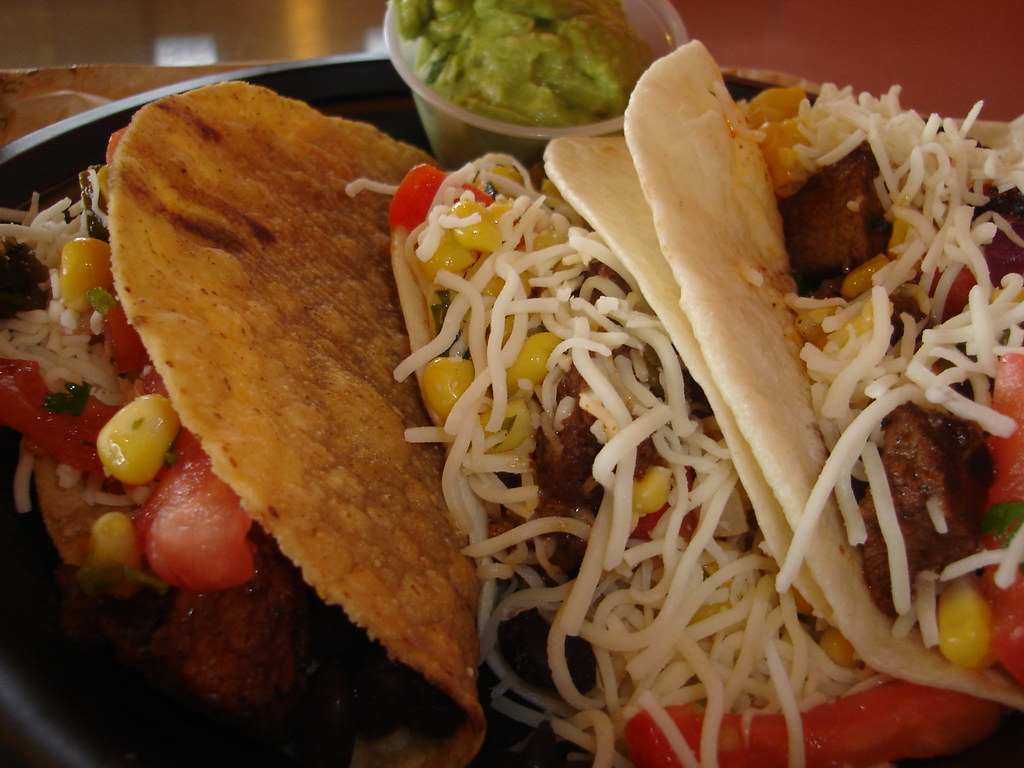
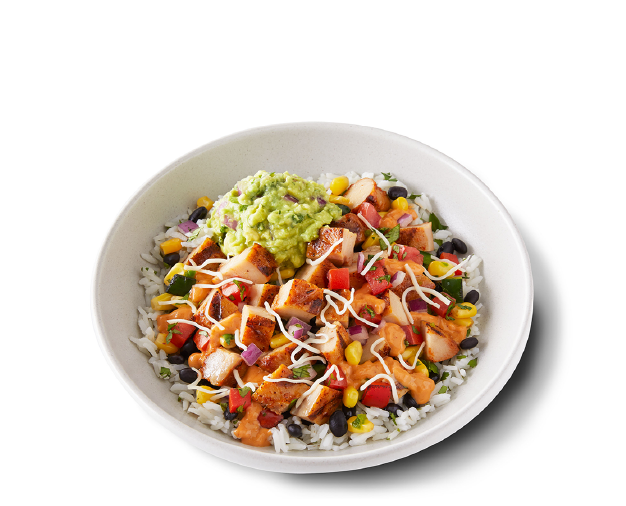
Illustrative licensed food photograph, not an official QDOBA product or evidence of current US portions, availability or prices.Burrito bowl. Photo: sarahstierch · Source · CC BY 2.0 · Display cropped to fit.
Official portions for this comparison
| Item / serving | Calories | Protein | Carbs | Fat | Sodium |
|---|---|---|---|---|---|
| Flour Tortilla (5.5") | 70 | 2 g | 12 g | 1.5 g | 170 mg |
| Flour Tortilla (10") | 210 | 6 g | 36 g | 5 g | 490 mg |
| Flour Tortilla (12.5") | 300 | 8 g | 52 g | 7 g | 760 mg |
| Grilled Adobo Chicken (3.5 oz.) | 190 | 19 g | 2 g | 12 g | 440 mg |
Ingredient portions are not complete entrées. Standard-portion combinations are calculated totals; changed portions are estimates. US source published February 26, 2026, checked November 8, 2026. Prices remain Varies without a verified local amount.
Official nutrition brochureWhat this guide covers
- How many calories are in a QDOBA burrito?
- The official source and what its tortilla sizes mean
- Compare all three flour tortillas directly
- Use one fixed filling to isolate the wrapper
- What changes when the same filling becomes a bowl?
- Swap the protein without changing the rest
- Rice and beans: identify which change you actually want
- Queso, cheese and guacamole can change the comparison
- Use the official Chicken Queso pair as a second reference
- Do not lose the side order outside the wrapper
- A practical burrito-ordering comparison
- FAQs: double wrapping, smaller tortillas and exact totals
How many calories are in a QDOBA burrito?
A QDOBA burrito does not have one universal calorie count. The documented 12.5-inch flour tortilla contributes 300 calories before any filling, while the official Chicken Queso Burrito entry lists 1,050 calories for a 569-gram serving. A different combination of meat, rice, beans and toppings produces a different total. For a controlled example, grilled adobo chicken, cilantro lime rice, black beans and pico de gallo total 525 calories without a tortilla. Adding the 12.5-inch tortilla brings that calculated burrito to 825 calories. That is an ingredient-based example, not an official signature recipe. The most useful comparison keeps those fillings fixed while changing only the wrapper or one ingredient. Otherwise, a difference attributed to the tortilla might actually come from extra rice, queso, a second protein portion or a side eaten with the burrito.
The official source and what its tortilla sizes mean
The figures here come from the QDOBA US Nutrition Brochure published February 26, 2026, checked November 8, 2026. It lists flour tortillas at 5.5, 10 and 12.5 inches. Those are separate nutrition entries, not interchangeable descriptions of a standard burrito wrapper. The source does not establish that every location offers every size for any requested build. In particular, a mathematical comparison using the smallest tortilla does not show that a full burrito's fillings will fit inside it. Use the size printed beside the ingredient rather than selecting the smallest number from a search result. For ordering, confirm which wrapper your restaurant actually uses. For tracking, count the wrapper once, whether it surrounds the filling or arrives separately.
Compare all three flour tortillas directly
The 5.5-inch flour tortilla supplies 70 calories, 2 grams of protein, 12 grams of carbohydrate, 1.5 grams of fat and 170 milligrams of sodium. The 10-inch entry supplies 210 calories, 6 grams of protein, 36 grams of carbohydrate, 5 grams of fat and 490 milligrams of sodium. The 12.5-inch entry supplies 300 calories, 8 grams of protein, 52 grams of carbohydrate, 7 grams of fat and 760 milligrams of sodium. Moving from the 10-inch to the 12.5-inch entry therefore adds 90 calories, 16 grams of carbohydrate and 270 milligrams of sodium. That difference is more useful than comparing diameter alone. Tortilla weight and recipe determine nutrition; a percentage increase in diameter is not a reliable percentage increase in calories. Select the documented size rather than estimating nutrition from its appearance.
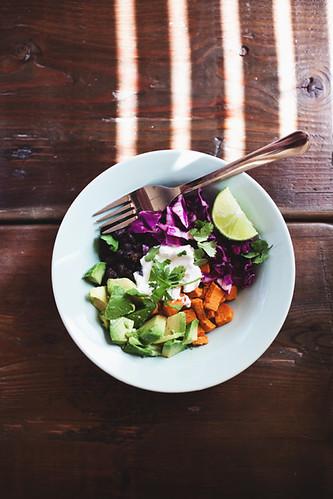
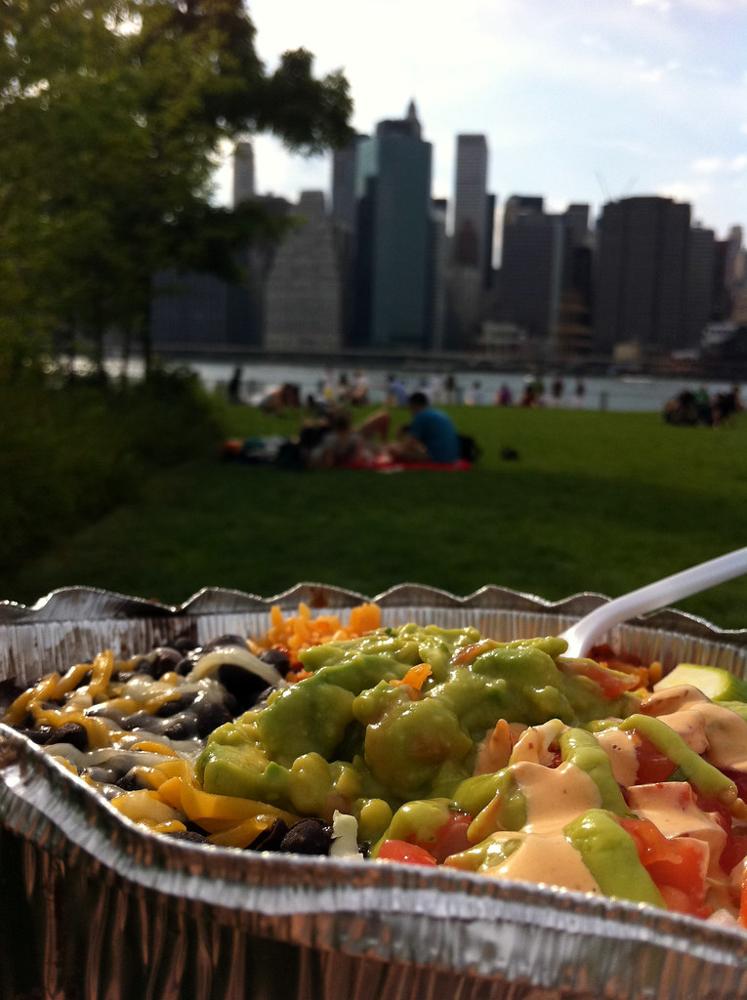
Illustrative licensed food photograph, not an official QDOBA product or evidence of current US portions, availability or prices.BURRITO BOWL // the little red house. Photo: the little red house · Source · CC BY 2.0 · Display cropped to fit.
Use one fixed filling to isolate the wrapper
Start with one source portion each of grilled adobo chicken at 3.5 ounces, cilantro lime rice at 4 ounces, black beans at 4 ounces and pico de gallo at 1 ounce. Together, those fillings provide a calculated 525 calories, 31 grams of protein, 65 grams of carbohydrate, 15.5 grams of fat and 1,230 milligrams of sodium. With the 10-inch tortilla, the arithmetic becomes 735 calories, 37 grams of protein, 101 grams of carbohydrate, 20.5 grams of fat and 1,720 milligrams of sodium. With the 12.5-inch tortilla, it becomes 825 calories, 39 grams of protein, 117 grams of carbohydrate, 22.5 grams of fat and 1,990 milligrams of sodium. These totals deliberately preserve every filling portion. They illustrate the nutrition difference between wrappers, not a promise that both builds are available or equally practical to roll.
What changes when the same filling becomes a bowl?
Removing the 12.5-inch tortilla from that 825-calorie example leaves the original 525-calorie filling. The difference is exactly the wrapper's 300 calories, 52 grams of carbohydrate, 8 grams of protein, 7 grams of fat and 760 milligrams of sodium. This is a genuinely controlled bowl-versus-burrito comparison because nothing inside changes. A bowl is not automatically lower in calories than every burrito, however. Add 4 ounces of guacamole and 2 ounces of Three Cheese Queso to the bowl and its total rises to 775 calories. Add shredded cheese as well and it reaches 885 calories. Those toppings may be exactly what you want, but the format alone no longer explains the result. If your goal is to compare the wrapper, keep toppings and portions identical before deciding which order fits your preferences.
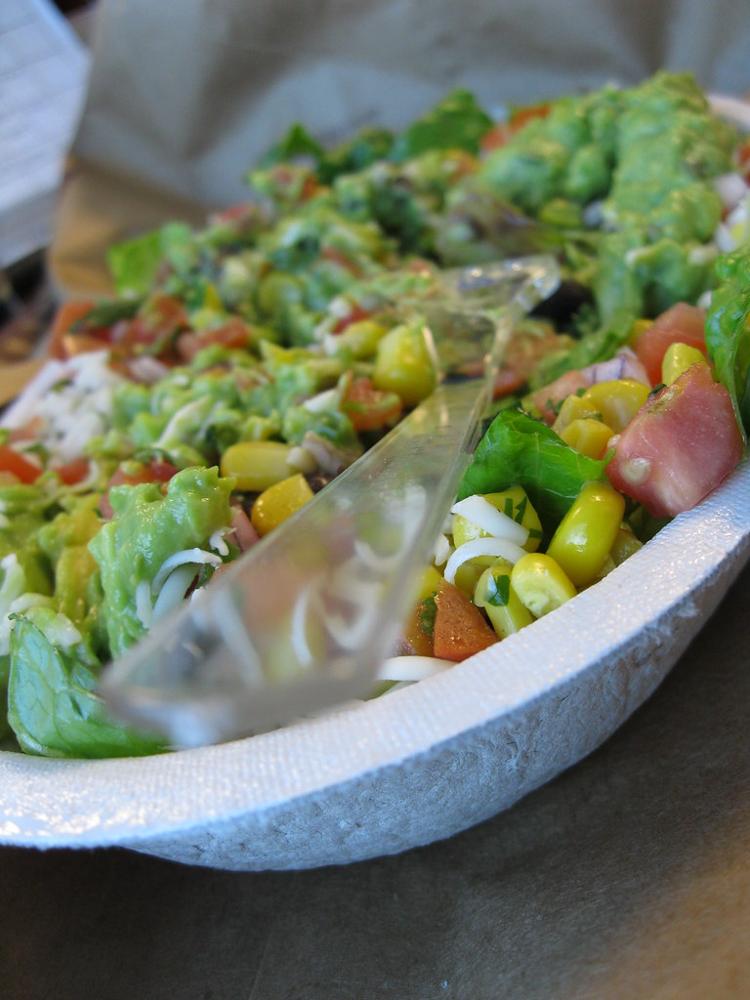
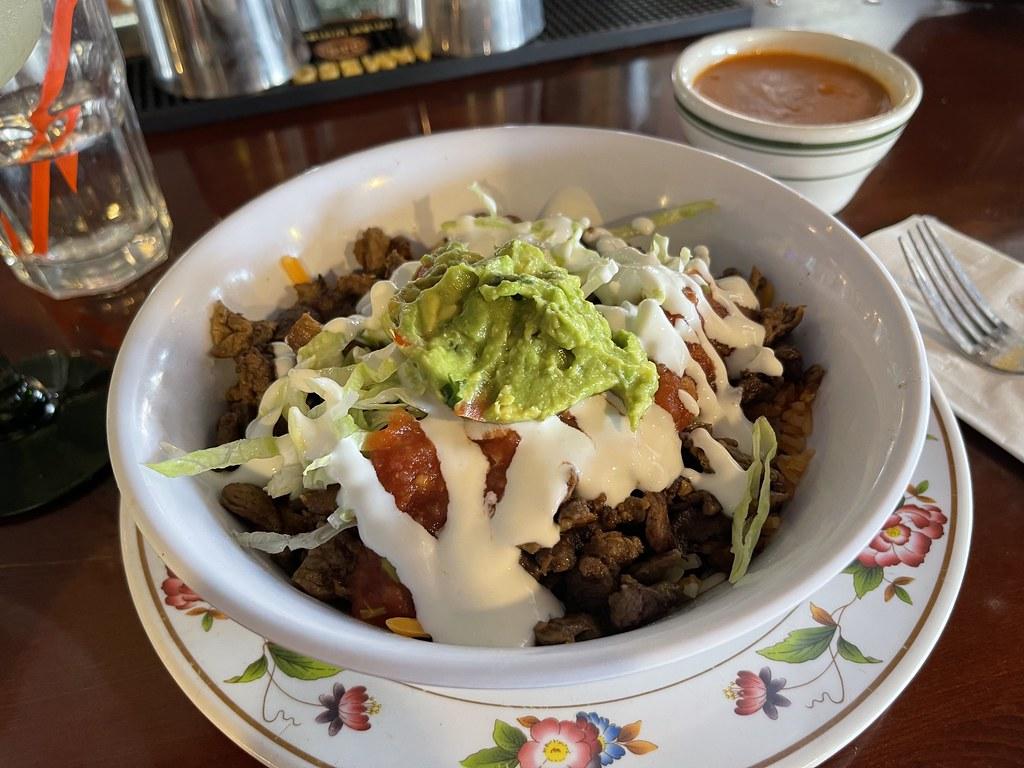
Illustrative licensed food photograph, not an official QDOBA product or evidence of current US portions, availability or prices.Vegetarian Burrito Bowl. Photo: CorruptKitten · Source · CC BY-SA 2.0 · Display cropped to fit.
Swap the protein without changing the rest
For another fixed comparison, hold the 12.5-inch tortilla, cilantro lime rice, black beans and pico constant. That non-meat foundation totals 635 calories. Add grilled adobo chicken and the burrito reaches 825 calories; add Cholula Hot & Sweet Chicken and it also reaches 825. Their protein and carbohydrate totals differ even though their calories match. Pork carnitas produces a 745-calorie build, brisket birria produces 775, and grilled steak produces 995, using the documented 3.5-ounce serving for each meat. These are calculated combinations, not five official burrito listings. They also show why substituting a generic chicken or beef entry can produce a misleading result. Use the exact QDOBA protein name and portion. A steak burrito comparison based on another restaurant's steak recipe would not describe the official ingredient figures used here.
Rice and beans: identify which change you actually want
In the chicken example, replacing 4 ounces of cilantro lime rice with 4 ounces of seasoned brown rice reduces the burrito from 825 to 805 calories. It also reduces carbohydrate by 2 grams and sodium by 140 milligrams while adding 1 gram of protein. Removing the cilantro lime rice entirely creates a larger change: the build becomes 635 calories, with 79 grams of carbohydrate instead of 117. Removing the black beans instead produces 685 calories, but it also removes their 9 grams of protein and 24 grams of carbohydrate. These are different trade-offs, not equivalent ways to make a lighter burrito. If you want beans for texture and protein, retaining them while adjusting rice may suit you better. If you enjoy both, keep both and compare another ingredient rather than automatically removing the same component every time.
Queso, cheese and guacamole can change the comparison
Starting from the 825-calorie chicken burrito, adding the documented 2-ounce Three Cheese Queso serving produces 905 calories. Adding 1 ounce of shredded cheese instead produces 935, while adding 2 ounces of guacamole produces 905. All three together bring the calculated total to 1,095 calories. Their macro contributions are different: queso adds 3 grams of protein and 3 grams of carbohydrate; shredded cheese adds 7 grams of protein and 1 gram of carbohydrate; the smaller guacamole portion adds 1 gram of protein and 5 grams of carbohydrate. Portion names matter here. The published 4-ounce guacamole entry is 170 calories, not simply the smaller entry copied twice. Likewise, the 4-ounce queso entry is 170 calories rather than 160. Use the listed serving that matches your order, especially when a separate side cup is involved.
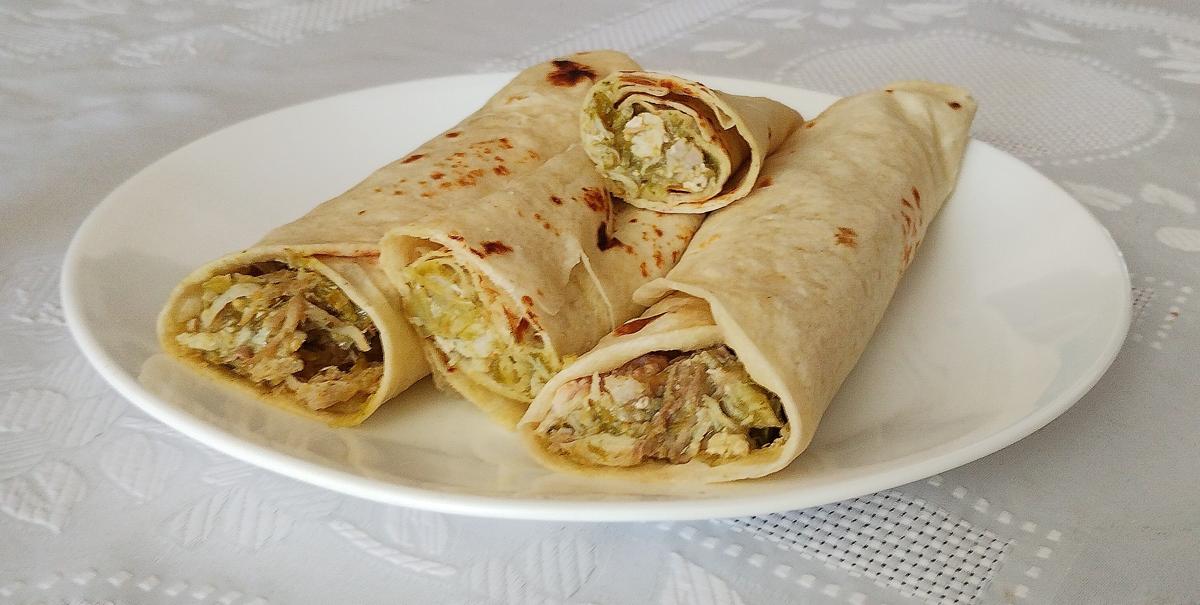
Illustrative licensed food photograph, not an official restaurant product or evidence of serving size, availability or prices.Burrito chihuahuense de chile verde.jpg. Photo: Levi bernardo · Source · CC BY-SA 4.0 · Display cropped to fit.
Use the official Chicken Queso pair as a second reference
QDOBA lists its Chicken Queso Bowl at 750 calories, 43 grams of protein, 74 grams of carbohydrate, 33 grams of fat and 1,820 milligrams of sodium. The Chicken Queso Burrito is listed at 1,050 calories, 51 grams of protein, 126 grams of carbohydrate, 40 grams of fat and 2,580 milligrams of sodium. The difference between those two official entries matches the documented 12.5-inch tortilla: 300 calories, 8 grams of protein, 52 grams of carbohydrate, 7 grams of fat and 760 milligrams of sodium. That makes this pair a useful published reference. It does not mean every custom chicken burrito contains 1,050 calories. The official bowl is a defined 468-gram item and the burrito is a defined 569-gram item, while your custom ingredient list may differ substantially in both composition and total quantity.
Do not lose the side order outside the wrapper
The documented 4-ounce tortilla chip serving contributes 560 calories, 75 grams of carbohydrate, 7 grams of protein, 26 grams of fat and 220 milligrams of sodium. Add that serving to the 825-calorie chicken burrito example and the food total becomes 1,385 calories before a dip or drink. Adding a separate 2-ounce Three Cheese Queso serving brings it to 1,465 calories. If you share the chips, calculate your share separately rather than counting the whole serving or omitting it automatically. An assumed half serving would contribute 280 calories and 37.5 grams of carbohydrate, but that remains a portion estimate unless measured. Keeping sides separate in your calculation also makes later adjustments easier: you can change the burrito without accidentally deleting the chips, or choose a different side without rebuilding the entire meal.
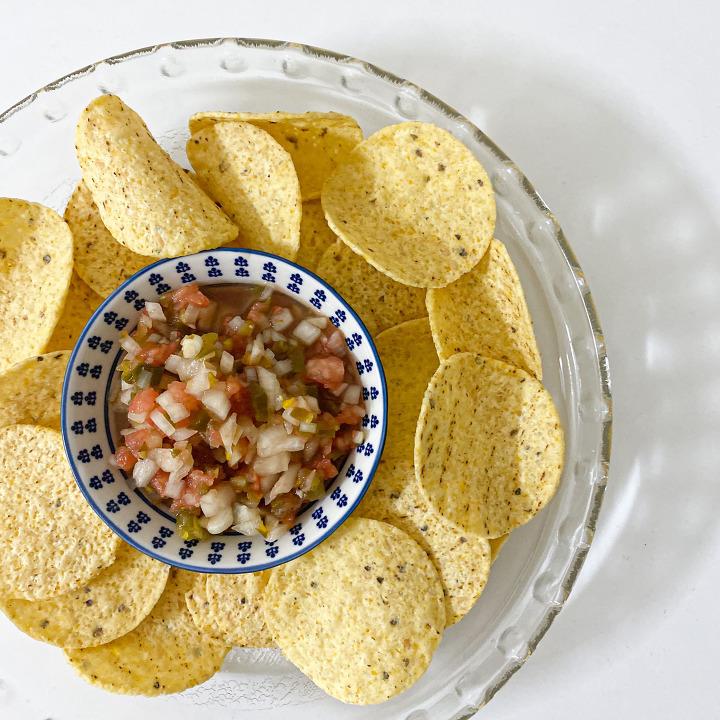
Illustrative licensed food photograph, not an official restaurant product or evidence of serving size, availability or prices.Homemade salsa with nachos 1.jpg. Photo: 에그란 · Source · CC BY 4.0 · Display cropped to fit.
A practical burrito-ordering comparison
Write your usual order as a short ingredient list before comparing alternatives: wrapper size, protein, rice, beans, salsa, dairy toppings, guacamole and sides. Then change one line at a time. For the 825-calorie chicken example, switching to brown rice saves 20 calories, omitting the large wrapper saves 300, and removing black beans saves 140 while reducing protein by 9 grams. These are distinct choices with distinct effects on the meal. If you request light rice, a half-portion model would subtract 95 calories from the cilantro lime rice version, but the phrase itself does not guarantee a weighed 2-ounce serving. Keep that assumption visible. Our estimated typical QDOBA price is about $10.95 for a chicken burrito or bowl and $12.45 for steak (checked November 15, 2026; see the QDOBA menu prices page), and your restaurant's checkout may differ slightly. The nutrition brochure does not establish a local burrito price or an extra-protein charge, so confirm those through the restaurant's ordering channel rather than deriving value claims from calories.
FAQs: double wrapping, smaller tortillas and exact totals
Does a second large tortilla count? Yes. Another 12.5-inch flour tortilla adds another 300 calories, 52 grams of carbohydrate and 760 milligrams of sodium to the calculation. Is the 70-calorie tortilla a standard burrito wrapper? The source identifies it as 5.5 inches; it should not replace the large-tortilla entry merely because both are flour tortillas. Is a bowl always 300 calories lighter? Only when it removes that specific wrapper and preserves every other ingredient and portion. Can you calculate half a burrito? Halving the full total is a reasonable planning model if the filling is distributed evenly, but one cut does not establish equal portions of meat, rice and sauce. Why might your receipt's named burrito differ from a custom sum? Use the official entry for that named recipe, and use ingredient arithmetic for your own build rather than treating the two as interchangeable.
See the full QDOBA menu
Prices, calories and macros for every item, or build a meal in the calculator.
Sources and corrections
Nutrition figures on Well.now come from official US restaurant sources, linked on each brand page with a last-checked date. Prices use verified local amounts first, then clearly labeled sourced estimates; Varies appears when neither is available. See our sources and methodology, or email be@well.now with a correction.
About the Well.now Editorial Team
This article was written and fact-checked by the Well.now Editorial Team. We check nutrition claims against each chain's official US information and never publish prices we cannot confirm. Well.now is independent and not paid by any restaurant. Read our editorial policy.