 Nutrition
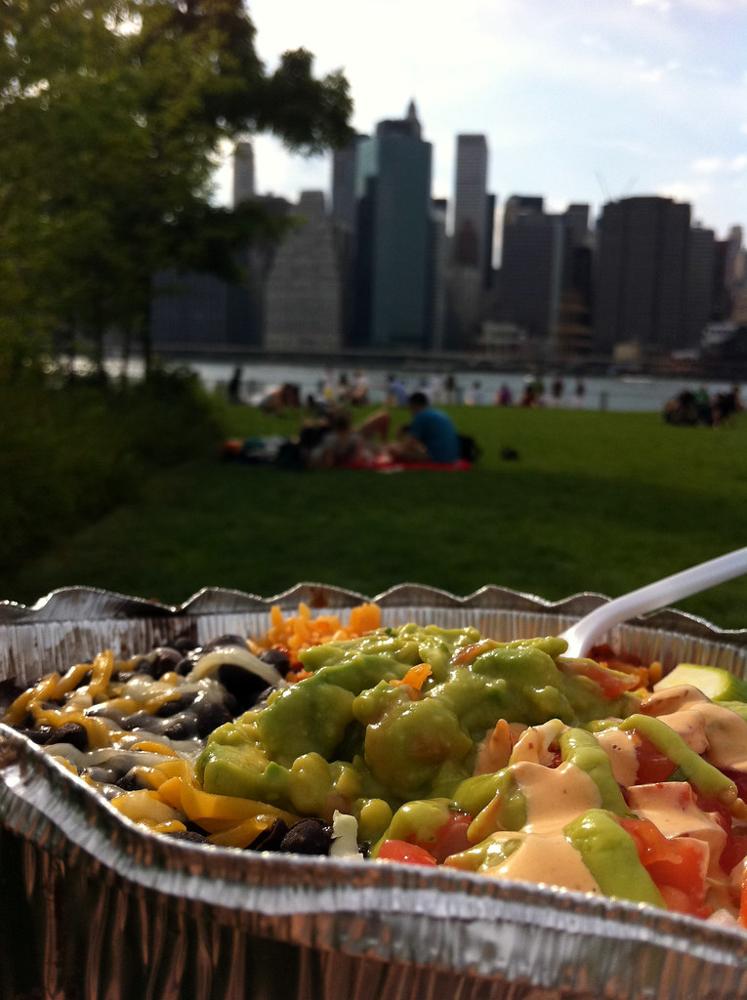
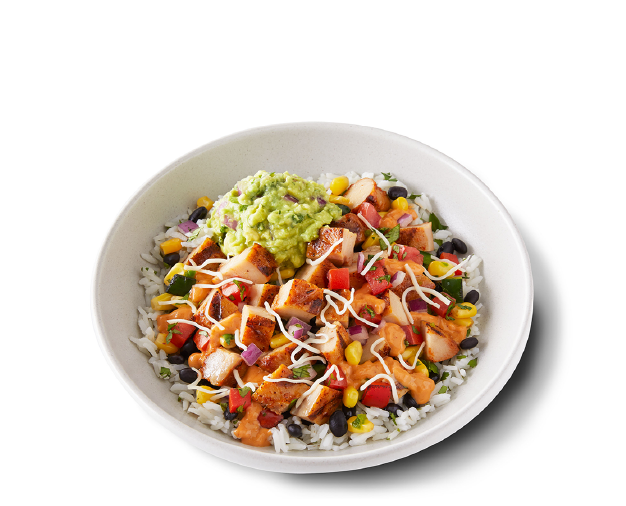
Illustrative licensed food photograph, not an official QDOBA product or evidence of current US portions, availability or prices.Burrito bowl, Brooklyn Bridge Park, Financial District. Photo: Saucy Salad · Source · CC BY 2.0 · Display cropped to fit.
Official portions for this comparison
| Item / serving | Calories | Protein | Carbs | Fat | Sodium |
|---|---|---|---|---|---|
| Cholula® Hot & Sweet Chicken (3.5oz) | 190 | 16 g | 10 g | 10 g | 540 mg |
| Cholula® Hot & Sweet Chicken Bowl | 610 | 31 g | 77 g | 20 g | 1500 mg |
| Grilled Adobo Chicken (3.5 oz.) | 190 | 19 g | 2 g | 12 g | 440 mg |
Ingredient portions are not complete entrées. Standard-portion combinations are calculated totals; changed portions are estimates. US source published February 26, 2026, checked November 8, 2026. Prices remain Varies without a verified local amount.
Official nutrition brochureWhat this guide covers
- The direct answer: the calories match, the macros do not
- Read the chicken serving, not the bowl name
- What equal calories tell you, and what they leave out
- Build the same rice-and-bean bowl with either chicken
- Compare a brown-rice version before removing ingredients
- A no-rice bowl makes the chicken difference easier to see
- Tortillas and chips can outweigh the chicken carbohydrate gap
- Toppings can add protein, but they are not equivalent
- How to interpret double chicken
- Official chicken meals are separate recipe entries
- A practical decision sequence for your next order
- FAQs: calories, carbs, sodium and portion claims
The direct answer: the calories match, the macros do not
QDOBA's Grilled Adobo Chicken and Cholula Hot & Sweet Chicken both list 190 calories per 3.5-ounce serving. Grilled adobo chicken provides 19 grams of protein, 2 grams of carbohydrate, 12 grams of fat and 440 milligrams of sodium. Cholula chicken provides 16 grams of protein, 10 grams of carbohydrate, 10 grams of fat and 540 milligrams of sodium. Switching from adobo to Cholula therefore leaves calories unchanged while reducing protein by 3 grams, increasing carbohydrate by 8 grams, reducing fat by 2 grams and increasing sodium by 100 milligrams. Neither choice can be described accurately using calories alone. If you are choosing between them, begin with the flavor you want, then use those specific differences to evaluate the complete order. Rice, beans, tortillas and toppings still need their own entries.
Read the chicken serving, not the bowl name
These figures come from the QDOBA US Nutrition Brochure published February 26, 2026, checked November 8, 2026. Each chicken ingredient entry describes 3.5 ounces of the prepared product. It does not describe a whole bowl, a raw chicken portion or an unspecified scoop from another menu. Because both entries use the same stated weight, their ingredient-level comparison is straightforward. A finished chicken bowl may contain several additional protein sources, including beans, cheese and queso. Consequently, a bowl advertised with more protein does not establish that its chicken serving itself contains more protein. Keep three labels separate when tracking: the chicken ingredient, your calculated custom meal and an official named recipe. They answer different questions and should not be substituted for one another simply because all contain chicken.
What equal calories tell you, and what they leave out
The shared 190-calorie figure makes this a useful example of why calorie matching is not macro matching. A diner comparing only calories would see no change after switching chicken, yet the carbohydrate difference is 8 grams per listed serving. Someone focused on protein would see adobo's 19 grams versus Cholula's 16. Someone comparing fat would see the reverse advantage numerically: Cholula lists 10 grams versus adobo's 12. These are narrow comparisons, not a universal ranking of which chicken is healthier. Do not reverse-engineer an exact sugar quantity from the word sweet or from the total carbohydrate value. The data used here establish total carbohydrate, not a sugar breakdown. Likewise, there is no need to recalculate the official calorie entries from rounded macro grams and replace the published numbers when the arithmetic does not align perfectly.
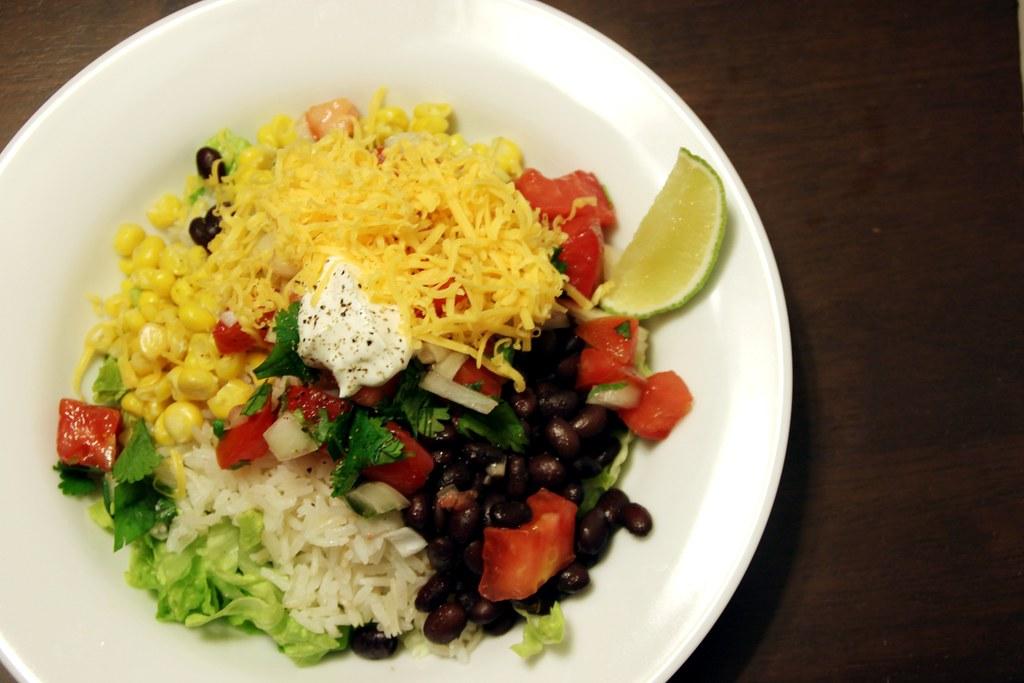
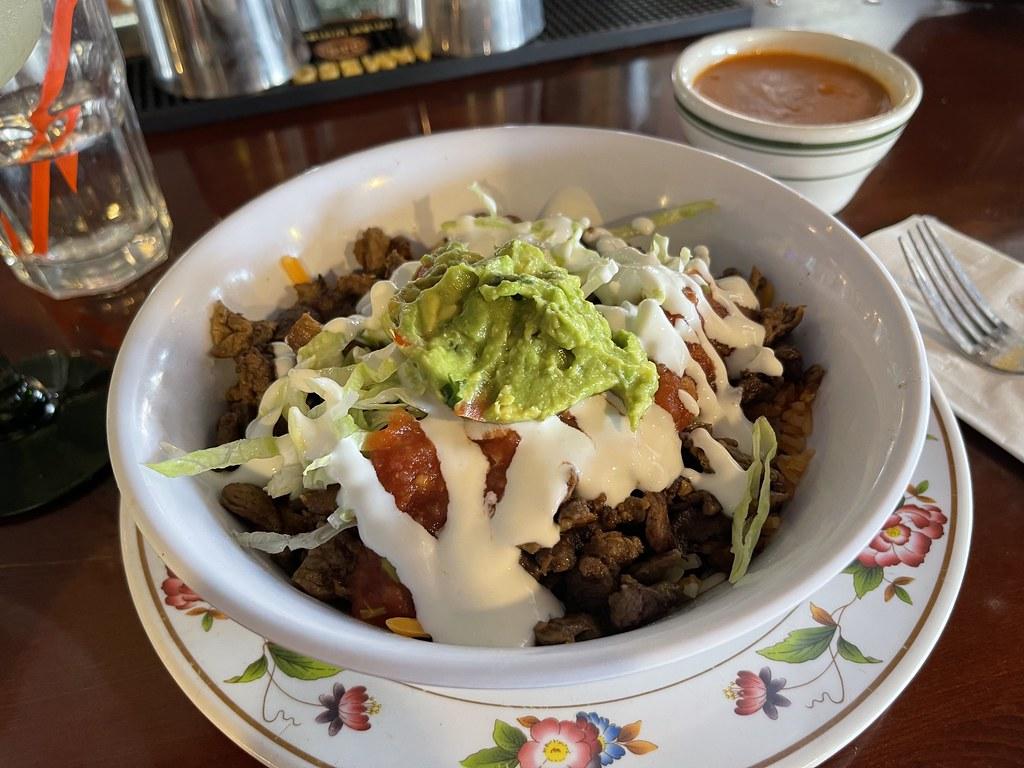
Illustrative licensed food photograph, not an official QDOBA product or evidence of current US portions, availability or prices.late-night burrito bowls. Photo: Stacy Spensley · Source · CC BY 2.0 · Display cropped to fit.
Build the same rice-and-bean bowl with either chicken
Use 4 ounces of cilantro lime rice, 4 ounces of black beans and 1 ounce of pico de gallo as the fixed foundation. Those ingredients contribute 335 calories, 12 grams of protein, 63 grams of carbohydrate, 3.5 grams of fat and 790 milligrams of sodium. Add one adobo chicken serving and the calculated bowl becomes 525 calories, 31 grams of protein, 65 grams of carbohydrate, 15.5 grams of fat and 1,230 milligrams of sodium. Substitute Cholula chicken without changing anything else and it remains 525 calories, with 28 grams of protein, 73 grams of carbohydrate, 13.5 grams of fat and 1,330 milligrams of sodium. These are custom sums, not signature recipes. They demonstrate that the chicken differences carry through unchanged when the surrounding ingredients stay fixed, even though the complete meal contains much more than the meat.
Compare a brown-rice version before removing ingredients
Replace the cilantro lime rice in those bowls with the documented 4-ounce seasoned brown rice portion. The adobo version becomes 505 calories, 32 grams of protein, 63 grams of carbohydrate, 14.5 grams of fat and 1,090 milligrams of sodium. The Cholula version becomes 505 calories, 29 grams of protein, 71 grams of carbohydrate, 12.5 grams of fat and 1,190 milligrams of sodium. Compared with the corresponding cilantro lime rice bowl, either change removes 20 calories, 2 grams of carbohydrate, 1 gram of fat and 140 milligrams of sodium while adding 1 gram of protein. That rice substitution changes sodium more than the chicken substitution does in these examples. It is a practical reminder to compare the whole ingredient list rather than expecting the protein selection to control every number in the finished meal.
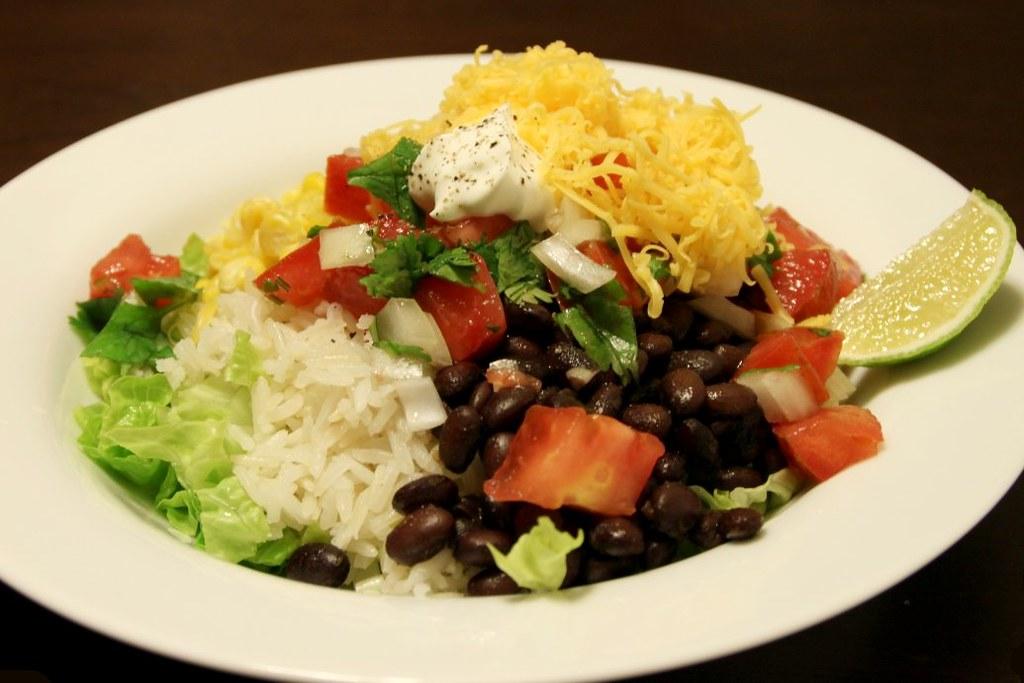
Illustrative licensed food photograph, not an official QDOBA product or evidence of current US portions, availability or prices.late-night burrito bowls. Photo: Stacy Spensley · Source · CC BY 2.0 · Display cropped to fit.
A no-rice bowl makes the chicken difference easier to see
For a smaller ingredient list, combine either chicken with 2 ounces of fajita vegetables, 2 ounces of guacamole and 1 ounce of pico de gallo. With adobo chicken, the calculated total is 315 calories, 21 grams of protein, 11 grams of carbohydrate, 23 grams of fat and 785 milligrams of sodium. With Cholula chicken, it is also 315 calories, with 18 grams of protein, 19 grams of carbohydrate, 21 grams of fat and 885 milligrams of sodium. Neither calculation includes rice, beans, a tortilla or a side. These are examples of changing the meal's structure, not official diet-specific menu items. If you want beans as well, add their full documented serving. Black beans would add 140 calories, 9 grams of protein and 24 grams of carbohydrate, rather than acting as a nutritionally invisible replacement for rice.
Tortillas and chips can outweigh the chicken carbohydrate gap
The carbohydrate difference between the two chicken servings is 8 grams. A 12.5-inch flour tortilla adds 52 grams of carbohydrate, and the documented 4-ounce tortilla chip serving adds 75 grams. Putting the 525-calorie adobo rice-and-bean filling into the large tortilla produces an 825-calorie burrito with 117 grams of carbohydrate. The equivalent Cholula burrito also has 825 calories, but 125 grams of carbohydrate. Add a full chip serving to either and the difference between the chickens remains 8 grams, while the meal gains another 560 calories and 75 grams of carbohydrate. This does not make the chicken distinction irrelevant. It puts that distinction in proportion. If carbohydrate is the comparison you care about, review the wrapper, rice and sides alongside the chicken rather than stopping after choosing the lower-carbohydrate meat.
Toppings can add protein, but they are not equivalent
One ounce of shredded cheese contributes 110 calories, 7 grams of protein, 1 gram of carbohydrate, 9 grams of fat and 180 milligrams of sodium. Two ounces of Three Cheese Queso contribute 80 calories, 3 grams of protein, 3 grams of carbohydrate, 8 grams of fat and 340 milligrams of sodium. Adding shredded cheese to the 525-calorie adobo bowl brings it to 635 calories and 38 grams of protein; adding queso instead brings it to 605 calories and 34 grams of protein. For the Cholula bowl, those protein totals would be 35 and 31 grams, respectively. Neither topping restores protein without changing anything else. If your real preference is queso, choose it for that reason and count its contribution. There is no need to stack several dairy toppings merely to make the meal's protein number look larger.
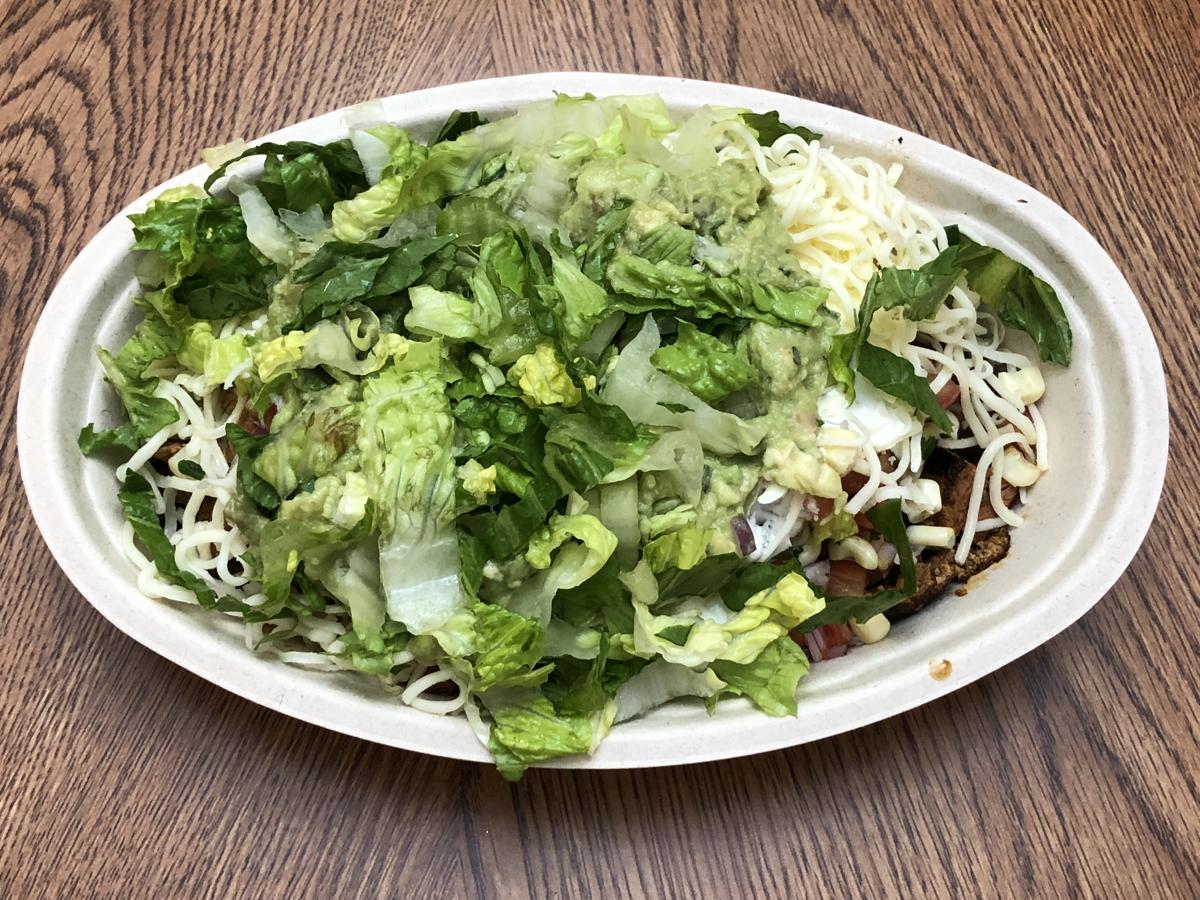
Illustrative licensed food photograph, not an official restaurant product or evidence of serving size, availability or prices.2021-01-06 21 25 25 A burrito bowl from Chipotle in the Franklin Farm section of Oak Hill, Fairfax County, Virginia.jpg. Photo: Famartin · Source · CC BY-SA 4.0 · Display cropped to fit.
How to interpret double chicken
Two documented adobo servings would weigh 7 ounces and total a calculated 380 calories, 38 grams of protein, 4 grams of carbohydrate, 24 grams of fat and 880 milligrams of sodium. Two Cholula servings would also total 380 calories, with 32 grams of protein, 20 grams of carbohydrate, 20 grams of fat and 1,080 milligrams of sodium. These are doubled ingredient models, not independently verified restaurant portions. Adding a second adobo serving to the earlier 525-calorie rice-and-bean bowl produces 715 calories and 50 grams of protein. The Cholula equivalent produces 715 calories and 44 grams of protein. Confirm what extra chicken means at your restaurant rather than assuming every extra-protein option guarantees an additional weighed 3.5 ounces. Our estimated typical QDOBA price is about $10.95 for a chicken burrito or bowl and $12.45 for steak (checked November 15, 2026; see the QDOBA menu prices page), and your restaurant's checkout may differ slightly. The nutrition source does not provide a universal upgrade charge or establish which option offers the best local value.
Official chicken meals are separate recipe entries
The official Cholula Hot & Sweet Chicken Bowl lists 610 calories, 31 grams of protein, 77 grams of carbohydrate, 20 grams of fat and 1,500 milligrams of sodium. Those figures are not the same as the 525-calorie custom Cholula bowl calculated above. The difference does not indicate an error; the recipes are not being presented as identical. Other named chicken meals also have their own totals. The Chicken Queso Bowl lists 750 calories and 43 grams of protein, while the Double Protein Bowl - Chicken lists 700 calories and 51 grams of protein. Do not infer the exact chicken weight in either meal by dividing its total protein by the chicken ingredient's protein value. Beans, cheese and other components can contribute protein, and the finished recipe is the proper reference when ordering that named item.
Illustrative licensed food photograph, not an official restaurant product or evidence of serving size, availability or prices.Chicken quesadilla 1.jpg. Photo: Skylark g · Source · CC BY-SA 3.0 · Display cropped to fit.
A practical decision sequence for your next order
First choose whether you actually prefer adobo or Cholula chicken. Next, calculate your usual base and toppings with that choice. If the two chicken versions have the same calories, look at the columns that do change rather than searching for a calorie advantage that the source does not show. For example, keep adobo when you want its additional 3 grams of protein per standard portion, or choose Cholula when you prefer that product while accounting for its additional 8 grams of carbohydrate. Then compare one larger meal decision, such as a tortilla, rice portion or chip side. Preserve everything else while making each comparison. If you request half rice, label the modeled amount as an estimate rather than an official portion. Save the final ingredient list so a future comparison starts from the same meal instead of a loosely remembered chicken bowl.
FAQs: calories, carbs, sodium and portion claims
Which chicken has fewer calories? Neither listed serving: both have 190 calories at 3.5 ounces. Which has more protein? Grilled adobo chicken has 19 grams, compared with 16 grams for Cholula. Is either carbohydrate-free? No. Adobo lists 2 grams and Cholula lists 10 grams per documented serving. Which has less sodium? Adobo lists 440 milligrams versus Cholula's 540. Does double chicken mean the same nutrition as the official Double Protein Bowl? No. Doubling a meat entry only models the meat; the official bowl is a complete recipe with its own values. Can the nutrition figures establish that either chicken meets an allergy requirement? No. Macro and sodium entries do not identify every ingredient or preparation condition. For that separate question, use QDOBA's current ingredient and allergen information rather than treating a favorable calorie or carbohydrate number as evidence of suitability.
See the full QDOBA menu
Prices, calories and macros for every item, or build a meal in the calculator.
Sources and corrections
Nutrition figures on Well.now come from official US restaurant sources, linked on each brand page with a last-checked date. Prices use verified local amounts first, then clearly labeled sourced estimates; Varies appears when neither is available. See our sources and methodology, or email be@well.now with a correction.
About the Well.now Editorial Team
This article was written and fact-checked by the Well.now Editorial Team. We check nutrition claims against each chain's official US information and never publish prices we cannot confirm. Well.now is independent and not paid by any restaurant. Read our editorial policy.