 Nutrition
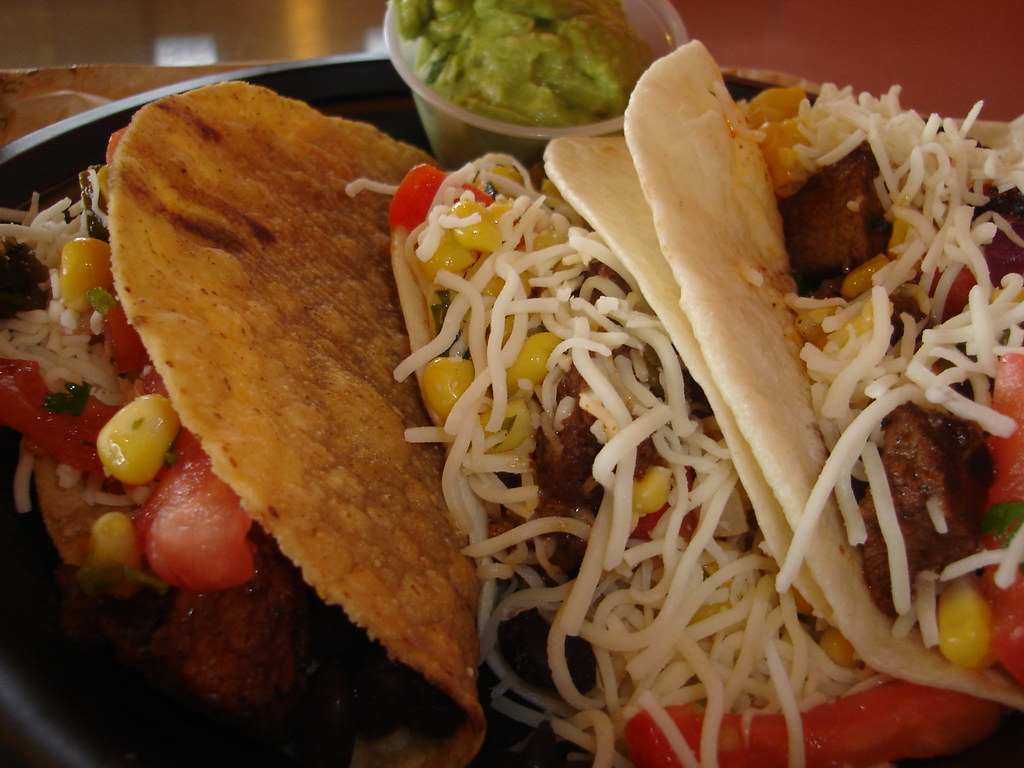
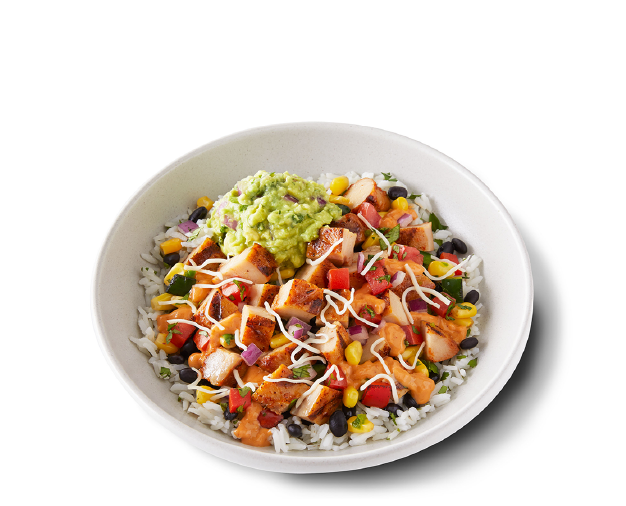
Illustrative licensed food photograph, not an official QDOBA product or evidence of current US portions, availability or prices.Guacamole. Photo: jmerelo · Source · CC BY-SA 2.0 · Display cropped to fit.
Official portions for this comparison
| Item / serving | Calories | Protein | Carbs | Fat | Sodium |
|---|---|---|---|---|---|
| Citrus Vinaigrette (1.5 oz.) (US) | 100 | 0 g | 7 g | 8 g | 330 mg |
| Crunchy Tortilla Shell | 390 | 7 g | 41 g | 22 g | 150 mg |
| Picante Ranch Dressing (1.5 oz.) | 80 | 1 g | 3 g | 8 g | 180 mg |
| Romaine Lettuce for Salad (3.5 oz) | 15 | 1 g | 3 g | 0 g | 10 mg |
Ingredient portions are not complete entrées. Standard-portion combinations are calculated totals; changed portions are estimates. US source published February 26, 2026, checked November 8, 2026. Prices remain Varies without a verified local amount.
Official nutrition brochureWhat this guide covers
- How many calories are in a QDOBA salad?
- Source dates and the boundary of the calculation
- Salad romaine is not the topping-lettuce entry
- The US dressing comparison
- A transparent chicken-and-bean salad model
- Add dressing without losing track of the baseline
- The crunchy shell changes more than the container
- A shell is not the same as tortilla strips
- Beans and rice need their own entries
- Cheese, guacamole and sour cream are separate choices
- Published salads are not interchangeable with custom models
- FAQ: What if I use half the dressing?
- FAQ: How do I count only part of the shell?
- FAQ: What should I check before saving a salad total?
How many calories are in a QDOBA salad?
A QDOBA salad does not have one universal calorie count. The published Citrus Lime Chicken Salad has 540 calories, while the listed Impossible Taco Salad has 520 and is marked for select locations. A custom salad depends on the lettuce portion, protein, beans, rice, toppings, dressing and whether you eat a crunchy shell. The salad-base romaine alone has 15 calories per 3.5-ounce serving. That is a starting ingredient, not the total for a prepared salad. The large Crunchy Tortilla Shell adds a published 390 calories, while the US Citrus Vinaigrette adds 100 per 1.5 ounces. Keeping those separate explains far more than assuming that every meal called a salad must fall within a narrow calorie range.
Source dates and the boundary of the calculation
This guide uses the QDOBA US Nutrition Brochure published February 26, 2026, with the source record checked November 8, 2026. Published named recipes and individual ingredient entries are different kinds of evidence. A named salad total describes that documented recipe; a custom combination is a sum of selected components. A reduced dressing portion or partial shell adds a further serving assumption. Those modeled results can support useful comparisons without being official QDOBA recipes. The source date also does not confirm that every item is available at every US restaurant. In particular, retain the select-location limitation on the Impossible entry. Check local availability separately, and use the nutrition row matching the exact item rather than treating similar salad names as interchangeable.
Salad romaine is not the topping-lettuce entry
QDOBA publishes two romaine portions. Romaine Lettuce at 0.25 ounce lists 0 calories and rounded zeros for protein, carbohydrates, fat and sodium. Romaine Lettuce for Salad at 3.5 ounces lists 15 calories, 1 gram of protein, 3 grams of carbohydrates, 0 grams of fat and 10 milligrams of sodium. Use the latter for the documented salad base. The smaller topping portion is not evidence that a whole bed of lettuce has no calories. It is also inappropriate to multiply its rounded zero by fourteen and conclude that 3.5 ounces must still equal zero. The separate salad entry resolves that issue directly. Serving-specific published values are more informative than scaling a rounded-zero entry beyond the portion it describes.
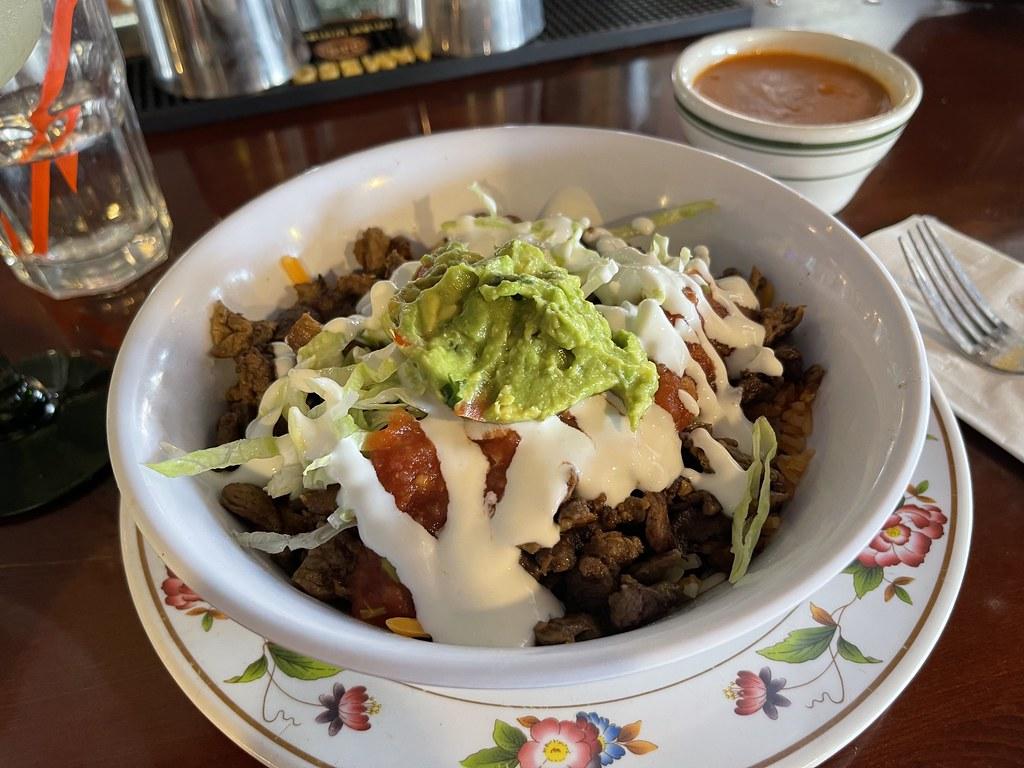
Illustrative licensed food photograph, not an official QDOBA product or evidence of current US portions, availability or prices.a is for guacamole, oops I mean avocado!. Photo: katerha · Source · CC BY 2.0 · Display cropped to fit.
The US dressing comparison
Citrus Vinaigrette, explicitly labeled US in the source entry, has 100 calories per 1.5 ounces, with 0 grams of protein, 7 grams of carbohydrates, 8 grams of fat and 330 milligrams of sodium. Picante Ranch Dressing at the same 1.5-ounce portion has 80 calories, 1 gram of protein, 3 grams of carbohydrates, 8 grams of fat and 180 milligrams of sodium. For equal documented portions, Picante Ranch is 20 calories and 150 milligrams of sodium lower, with 4 fewer grams of carbohydrates and 1 more gram of protein. Both list 8 grams of fat. This comparison concerns these two published dressings only. It does not establish that ranch dressings generally have fewer calories than vinaigrettes or that every dressing cup contains exactly 1.5 ounces.
A transparent chicken-and-bean salad model
Start a component model with the 3.5-ounce salad romaine entry, 3.5 ounces of Grilled Adobo Chicken, 4 ounces of black beans and 1 ounce of pico de gallo. The calorie sum is 15 plus 190 plus 140 plus 5, totaling 350. The same ingredients sum to 29 grams of protein, 30 grams of carbohydrates, 13 grams of fat and 850 milligrams of sodium. This is a planning model built from published portions, not an official named salad recipe or an assertion about the amounts a restaurant puts into every salad. It is useful because each addition remains visible. You can now compare dressings or a shell while keeping the food underneath identical, rather than comparing two unrelated finished orders.
Add dressing without losing track of the baseline
Adding the published US Citrus Vinaigrette portion to that 350-calorie model makes 450 calories, 29 grams of protein, 37 grams of carbohydrates, 21 grams of fat and 1,180 milligrams of sodium. Using the published Picante Ranch portion instead makes 430 calories, 30 grams of protein, 33 grams of carbohydrates, 21 grams of fat and 1,030 milligrams of sodium. The 20-calorie difference comes entirely from dressing because the base ingredients are unchanged. If you choose both dressings, both need to be added; selecting a second flavor does not cancel the first. Conversely, do not add another dressing entry to a complete recipe total unless you have established that it represents additional food beyond the documented recipe.
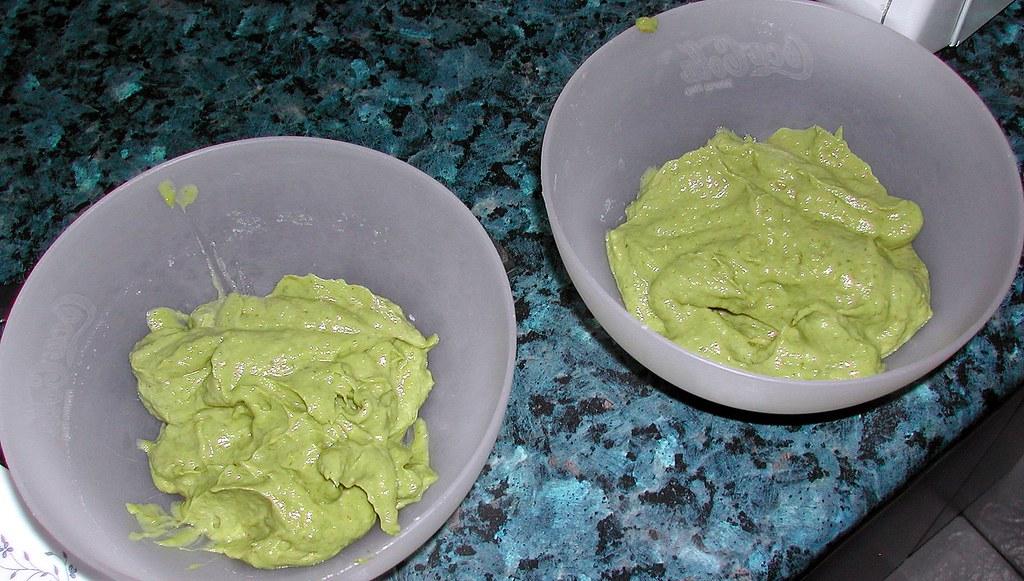
Illustrative licensed food photograph, not an official QDOBA product or evidence of current US portions, availability or prices.Guacamole. Photo: You As A Machine · Source · CC BY-SA 2.0 · Display cropped to fit.
The crunchy shell changes more than the container
QDOBA's Crunchy Tortilla Shell lists 390 calories, 7 grams of protein, 41 grams of carbohydrates, 22 grams of fat and 150 milligrams of sodium. Adding it to the 450-calorie chicken-and-bean model with Citrus Vinaigrette gives 840 calories, 36 grams of protein, 78 grams of carbohydrates, 43 grams of fat and 1,330 milligrams of sodium. The same model without the shell remains 450 calories. That 390-calorie difference is the shell entry, not a change in lettuce or dressing. This is why the serving vessel deserves its own line in a component calculation. If you leave the shell uneaten, do not count it as consumed merely because it held the salad; if you eat it, its nutrition belongs in the meal.
A shell is not the same as tortilla strips
Tortilla Strips have a separate 0.5-ounce entry containing 70 calories, 1 gram of protein, 8 grams of carbohydrates, 4.5 grams of fat and 35 milligrams of sodium. Added to the 450-calorie dressed model, strips produce 520 calories, 30 grams of protein, 45 grams of carbohydrates, 25.5 grams of fat and 1,215 milligrams of sodium. Compared with adding the full crunchy shell, the strips addition is 320 calories lower at the documented portions. This is not a claim that strips and a shell are equal amounts of food. It is a comparison of the actual published serving options. If your salad contains strips and you also eat its shell, count both rather than choosing whichever entry gives the total you expected.
Beans and rice need their own entries
A salad name does not tell you whether beans or rice are present. Black beans at 4 ounces list 140 calories and 9 grams of protein; pinto beans at 4 ounces list 130 calories and 8 grams of protein. Substituting pinto beans in the undressed model changes its calories from 350 to 340 and protein from 29 to 28 grams. Adding 4 ounces of Cilantro Lime Rice to the original model adds 190 calories, 3 grams of protein, 38 grams of carbohydrates, 2.5 grams of fat and 390 milligrams of sodium. The original dressed 450-calorie model would therefore become 640 calories with that rice addition. The rice is additional food, not something automatically offset by choosing lettuce as the base.
Illustrative licensed food photograph, not an official restaurant product or evidence of serving size, availability or prices.Burrito chihuahuense de chile verde.jpg. Photo: Levi bernardo · Source · CC BY-SA 4.0 · Display cropped to fit.
Cheese, guacamole and sour cream are separate choices
The published 1-ounce shredded cheese portion contributes 110 calories, 7 grams of protein, 1 gram of carbohydrates, 9 grams of fat and 180 milligrams of sodium. The 2-ounce guacamole entry contributes 80 calories, 1 gram of protein, 5 grams of carbohydrates, 8 grams of fat and 160 milligrams of sodium. Sour cream at 1 ounce contributes 50 calories, 1 gram of protein, 3 grams of carbohydrates, 5 grams of fat and 10 milligrams of sodium. Adding all three to the 450-calorie dressed model contributes another 240 calories, bringing it to 690 before any shell or strips. These additions are not forbidden ingredients; they are visible choices. Compare the toppings you actually want rather than treating every salad topping as already included in a generic calorie allowance.
Published salads are not interchangeable with custom models
The Citrus Lime Chicken Salad lists 540 calories, 31 grams of protein, 49 grams of carbohydrates, 26 grams of fat and 1,290 milligrams of sodium. The select-location Impossible Taco Salad lists 520 calories, 31 grams of protein, 46 grams of carbohydrates, 23 grams of fat and 1,180 milligrams of sodium. Those are complete published entries. Our component model reaching 520 calories after strips does not make it the Impossible salad, and our chicken model should not replace the official Citrus Lime Chicken Salad entry. Matching one total cannot establish matching ingredients. Use the complete row when ordering the documented named recipe, and use a clearly labeled component build when selecting your own combination. Do not reverse-engineer unknown ingredient quantities from the published total.
FAQ: What if I use half the dressing?
Half of the documented 1.5-ounce Citrus Vinaigrette portion is a proportional estimate of 50 calories, 3.5 grams of carbohydrates, 4 grams of fat and 165 milligrams of sodium, with zero listed protein. Applied to the 350-calorie undressed model, that makes an estimated 400 calories rather than 450. Half of the Picante Ranch reference would contribute an estimated 40 calories. These are not official half-dressing recipes. A partly used cup may not equal half the documented weight, and dressing left on the container complicates visual estimates. Ordering dressing separately can help you choose an amount, but the location of the cup does not itself reduce nutrition. Log the portion consumed and identify it as an estimate when it was not measured.
Illustrative licensed food photograph, not an official restaurant product or evidence of serving size, availability or prices.Homemade salsa with nachos 1.jpg. Photo: 에그란 · Source · CC BY 4.0 · Display cropped to fit.
FAQ: How do I count only part of the shell?
Apply your estimated fraction to the shell entry, independently of the salad filling. Half the Crunchy Tortilla Shell is an estimated 195 calories, 3.5 grams of protein, 20.5 grams of carbohydrates, 11 grams of fat and 75 milligrams of sodium. One quarter is an estimated 97.5 calories. Eating all the filling and half the shell is not equivalent to eating half the whole salad. Keep those portions separate so the calculation reflects your actual plan. Likewise, shell fragments mixed into the salad are still part of the shell amount consumed. There is no need to claim exactness from a visual fraction: a rounded estimate with a clear assumption is more useful than an unexplained number carried to several decimal places.
FAQ: What should I check before saving a salad total?
Confirm that the lettuce entry is the 3.5-ounce salad base, not the 0.25-ounce topping. Check the exact US dressing, its portion and whether it is already included in a complete recipe. Then review beans, rice, protein, cheese, guacamole, sour cream, strips and shell separately. Include any chips or drink outside the salad container when reviewing the full meal. Keep nonstandard portions labeled as estimates, and do not infer allergen safety or a medical benefit from a lower calorie result. The strongest salad calculation is not necessarily the smallest number. It is the one that identifies the food, uses the appropriate published servings and makes every change from those servings clear enough that another reader could reproduce the arithmetic.
See the full QDOBA menu
Prices, calories and macros for every item, or build a meal in the calculator.
Sources and corrections
Nutrition figures on Well.now come from official US restaurant sources, linked on each brand page with a last-checked date. Prices use verified local amounts first, then clearly labeled sourced estimates; Varies appears when neither is available. See our sources and methodology, or email be@well.now with a correction.
About the Well.now Editorial Team
This article was written and fact-checked by the Well.now Editorial Team. We check nutrition claims against each chain's official US information and never publish prices we cannot confirm. Well.now is independent and not paid by any restaurant. Read our editorial policy.