 Guides
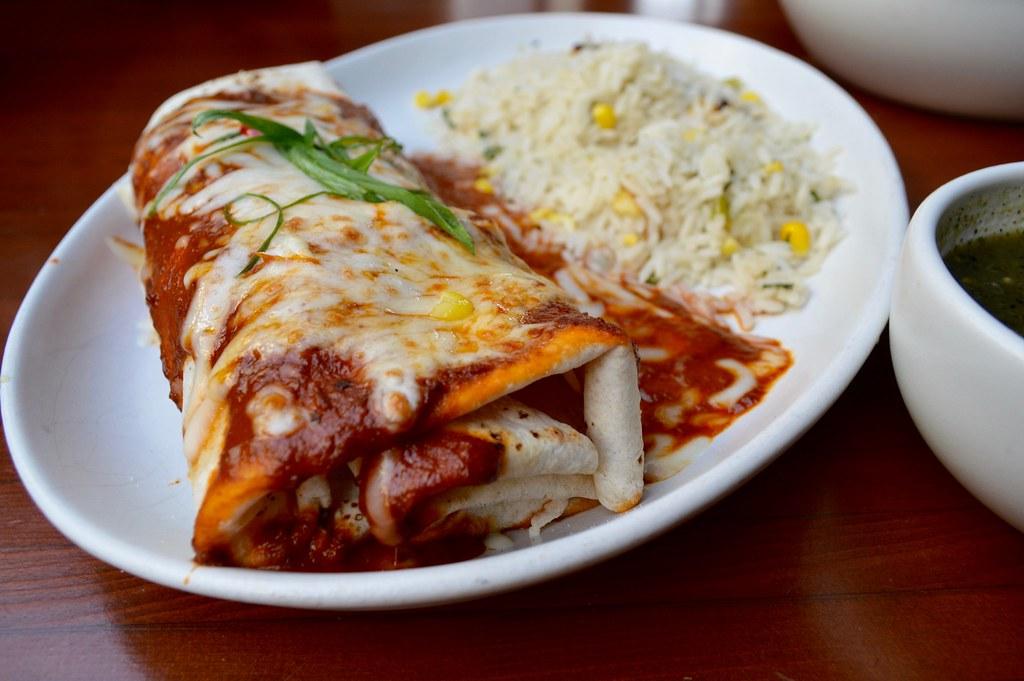
Illustrative licensed food photograph, not an official QDOBA product or evidence of current US portions, availability or prices.Burrito. Photo: lauren.topor · Source · CC BY 2.0 · Display cropped to fit.
Official portions for this comparison
| Item / serving | Calories | Protein | Carbs | Fat | Sodium |
|---|---|---|---|---|---|
| Bacon (Select Locations) (1 oz.) | 120 | 9 g | 1 g | 8 g | 430 mg |
| Bacon (Select Locations) (2 oz.) | 230 | 19 g | 2 g | 17 g | 860 mg |
| Chorizo (1.5 oz.) | 130 | 7 g | 2 g | 10 g | 410 mg |
| Chorizo (3.0 oz.) | 260 | 14 g | 5 g | 20 g | 820 mg |
| Eggs (6 oz.) | 230 | 19 g | 2 g | 16 g | 440 mg |
Ingredient portions are not complete entrées. Standard-portion combinations are calculated totals; changed portions are estimates. US source published February 26, 2026, checked November 8, 2026. Prices remain Varies without a verified local amount.
Official nutrition brochureWhat this guide covers
- Confirm breakfast before planning the trip
- Distinguish listed ingredients from a complete menu
- Read the egg serving before using its numbers
- Compare bacon portions without assuming exact doubling
- Understand what changes with chorizo
- Treat potatoes as a distinct component
- Choose the tortilla with its size in mind
- Work through an egg and potato example
- See the effect of meat and cheese additions
- Use sauces deliberately rather than automatically
- Keep beverages in the breakfast calculation
- Plan for dietary needs and group orders
- Use a short local ordering checklist
Confirm breakfast before planning the trip
QDOBA breakfast is available at select locations, so a breakfast ingredient in a national nutrition resource does not mean every US restaurant serves it. Start with the location you intend to visit, not a general menu search. Check its ordering options and contact the restaurant if breakfast availability is unclear. Ask whether breakfast is being served on the day you plan to go and which items are available. Do not assume that one restaurant’s schedule applies to another or that a past order confirms current service. This guide does not assign breakfast hours because local availability must be verified. That first check is especially useful for commuters, travelers, and families coordinating several stops, since a complete nutrition plan is not helpful if the restaurant does not offer the meal.
Read the egg serving before using its numbers
The listed egg serving is 6 ounces, with 230 calories, 19 grams of protein, 2 grams of carbohydrates, 16 grams of fat, and 440 milligrams of sodium. Those values belong to that stated serving. They do not establish how many eggs are used in every breakfast item or how much egg a particular burrito receives. Ask about the standard build if you need to estimate a finished meal. It is also important not to infer the complete egg preparation or allergen profile from the word eggs alone. Current ingredient and allergen information answers a different question from the nutrient total. For planning purposes, use the 6-ounce entry only when you are intentionally modeling that amount, and label the result as an ingredient-based estimate.
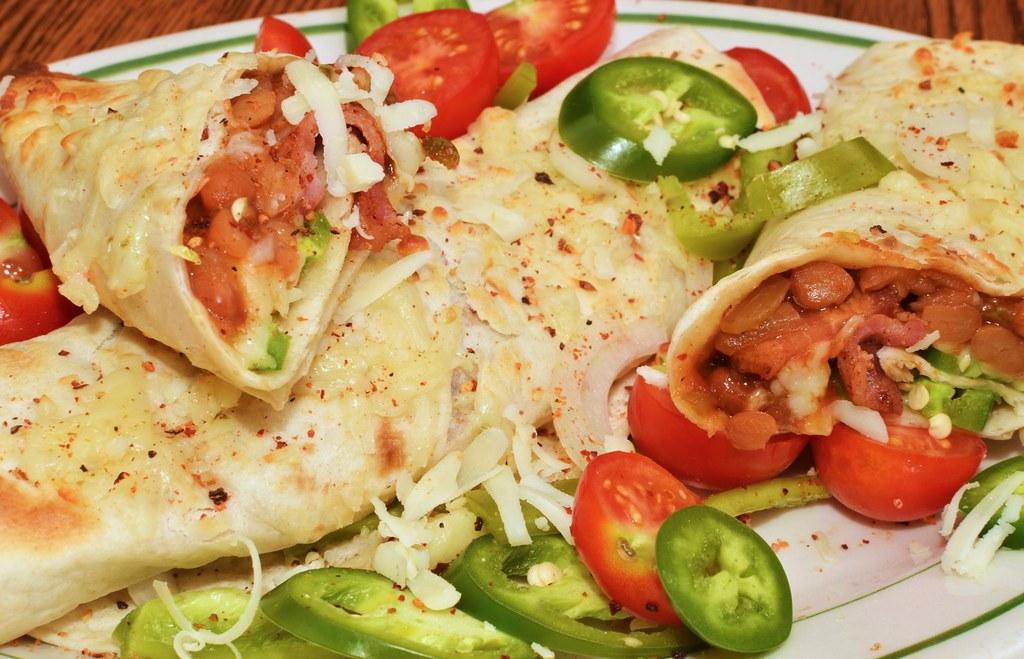
Illustrative licensed food photograph, not an official QDOBA product or evidence of current US portions, availability or prices.Mmm... bean burritos with pepper jack and bacon. Photo: jeffreyw · Source · CC BY 2.0 · Display cropped to fit.
Compare bacon portions without assuming exact doubling
The dataset lists bacon in two portions. A 1-ounce serving has 120 calories, 9 grams of protein, 1 gram of carbohydrates, 8 grams of fat, and 430 milligrams of sodium. The 2-ounce entry has 230 calories, 19 grams of protein, 2 grams of carbohydrates, 17 grams of fat, and 860 milligrams of sodium. Notice that the larger entry is not exactly twice every smaller-entry value. Published nutrition figures can reflect rounding and source calculations, so use the listed serving that matches the amount being modeled instead of forcing a proportional correction. If a restaurant describes an order as extra bacon, ask what that means for the build. The phrase alone does not tell you whether the 1-ounce or 2-ounce entry is the appropriate reference.
Understand what changes with chorizo
Chorizo is listed at 130 calories for 1.5 ounces, with 7 grams of protein, 2 grams of carbohydrates, 10 grams of fat, and 410 milligrams of sodium. The 3-ounce entry lists 260 calories, 14 grams of protein, 5 grams of carbohydrates, 20 grams of fat, and 820 milligrams of sodium. This gives you two specific reference portions, not a universal comparison for every scoop or breakfast item. Someone choosing between bacon and chorizo should compare the actual amounts they expect to receive and the nutrients that matter to them. Calories alone do not describe the flavor, protein, or sodium tradeoff. If the menu does not specify the amount, keep the estimate conditional rather than presenting a precise total for an unverified local meal.
Treat potatoes as a distinct component
Seasoned potatoes are listed at 100 calories, 1 gram of protein, 12 grams of carbohydrates, zero grams of fat, and 240 milligrams of sodium per 2-ounce serving. Use those published values as recorded rather than silently replacing them with a different potato preparation. Restaurant potatoes can vary by recipe, and a generic food database may not describe the same product. Ask whether potatoes are included in the breakfast item or added separately, since that changes the calculation and potentially the price. If you want fewer potatoes, the actual amount served may be uncertain. A lighter request is not automatically half a listed portion. For an exact planning example, model the full stated serving; for a real customized order, acknowledge that hand-portioned amounts can differ.
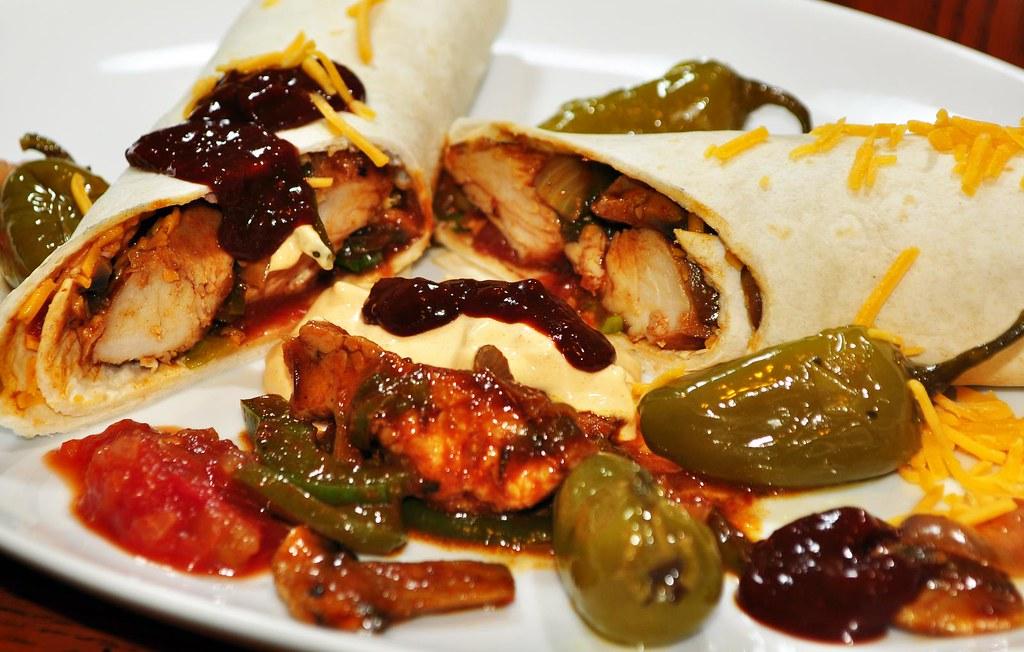
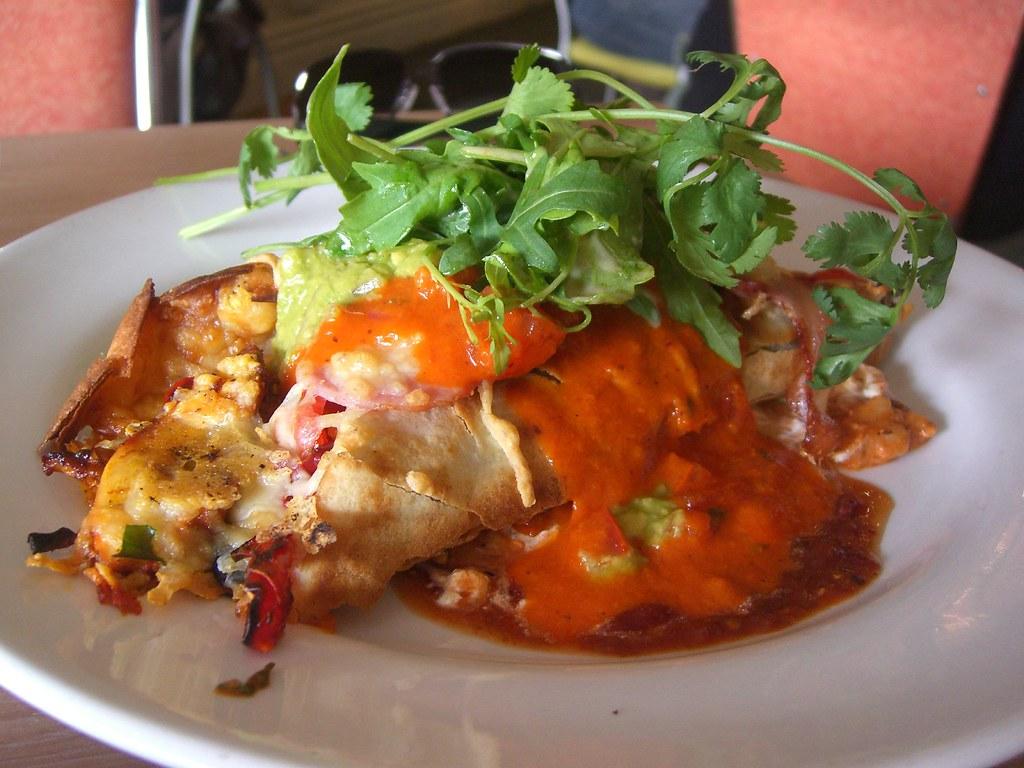
Illustrative licensed food photograph, not an official QDOBA product or evidence of current US portions, availability or prices.Burrito? Fajita? chicken and stuff in a flour tortilla. Photo: jeffreyw · Source · CC BY 2.0 · Display cropped to fit.
Choose the tortilla with its size in mind
The dataset distinguishes flour tortillas by diameter. A 5.5-inch tortilla has 70 calories and 170 milligrams of sodium, a 10-inch tortilla has 210 calories and 490 milligrams, and a 12.5-inch tortilla has 300 calories and 760 milligrams. These are not interchangeable references. Ask which size is used in the breakfast format you are considering, especially if comparing a smaller item with a burrito. The tortilla can materially change the meal’s total even before fillings are added. If the restaurant can serve the same ingredients in a bowl, removing the tortilla changes those numbers, but it does not establish an identical portion of every filling. Confirm the build rather than assuming that a bowl is simply the burrito’s nutrition with one ingredient mathematically removed.
Work through an egg and potato example
A planning example using the listed 6 ounces of eggs, 2 ounces of seasoned potatoes, and one 10-inch flour tortilla totals 540 calories. The arithmetic is 230 plus 100 plus 210. The same ingredient model provides 26 grams of protein, 50 grams of carbohydrates, 21 grams of fat, and 1,170 milligrams of sodium. Those totals come from adding the corresponding published fields, not from reconstructing calories with a macronutrient formula. They describe an illustrative combination, not a verified standard breakfast item or guaranteed restaurant portion. No meat, cheese, salsa, sour cream, or drink is included. This makes the example useful as a baseline: once the local build is confirmed, you can see exactly which additional ingredients need to be counted rather than starting from a vague burrito estimate.
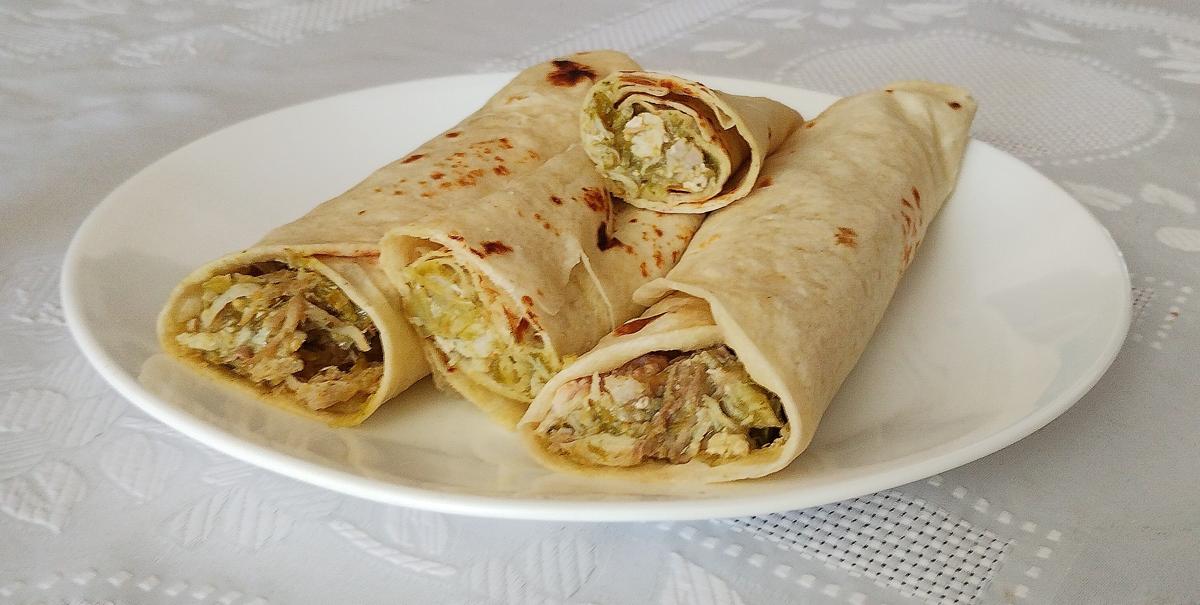
Illustrative licensed food photograph, not an official restaurant product or evidence of serving size, availability or prices.Burrito chihuahuense de chile verde.jpg. Photo: Levi bernardo · Source · CC BY-SA 4.0 · Display cropped to fit.
See the effect of meat and cheese additions
Adding the listed 1-ounce bacon portion to that egg, potato, and 10-inch tortilla example brings the total from 540 to 660 calories and sodium from 1,170 to 1,600 milligrams. Protein rises from 26 to 35 grams. Adding the listed 1.5-ounce chorizo portion instead produces 670 calories, 33 grams of protein, and 1,580 milligrams of sodium. Shredded cheese is another separate addition: its 1-ounce entry contributes 110 calories, 7 grams of protein, and 180 milligrams of sodium. These comparisons are useful when deciding which ingredient you value most for flavor or fullness. They are not price comparisons, because the dataset does not contain verified prices. Ask locally whether the selected addition is included, substituted, or charged separately before finalizing the order.
Use sauces deliberately rather than automatically
Breakfast flavor does not have to come from adding every available topping. The dataset lists pico de gallo at 5 calories and 70 milligrams of sodium per ounce, salsa roja at 5 calories and 85 milligrams, and salsa verde at 10 calories and 240 milligrams. A 2-ounce portion of Three Cheese Queso adds 80 calories and 340 milligrams of sodium. These examples show why low calories and low sodium are different questions. Choose the sauce you actually want, then include its stated portion in the estimate. Asking for sauce separately can help you control how much you use, but it does not tell you the exact amount consumed unless you measure it. It also does not change the ingredient or allergen status of the sauce itself.
Keep beverages in the breakfast calculation
A beverage can change a breakfast total substantially, and the dataset does not describe every drink a location might sell. Its listed 20-fluid-ounce Coca Cola has 240 calories and 67 grams of carbohydrates. A listed 12-fluid-ounce Mexican Coke has 150 calories and 39 grams of carbohydrates. Those are different products and serving sizes, so do not substitute one entry for the other. The dataset also lists two 6-fluid-ounce apple juice boxes with different values: Honest at 40 calories and Minute Maid Kid’s at 80 calories. Check the actual brand and package. If you order a drink not represented in the source, obtain its current information rather than treating the missing value as zero. A breakfast total is incomplete until the beverage is accounted for.
Illustrative licensed food photograph, not an official restaurant product or evidence of serving size, availability or prices.Homemade salsa with nachos 1.jpg. Photo: 에그란 · Source · CC BY 4.0 · Display cropped to fit.
Plan for dietary needs and group orders
Breakfast orders can involve eggs, dairy-containing additions, flour tortillas, prepared meats, and shared equipment, so ingredient preferences and allergy needs should be discussed explicitly. Do not infer allergen suitability from a short ingredient name or a bowl format. QDOBA’s gluten-friendly guidance is not a cross-contact guarantee, and a current allergen review remains necessary for the exact build. For a group order, identify each meal and keep requested substitutions attached to the correct person. If ordering for children, do not derive their portions or calorie needs from the adult ingredient examples here. Ask what the location offers and what is included. A morning meeting may also require a separate catering conversation, because individual breakfast availability does not establish that breakfast catering is offered or available for your event.
Use a short local ordering checklist
Before placing a breakfast order, confirm that the selected restaurant serves breakfast that day, identify the available format, and ask which ingredients and tortilla size are included. Then verify the current total price, any substitution charges, and the pickup arrangement shown for that location. If nutrition tracking matters, record the confirmed components and use the matching serving entries as a transparent estimate. Keep unverified portions separate from exact arithmetic. If allergy or gluten-related needs are involved, discuss those before preparation rather than relying on an online removal request alone. Finally, check the food at handoff for unexpected additions. This approach keeps the useful parts of national nutrition information while recognizing what it cannot provide: local breakfast availability, a guaranteed build, a verified price, or a universal schedule.
See the full QDOBA menu
Prices, calories and macros for every item, or build a meal in the calculator.
Sources and corrections
Nutrition figures on Well.now come from official US restaurant sources, linked on each brand page with a last-checked date. Prices use verified local amounts first, then clearly labeled sourced estimates; Varies appears when neither is available. See our sources and methodology, or email be@well.now with a correction.
About the Well.now Editorial Team
This article was written and fact-checked by the Well.now Editorial Team. We check nutrition claims against each chain's official US information and never publish prices we cannot confirm. Well.now is independent and not paid by any restaurant. Read our editorial policy.