 Nutrition
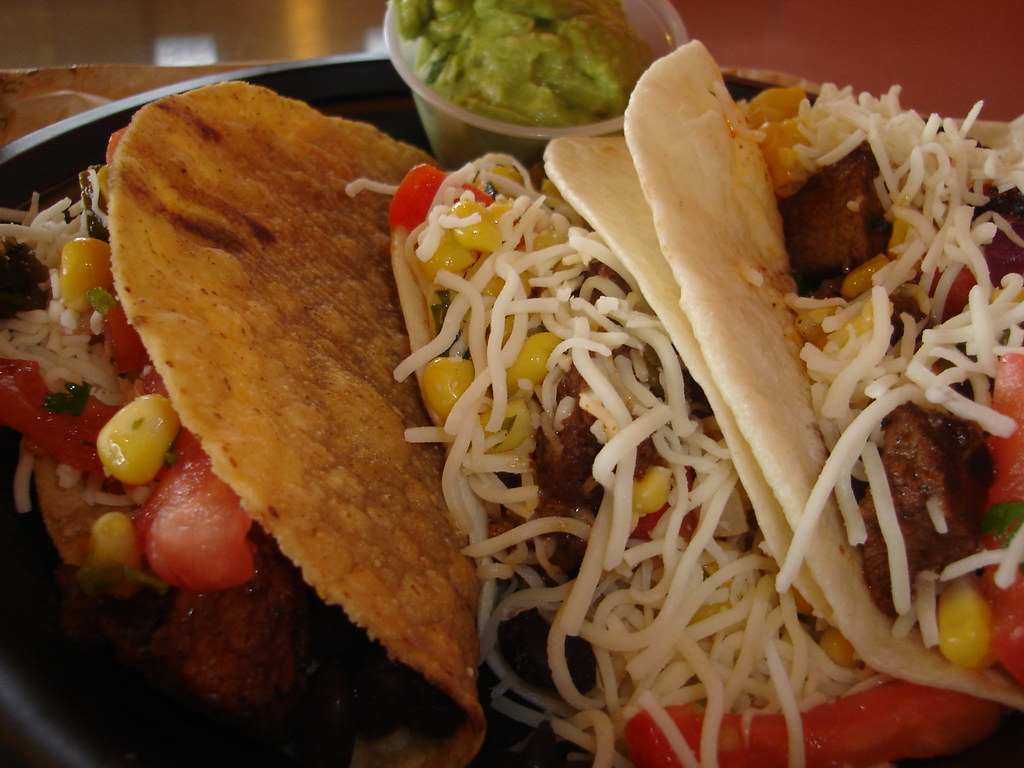
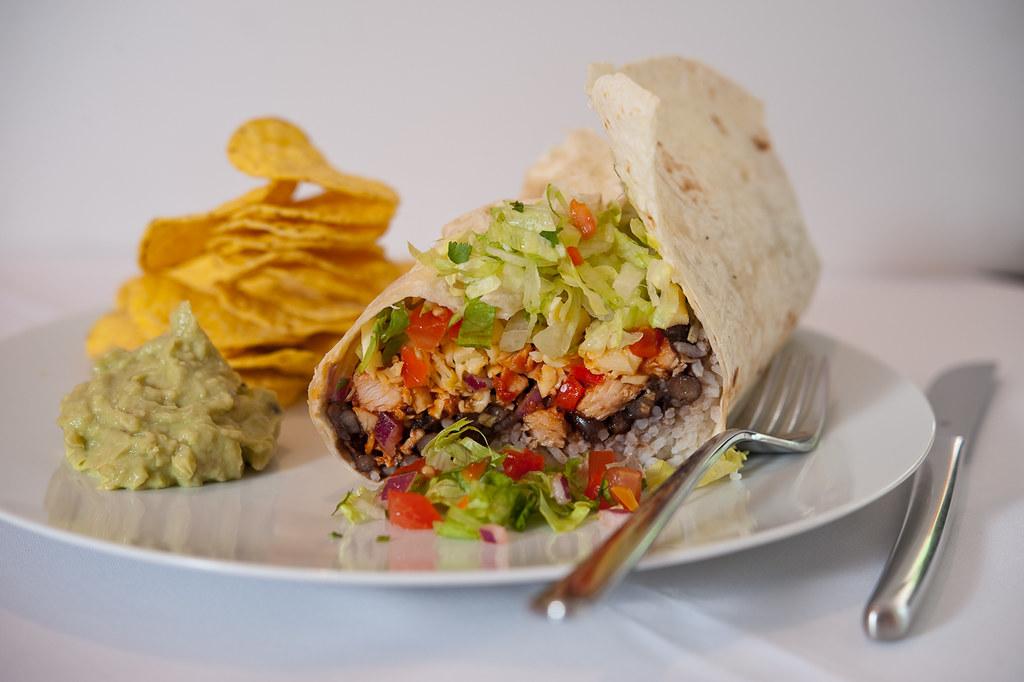
Illustrative licensed food photograph, not an official QDOBA product or evidence of current US portions, availability or prices.Qrito Burrito Guacamole. Photo: bloomsburys · Source · CC BY 2.0 · Display cropped to fit.
Official portions for this comparison
| Item / serving | Calories | Protein | Carbs | Fat | Sodium |
|---|---|---|---|---|---|
| Flour Tortilla (10") | 210 | 6 g | 36 g | 5 g | 490 mg |
| Shredded Cheese (1.0 oz.) | 110 | 7 g | 1 g | 9 g | 180 mg |
Ingredient portions are not complete entrées. Standard-portion combinations are calculated totals; changed portions are estimates. US source published February 26, 2026, checked November 8, 2026. Prices remain Varies without a verified local amount.
Official nutrition brochureWhat this guide covers
- A quesadilla needs a named recipe or stated quantities
- The source and a necessary caution about its recipe row
- Why component models answer a different question
- Choose the flour tortilla entry explicitly
- Cheese quantity is a separate assumption
- A basic tortilla-and-cheese comparison
- Compare one cheese portion with two
- Add chicken to an identified baseline
- Change the protein without changing everything else
- Folding a tortilla is not adding a second tortilla
- Dips belong outside the core model unless included
- FAQ: How many calories are in one wedge?
- FAQ: Can I estimate light cheese or half a quesadilla?
- FAQ: Which total should I use when ordering?
A quesadilla needs a named recipe or stated quantities
There is no single supported nutrition total for every possible QDOBA quesadilla. The brochure’s Quesabirria Quesadilla row is excluded pending clarification of inconsistent calorie and fat figures. A plain cheese or custom chicken quesadilla requires an explicitly stated ingredient model. For a custom estimate, the tortilla size, tortilla count, cheese amount, protein and any additional ingredients must be stated. One 12.5-inch flour tortilla contributes 300 calories, and the published 1-ounce shredded cheese entry contributes 110. Adding those gives a 410-calorie component model before other ingredients. It does not prove that QDOBA's standard cheese quesadilla contains those exact quantities. A useful answer begins by separating published complete recipes from arithmetic examples based on selected components.
The source and a necessary caution about its recipe row
The reference is the QDOBA US Nutrition Brochure published February 26, 2026, with the project source record checked November 8, 2026. Both Quesabirria Quesadilla and Quesabirria Burrito contain internally inconsistent calorie and fat figures. Neither complete-recipe row is used for nutrition recommendations or calculations pending clarification from QDOBA. Do not guess a replacement fat value or reconstruct an official recipe from the disputed totals. Instead, choose independently documented tortilla, cheese and protein servings for an explicitly labeled component estimate. The resulting calculation answers what those selected amounts would add up to; it does not establish the recipe served under a signature name. This specific source issue does not justify substituting an invented recipe or an unrelated restaurant’s numbers, and it does not invalidate every separate ingredient entry in the brochure.
Why component models answer a different question
A complete-recipe entry describes a named restaurant item as published. A component model answers what selected amounts would sum to using the available ingredient rows. The second approach is useful when the complete recipe is unavailable or when you want to isolate a change, but it depends on your quantity assumptions. Selecting one tortilla and one cheese portion in a calculator does not establish the restaurant's actual assembly standard. Likewise, a model that happens to total 1,080 calories does not become the official Quesabirria recipe. Many different combinations can reach the same calorie number. Label the model, list its components and avoid filling in missing recipe details by working backward from a finished item's calories or protein.
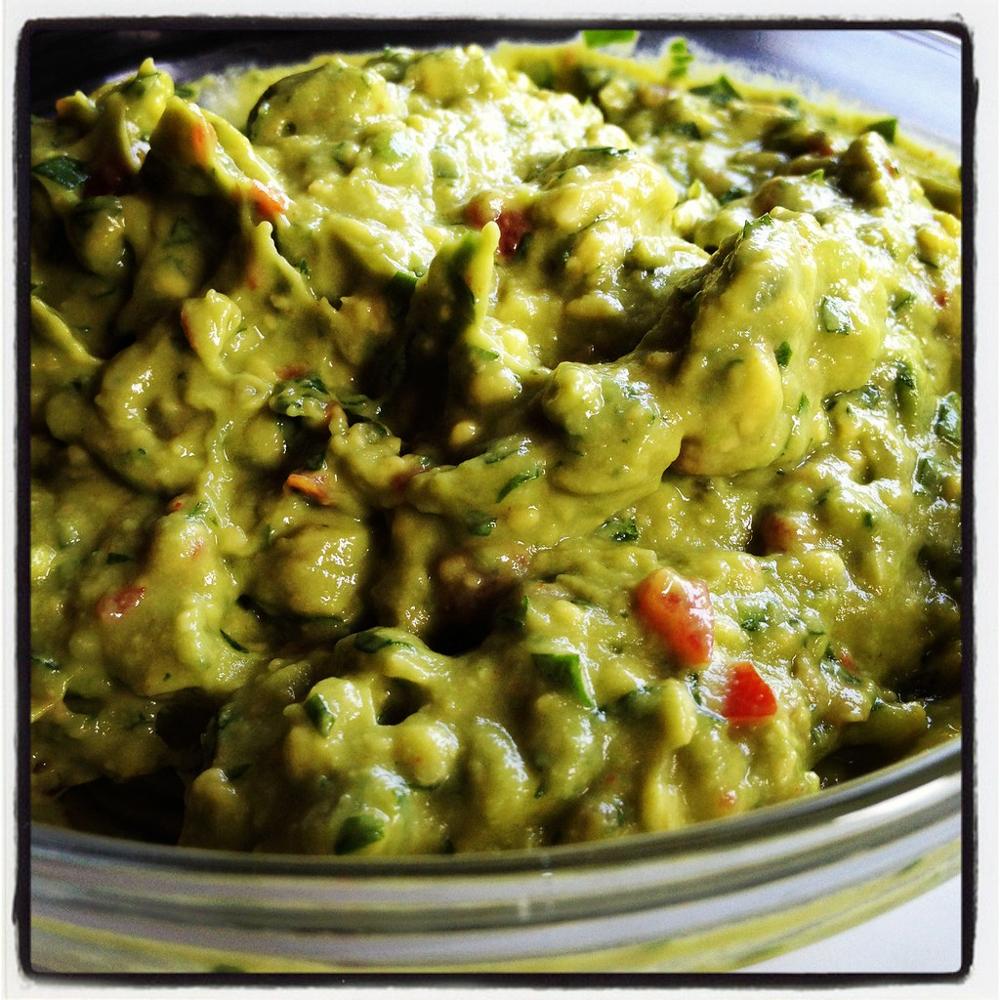
Illustrative licensed food photograph, not an official QDOBA product or evidence of current US portions, availability or prices.Guacamole. Photo: You As A Machine · Source · CC BY-SA 2.0 · Display cropped to fit.
Choose the flour tortilla entry explicitly
QDOBA lists three US flour tortilla sizes. The 5.5-inch tortilla has 70 calories, 2 grams of protein, 12 grams of carbohydrates, 1.5 grams of fat and 170 milligrams of sodium. The 10-inch tortilla has 210 calories, 6 grams of protein, 36 grams of carbohydrates, 5 grams of fat and 490 milligrams of sodium. The 12.5-inch tortilla has 300 calories, 8 grams of protein, 52 grams of carbohydrates, 7 grams of fat and 760 milligrams of sodium. Do not choose a size merely because it produces a familiar-looking quesadilla total. Confirm the actual product if possible, or state the selected size as a model assumption. The source's Canada-only whole-wheat tortilla is not a US substitute.
Cheese quantity is a separate assumption
The shredded cheese entry is 1 ounce with 110 calories, 7 grams of protein, 1 gram of carbohydrates, 9 grams of fat and 180 milligrams of sodium. A modeled 2-ounce amount doubles those values to an estimated 220 calories, 14 grams of protein, 2 grams of carbohydrates, 18 grams of fat and 360 milligrams of sodium. Three modeled ounces would contribute an estimated 330 calories. These multiples are transparent portion estimates, not independently published quesadilla cheese allocations. Terms such as regular cheese, extra cheese or cheese quesadilla do not by themselves establish an ounce amount. Keep the assumed quantity beside the total so that another reader can distinguish the sourced 1-ounce ingredient facts from your decision to use one, two or three portions.
A basic tortilla-and-cheese comparison
Using one published 1-ounce cheese portion with one 10-inch tortilla produces a component sum of 320 calories, 13 grams of protein, 37 grams of carbohydrates, 14 grams of fat and 670 milligrams of sodium. With one 12.5-inch tortilla instead, the same cheese portion produces 410 calories, 15 grams of protein, 53 grams of carbohydrates, 16 grams of fat and 940 milligrams of sodium. The difference is 90 calories, 2 grams of protein, 16 grams of carbohydrates, 2 grams of fat and 270 milligrams of sodium. This is a controlled tortilla-size comparison, not a claim about two official quesadilla sizes or their availability. It demonstrates the effect of changing the wrapper while keeping the assumed cheese amount constant.
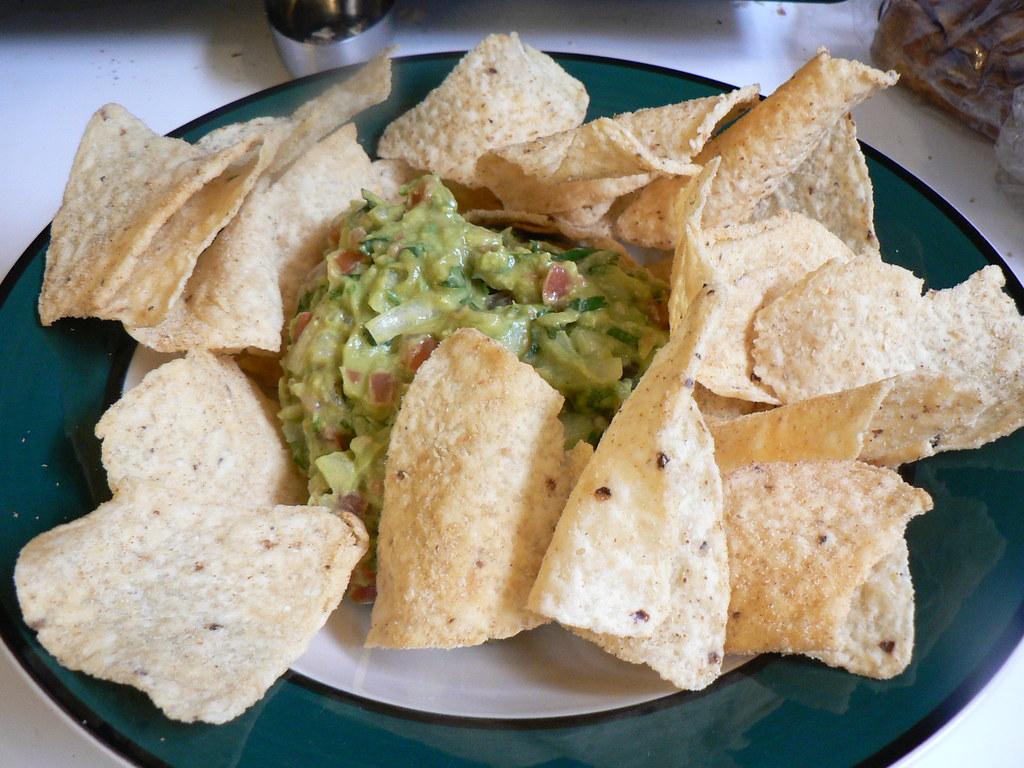
Illustrative licensed food photograph, not an official QDOBA product or evidence of current US portions, availability or prices.guacamole. Photo: stu_spivack · Source · CC BY-SA 2.0 · Display cropped to fit.
Compare one cheese portion with two
Keep the 12.5-inch tortilla fixed. With one ounce of cheese, the component model is 410 calories. With an estimated 2 ounces of cheese, it becomes 520 calories, 22 grams of protein, 54 grams of carbohydrates, 25 grams of fat and 1,120 milligrams of sodium. The additional modeled ounce therefore adds 110 calories and 7 grams of protein, along with 1 gram of carbohydrates, 9 grams of fat and 180 milligrams of sodium. This isolates the cheese change without altering the tortilla or adding meat at the same time. It also shows why a quesadilla's cheese quantity cannot be treated as an incidental detail. An unsupported cheese assumption can shift the result even when the tortilla entry is correct.
Add chicken to an identified baseline
Grilled Adobo Chicken lists 190 calories, 19 grams of protein, 2 grams of carbohydrates, 12 grams of fat and 440 milligrams of sodium per 3.5 ounces. Adding that selected serving to the model containing one 12.5-inch tortilla and an estimated 2 ounces of cheese gives 710 calories, 41 grams of protein, 56 grams of carbohydrates, 37 grams of fat and 1,560 milligrams of sodium. This is a chicken quesadilla component model with explicit quantities, not an official QDOBA chicken quesadilla recipe. If the actual cheese or chicken amount differs, the total differs. The example remains useful for comparison because the assumptions are visible rather than hidden behind a menu-style name suggesting a verified standard preparation.
Change the protein without changing everything else
The published 3.5-ounce Grilled Steak entry has 360 calories, 20 grams of protein, 5 grams of carbohydrates, 28 grams of fat and 600 milligrams of sodium. Substituting it for the selected chicken serving in the same tortilla-and-cheese model gives 880 calories, 42 grams of protein, 59 grams of carbohydrates, 53 grams of fat and 1,720 milligrams of sodium. Compared with the chicken model, the steak model is 170 calories higher, with 1 more gram of protein, 3 more grams of carbohydrates, 16 more grams of fat and 160 more milligrams of sodium. This comparison applies to those published ingredient portions. It is not a statement that every restaurant serves equal protein weights in every custom quesadilla or that these models reproduce named menu recipes.
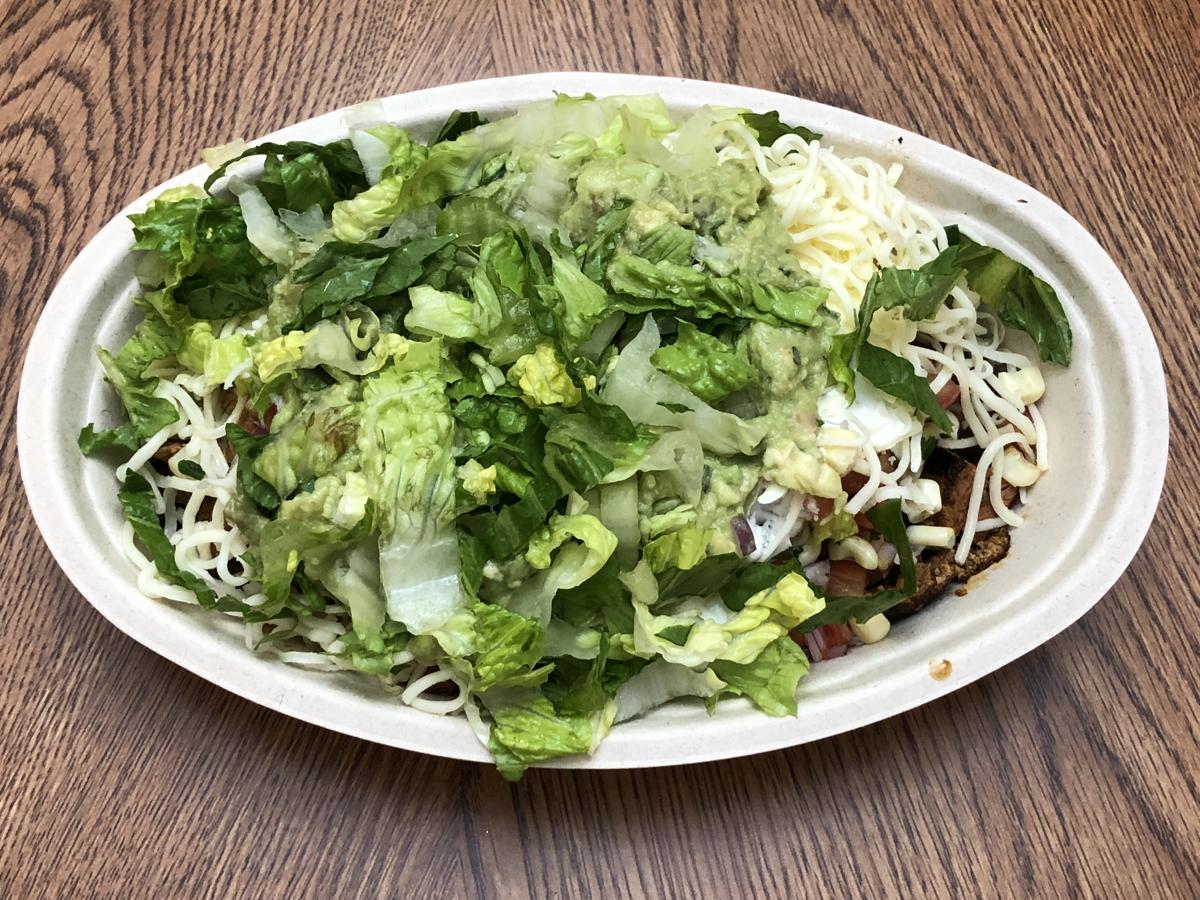
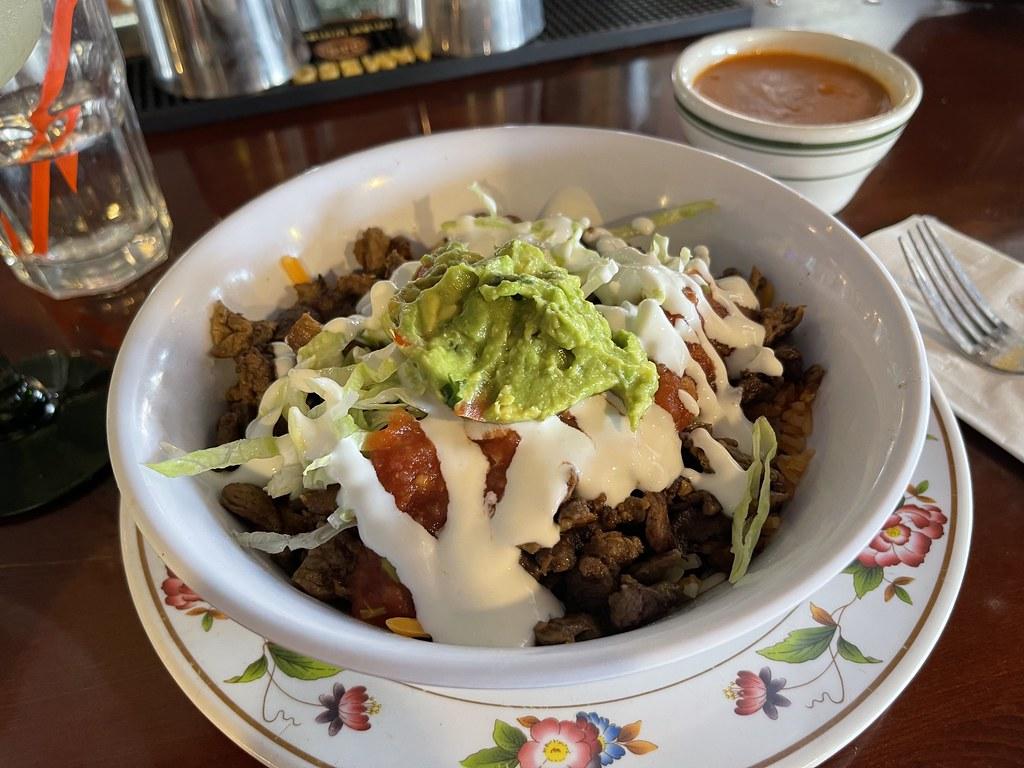
Illustrative licensed food photograph, not an official restaurant product or evidence of serving size, availability or prices.2021-01-06 21 25 25 A burrito bowl from Chipotle in the Franklin Farm section of Oak Hill, Fairfax County, Virginia.jpg. Photo: Famartin · Source · CC BY-SA 4.0 · Display cropped to fit.
Folding a tortilla is not adding a second tortilla
One tortilla folded over its filling still counts as one tortilla. A construction using two separate tortillas counts as two. With the 12.5-inch entry, that distinction changes the wrapper subtotal from 300 to 600 calories before cheese or protein. Do not infer the construction solely from the number of cut wedges: cutting a folded quesadilla into several pieces does not create additional wrappers. If your component record already includes one tortilla and you later discover a second, add one more tortilla entry rather than rebuilding the meal with an unexplained multiplier. Conversely, do not assume that two visible layers mean two complete tortillas, because folding naturally creates two layers. Establish the actual construction or retain it as an explicit uncertainty.
Dips belong outside the core model unless included
Sour cream at 1 ounce adds 50 calories, 1 gram of protein, 3 grams of carbohydrates, 5 grams of fat and 10 milligrams of sodium. Hand Crafted Guacamole at 2 ounces adds 80 calories, 1 gram of protein, 5 grams of carbohydrates, 8 grams of fat and 160 milligrams of sodium. Adding both selected portions to the 710-calorie chicken model gives 840 calories, 43 grams of protein, 64 grams of carbohydrates, 50 grams of fat and 1,730 milligrams of sodium. That assumes the entire added portions are eaten. Do not automatically append these dips to a published complete recipe without checking its stated scope, and do not omit an additional side simply because it sits in a separate cup.
FAQ: How many calories are in one wedge?
You need the whole-item total, the number of pieces and an equal-division assumption. If the illustrative 710-calorie chicken model were cut into four equal portions with evenly distributed filling, each would average an estimated 177.5 calories. Six equal portions would average about 118 calories. Neither result is an official QDOBA wedge entry, and the piece count alone says nothing about the size of the complete item. If one wedge contains more filling or is cut larger, its amount differs from the average. For the published 1,080-calorie Quesabirria recipe, an estimated half would be 540 calories, but that division inherits the source context and should not be used to disguise the unresolved issue in its printed fat field.
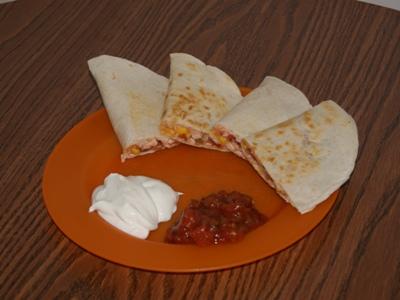
Illustrative licensed food photograph, not an official restaurant product or evidence of serving size, availability or prices.Chicken quesadilla 1.jpg. Photo: Skylark g · Source · CC BY-SA 3.0 · Display cropped to fit.
FAQ: Can I estimate light cheese or half a quesadilla?
Yes, provided the assumptions are clear. Light cheese is not a defined ounce amount in the ingredient facts used here. If you model half of the published 1-ounce cheese portion, that is an estimated 55 calories and 3.5 grams of protein, not a verified light-cheese preparation. Eating half of a complete model is a different calculation: it halves the tortilla, cheese, protein and other included ingredients together, assuming even distribution. Do not remove half the cheese and also halve the whole meal unless both changes actually describe what you ate. Keep any separately consumed dips outside the whole-item fraction when appropriate. Someone may eat half the quesadilla but all the guacamole, so one blanket fraction can misstate the meal.
FAQ: Which total should I use when ordering?
Use a published complete-recipe entry when it matches the named item and documented preparation, while retaining any source caveat. For a custom quesadilla without a matching complete entry, use a clearly labeled component estimate only when you can state the selected tortilla size and count, cheese quantity, protein amount and additions. If those amounts are unknown, acknowledge that the total is uncertain rather than presenting a narrow exact range. Review whether sides are included, whether a partial portion is estimated and whether the calculator has duplicated a tortilla or topping. Published ingredient facts make the arithmetic traceable, but they cannot establish an unpublished recipe. That distinction is the key to useful QDOBA quesadilla nutrition comparisons without inventing serving standards or treating a model as official.
See the full QDOBA menu
Prices, calories and macros for every item, or build a meal in the calculator.
Sources and corrections
Nutrition figures on Well.now come from official US restaurant sources, linked on each brand page with a last-checked date. Prices use verified local amounts first, then clearly labeled sourced estimates; Varies appears when neither is available. See our sources and methodology, or email be@well.now with a correction.
About the Well.now Editorial Team
This article was written and fact-checked by the Well.now Editorial Team. We check nutrition claims against each chain's official US information and never publish prices we cannot confirm. Well.now is independent and not paid by any restaurant. Read our editorial policy.