 Nutrition
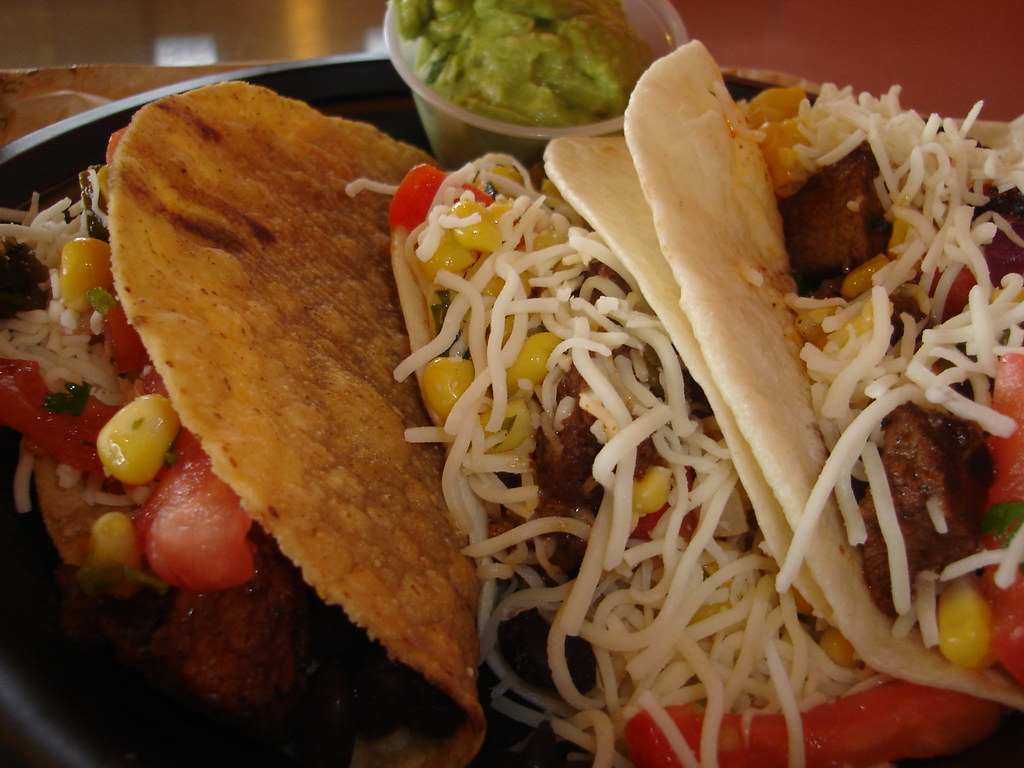
Illustrative licensed food photograph, not an official QDOBA product or evidence of current US portions, availability or prices.guacamole, salsa and chips. Photo: stu_spivack · Source · CC BY-SA 2.0 · Display cropped to fit.
Your QDOBA order, with sources
Ingredient portions are not complete entrées. Standard-portion combinations are calculated totals; changed portions are estimates. US source published February 26, 2026, checked November 8, 2026. Prices remain Varies without a verified local amount.
Official nutrition brochureWhat this guide covers
- What under 500 calories means in this guide
- The source veggie bowl: 435 calories with rice and guacamole
- The source no-rice chicken bowl: 375 calories
- Keep rice by changing the bean decision
- A carnitas bowl with both rice and beans
- A second meatless build with pinto beans
- Use the listed topping portions, not a generic scoop
- Shells, chips, and drinks need separate arithmetic
- Published complete meals are separate from custom builds
- FAQs: half portions, extra protein, and ordering accurately
- Choose the comparison before changing the basket
What under 500 calories means in this guide
An order under 500 calories is a numerical description, not a health ranking or a promise that a particular meal will meet your needs. The examples below use the QDOBA US Nutrition Brochure dated February 26, 2026, with source data checked November 8, 2026. They are not a live menu or confirmation of local availability. Each custom total adds the brochure values for explicitly named portions. Unless stated otherwise, drinks, chips, tortillas, dressings, and additional toppings are excluded. A bowl is treated as a serving container, not an edible shell. The distinction matters because the listed crunchy tortilla shell contributes 390 calories by itself. Published ingredient numbers are rounded, and restaurant scoops can vary, so these calculations are planning estimates rather than measurements of your finished order. Here, under 500 means strictly below 500: a calculated 500-calorie meal does not qualify, even if the difference from 495 looks small.
The source veggie bowl: 435 calories with rice and guacamole
The source meal file defines a rice, beans, and veggie bowl with seasoned brown rice, black beans, fajita vegetables, pico de gallo, and 2 ounces of guacamole. Using the listed portions, that is 170 + 140 + 40 + 5 + 80 = 435 calories. The same build supplies 15 grams of protein, 69 grams of total carbohydrate, and 925 milligrams of sodium. Order 4 ounces each of brown rice and black beans, 2 ounces each of fajita vegetables and guacamole, and 1 ounce of pico. This example demonstrates that an under-500 bowl does not automatically require removing rice or beans. There are 65 calories between its calculated total and 500. Adding the listed 1-ounce sour cream portion contributes 50 calories, producing 485. Adding 1 ounce of shredded cheese instead contributes 110, producing 545. Those are different configurations, not interchangeable finishing touches.
The source no-rice chicken bowl: 375 calories
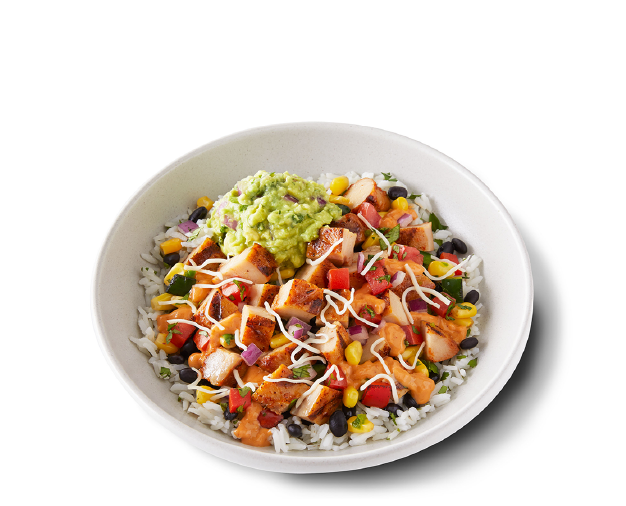
Another source-defined build combines black beans, grilled adobo chicken, fajita vegetables, and pico without rice. Its calorie calculation is 140 + 190 + 40 + 5 = 375. The portions are 4 ounces of black beans, 3.5 ounces of chicken, 2 ounces of vegetables, and 1 ounce of pico. Together they provide 29 grams of protein, 30 grams of total carbohydrate, and 955 milligrams of sodium. Adding 2 ounces of guacamole produces a 455-calorie bowl with 30 grams of protein and 35 grams of carbohydrate. Adding 2 ounces of Three Cheese Queso instead also produces 455 calories, but the resulting protein, carbohydrate, and sodium totals differ: 32 grams, 33 grams, and 1,295 milligrams. Choose the topping you actually want and count that specific portion. The equal calorie totals do not make guacamole and queso nutritionally identical.
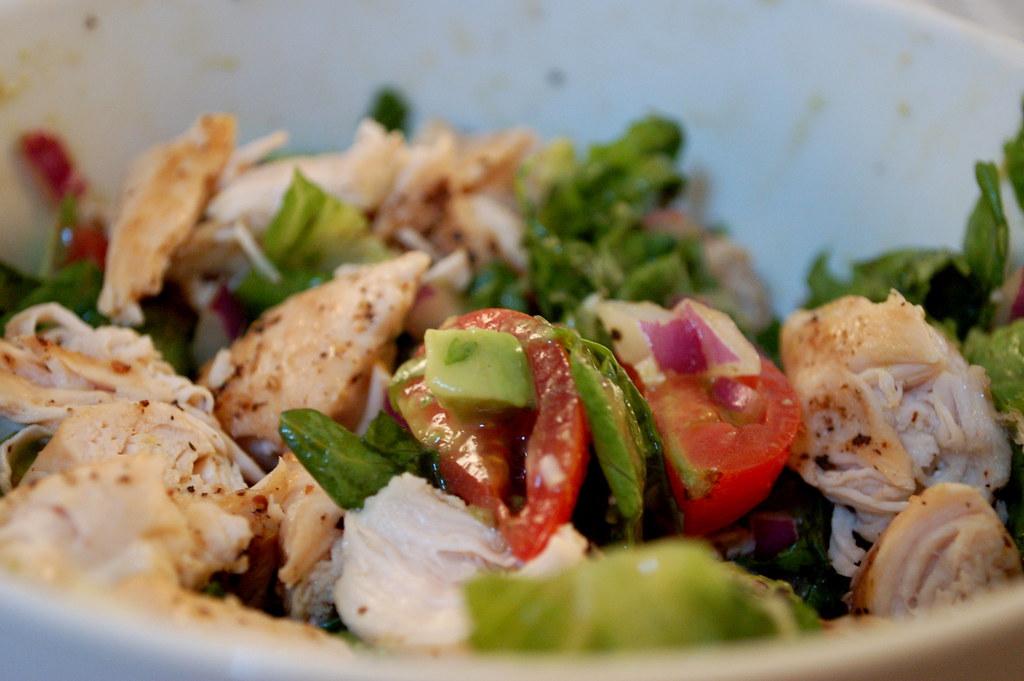
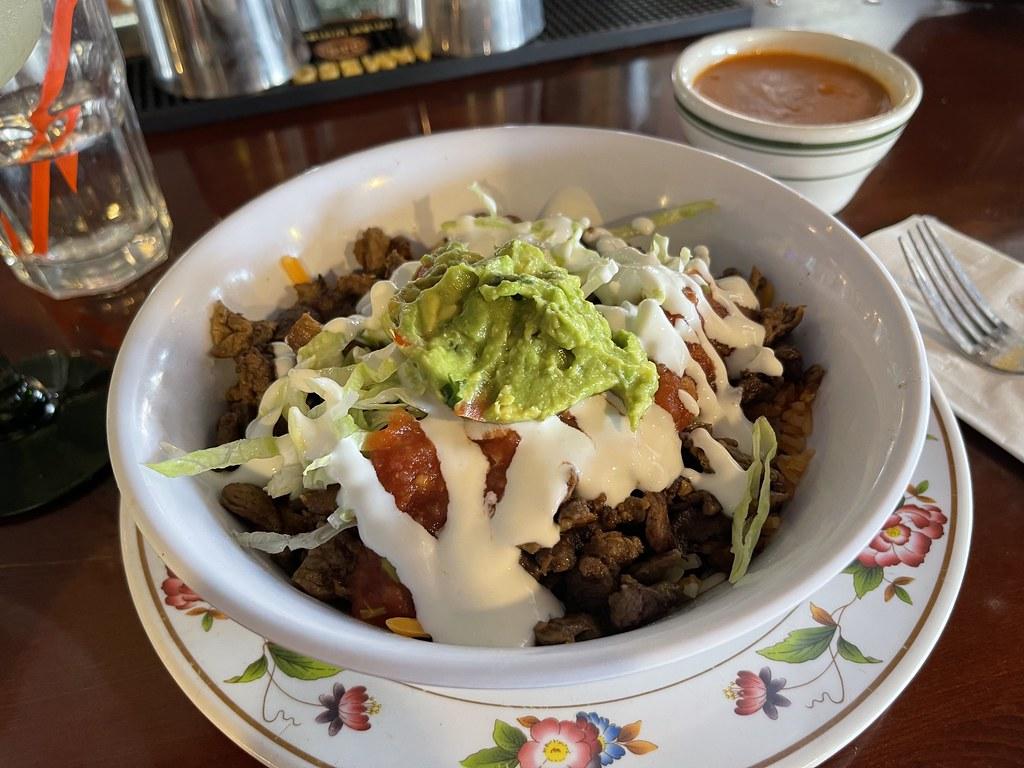
Illustrative licensed food photograph, not an official QDOBA product or evidence of current US portions, availability or prices.Sorta' guacamole chicken salad 1. Photo: Kimtaro · Source · CC BY 2.0 · Display cropped to fit.
Keep rice by changing the bean decision
The source chicken and black bean bowl contains cilantro lime rice, black beans, adobo chicken, and pico. At the listed servings, its total is 190 + 140 + 190 + 5 = 525 calories. That exact build is not under 500. Swapping only the rice to seasoned brown rice reduces the total by 20 calories, leaving 505, which still misses the threshold. A different configuration keeps brown rice and chicken but replaces the black beans with fajita vegetables: 170 + 190 + 40 + 5 = 405 calories. Add 2 ounces of guacamole and the result becomes 485. This rice-based alternative has 25 grams of protein, 47 grams of total carbohydrate, and 1,035 milligrams of sodium with guacamole included. State the substitution clearly when ordering. Simply asking for a lighter chicken bowl does not specify whether the rice, beans, topping, or serving size should change.
A carnitas bowl with both rice and beans
Pork carnitas is listed at 110 calories per 3.5-ounce portion. Combine it with 4 ounces of seasoned brown rice, 4 ounces of black beans, and 1 ounce of pico for 110 + 170 + 140 + 5 = 425 calories. The build provides 27 grams of protein and 61 grams of total carbohydrate, with 1,210 milligrams of sodium. Add 2 ounces of fajita vegetables and it becomes 465 calories, 28 grams of protein, 64 grams of carbohydrate, and 1,325 milligrams of sodium. This is a useful comparison with the 525-calorie source chicken bowl, but it changes both the protein and the rice, so the full 100-calorie difference should not be attributed to pork alone. Keeping the original cilantro lime rice and substituting only carnitas for chicken produces 445 calories. None of these comparisons establishes a health ranking between proteins.
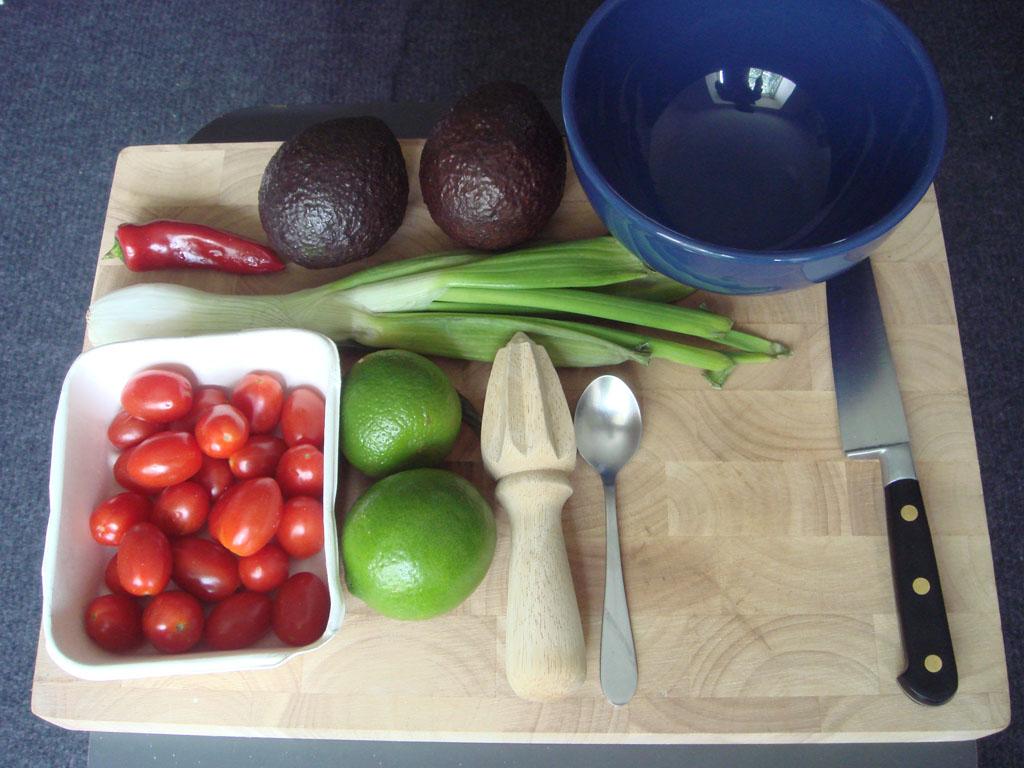
Illustrative licensed food photograph, not an official QDOBA product or evidence of current US portions, availability or prices.Guacamole - before. Photo: jolyon_russ · Source · CC BY-SA 2.0 · Display cropped to fit.
A second meatless build with pinto beans
For a different bean-and-rice combination, use 4 ounces of pinto beans, 4 ounces of cilantro lime rice, 2 ounces of fajita vegetables, 2 ounces of guacamole, and 1 ounce of pico. The total is 130 + 190 + 40 + 80 + 5 = 445 calories. This version supplies 13 grams of protein, 70 grams of total carbohydrate, and 1,085 milligrams of sodium. Switching the cilantro lime rice to brown rice yields 425 calories, 14 grams of protein, 68 grams of carbohydrate, and 945 milligrams of sodium. Switching pinto beans to black beans in that brown-rice version returns you to the source veggie bowl at 435 calories. These examples make the size of each decision visible. The bean substitution changes calories by 10, while the rice substitution changes them by 20. Neither difference is large enough to erase an uncounted 300-calorie tortilla.
Use the listed topping portions, not a generic scoop
Guacamole and queso illustrate why the serving description belongs beside the calorie number. Guacamole is listed at 80 calories for 2 ounces and 170 for 4 ounces. Three Cheese Queso is listed at 80 calories for 2 ounces and 170 for 4 ounces. Use those published entries rather than assuming the larger serving is exactly twice the smaller published number. On the 375-calorie no-rice chicken bowl, either listed 2-ounce addition produces 455 calories, while either listed 4-ounce addition produces 545. Sour cream is 50 calories per ounce, shredded cheese is 110 per ounce, and cotija is 25 per quarter-ounce. Adding cotija to the 455-calorie guacamole version produces 480. Adding sour cream to that same version produces 505. Asking for a topping on the side may help you control what you eat, but it does not establish a measured fraction unless the portion is actually known.
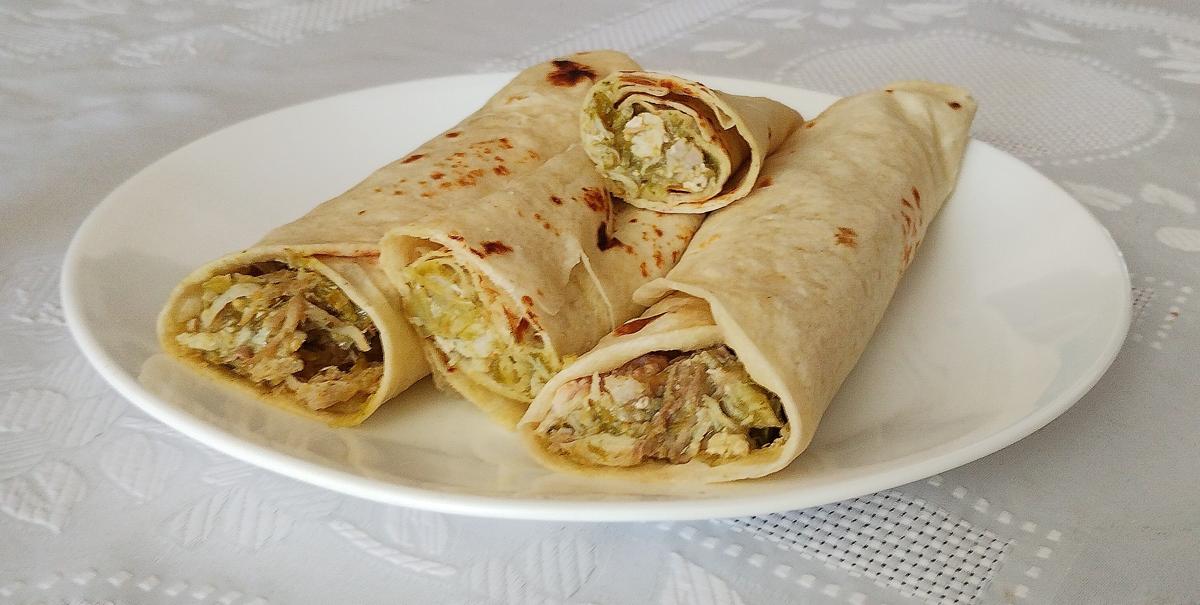
Illustrative licensed food photograph, not an official restaurant product or evidence of serving size, availability or prices.Burrito chihuahuense de chile verde.jpg. Photo: Levi bernardo · Source · CC BY-SA 4.0 · Display cropped to fit.
Shells, chips, and drinks need separate arithmetic
The 12.5-inch flour tortilla adds 300 calories, so wrapping the 375-calorie no-rice chicken filling creates a 675-calorie calculation. A crunchy tortilla shell adds 390, taking that filling to 765. The smaller flour tortillas have their own entries: 70 calories for 5.5 inches and 210 for 10 inches. Do not substitute one size's nutrition for another. A listed 4-ounce serving of tortilla chips contributes 560 calories, which exceeds this article's threshold before any dip or entree is included. A 20-fluid-ounce Coca Cola contributes another 240 calories; pairing it with the 435-calorie veggie bowl produces 675. These numbers do not mean a side or drink is forbidden. They mean an under-500 entree and an under-500 complete order are different claims. Specify whether your target covers just the bowl or everything you intend to eat and drink with it.
Published complete meals are separate from custom builds
The dataset includes several complete meals below 500 calories: Keto Bowl - Chicken at 400, Keto Bowl - Steak at 490, and Street Style Pork Carnitas Tacos, three flour tacos, at 370. Those are published complete-item values, not recipes reconstructed here. Their listed names do not establish current availability or guarantee a dietary outcome. Other complete entries exceed the threshold, including the 530-calorie Fajita Vegan Bowl and the 540-calorie Citrus Lime Chicken Salad. A salad name therefore does not establish a lower calorie count than a rice bowl. Likewise, the custom 435-calorie veggie bowl should not be substituted for the published Fajita Vegan Bowl. The dataset does not show that they have identical portions or ingredients. Compare complete items using their own entries, and compare custom builds by adding their actual selected ingredients. Mixing the two methods can produce a misleading total.
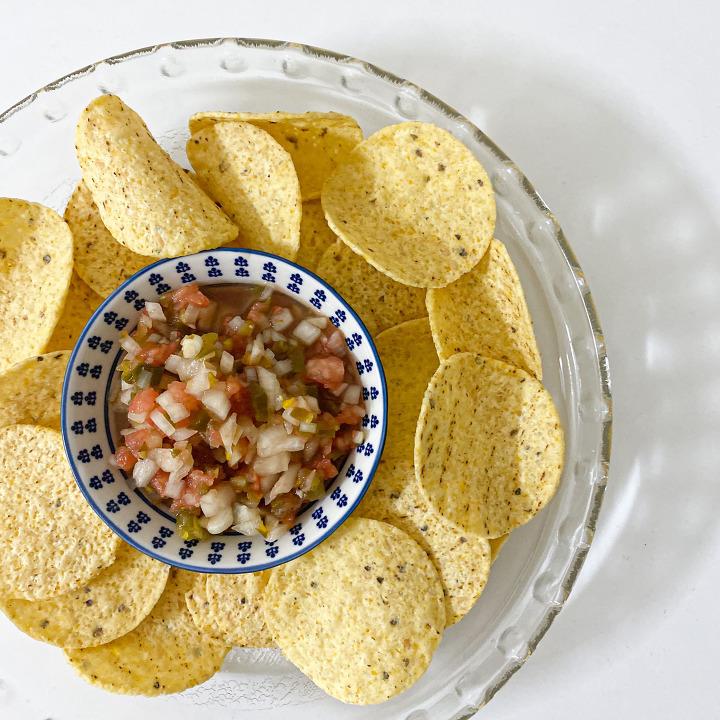
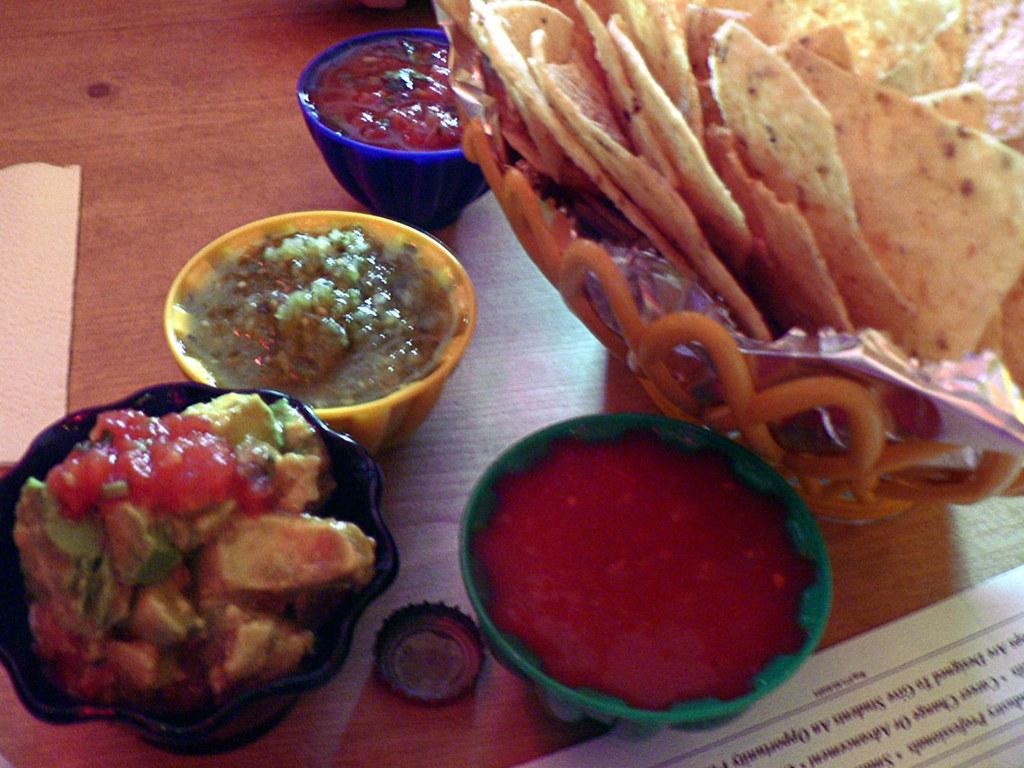
Illustrative licensed food photograph, not an official restaurant product or evidence of serving size, availability or prices.Homemade salsa with nachos 1.jpg. Photo: 에그란 · Source · CC BY 4.0 · Display cropped to fit.
FAQs: half portions, extra protein, and ordering accurately
Can a half portion fit? Mathematically, half the listed brown rice serving is 85 calories, but that is a modeled 2-ounce portion, not a separately published serving or a promise about a scoop. Can you double the chicken and remain under 500? Not in the source no-rice bowl: adding another 190-calorie chicken portion raises 375 to 565. Can you add several zero-calorie toppings freely? The dataset lists the quarter-ounce romaine garnish and the 0.12-ounce cilantro portion at zero calories, but those entries are rounded and portion-specific. What is a clear ordering script? Try: bowl, no rice, black beans, adobo chicken, fajita vegetables, pico, and the listed 2-ounce guacamole portion. That corresponds to the 455-calorie example. Confirm the portion, count any extras, and keep the source date in mind. This is a reproducible calculation framework, not a claim that the restaurant can deliver laboratory precision.
Choose the comparison before changing the basket
A useful saved comparison records whether the limit applies to one entrée or the complete order. Keep the drink and shared-side decisions on separate lines. If you choose the 435-calorie rice-and-veggie build, a standard 2-ounce queso portion adds 80 calories and moves it to 515. Removing guacamole before adding that queso produces a different calculation: the two toppings have the same published calories at those portions, leaving the entrée at 435. That is a replacement, not a free addition. Review the selected list before pressing Calculate so the first topping is actually removed. When looking at a receipt, match the ingredients rather than a short bowl nickname. Check the dedicated menu-price page and official local checkout for the cost of those choices. The calorie comparison cannot establish that a substitution is available, included or cheaper.
See the full QDOBA menu
Prices, calories and macros for every item, or build a meal in the calculator.
Sources and corrections
Nutrition figures on Well.now come from official US restaurant sources, linked on each brand page with a last-checked date. Prices use verified local amounts first, then clearly labeled sourced estimates; Varies appears when neither is available. See our sources and methodology, or email be@well.now with a correction.
About the Well.now Editorial Team
This article was written and fact-checked by the Well.now Editorial Team. We check nutrition claims against each chain's official US information and never publish prices we cannot confirm. Well.now is independent and not paid by any restaurant. Read our editorial policy.