 Nutrition
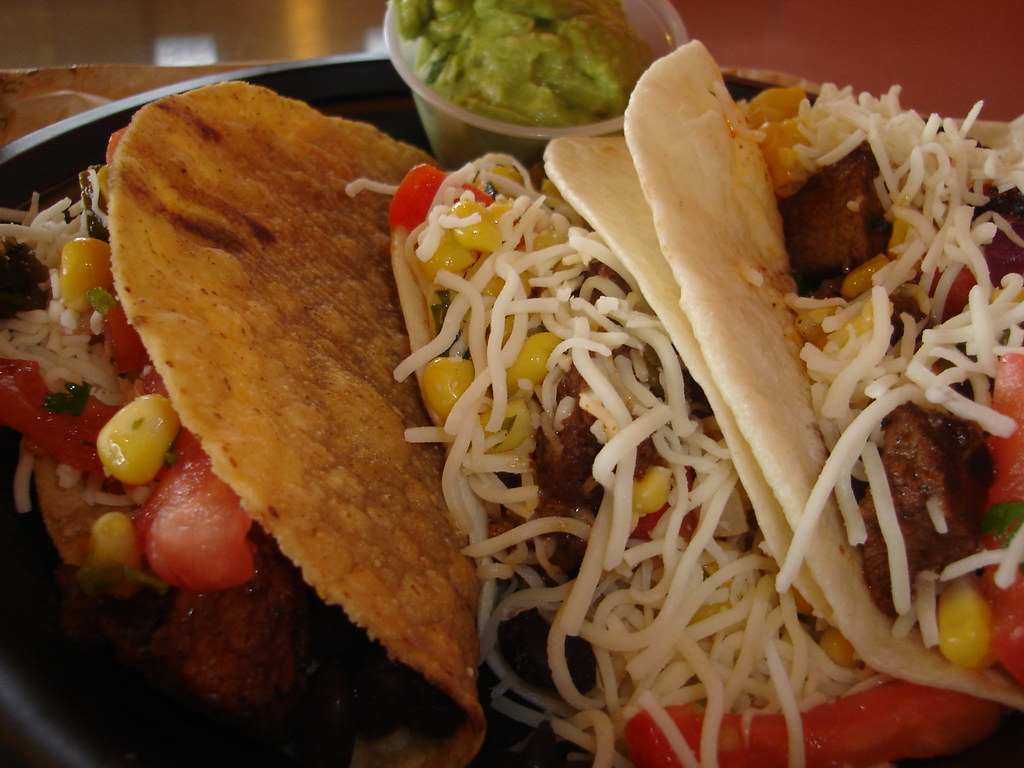
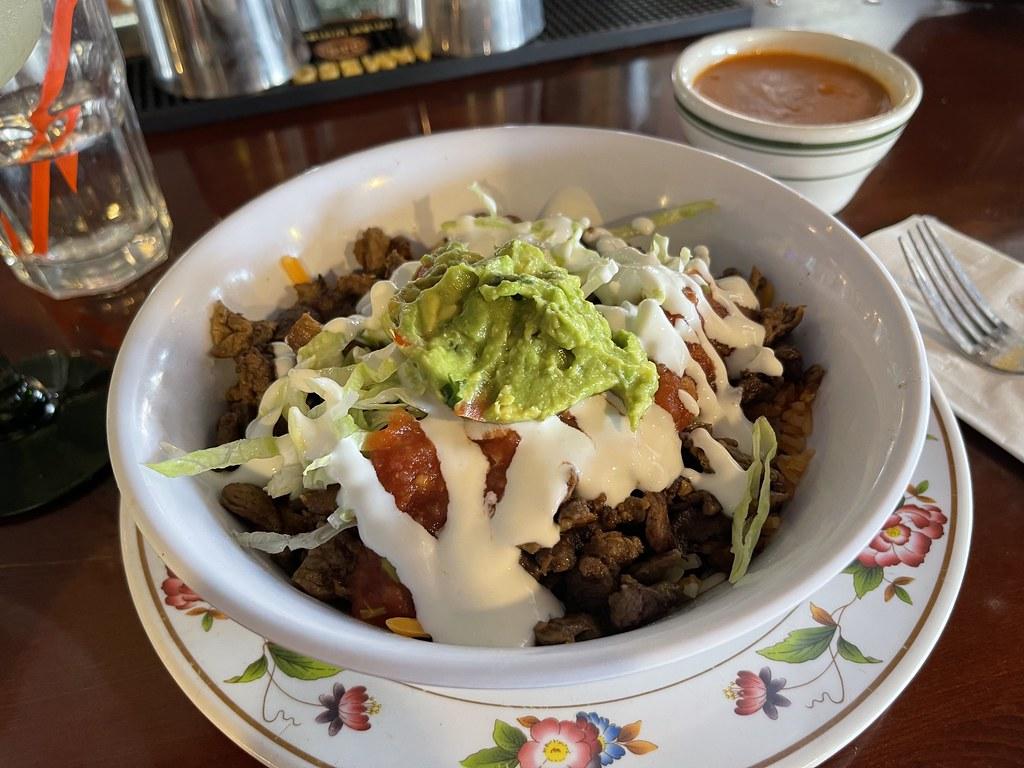
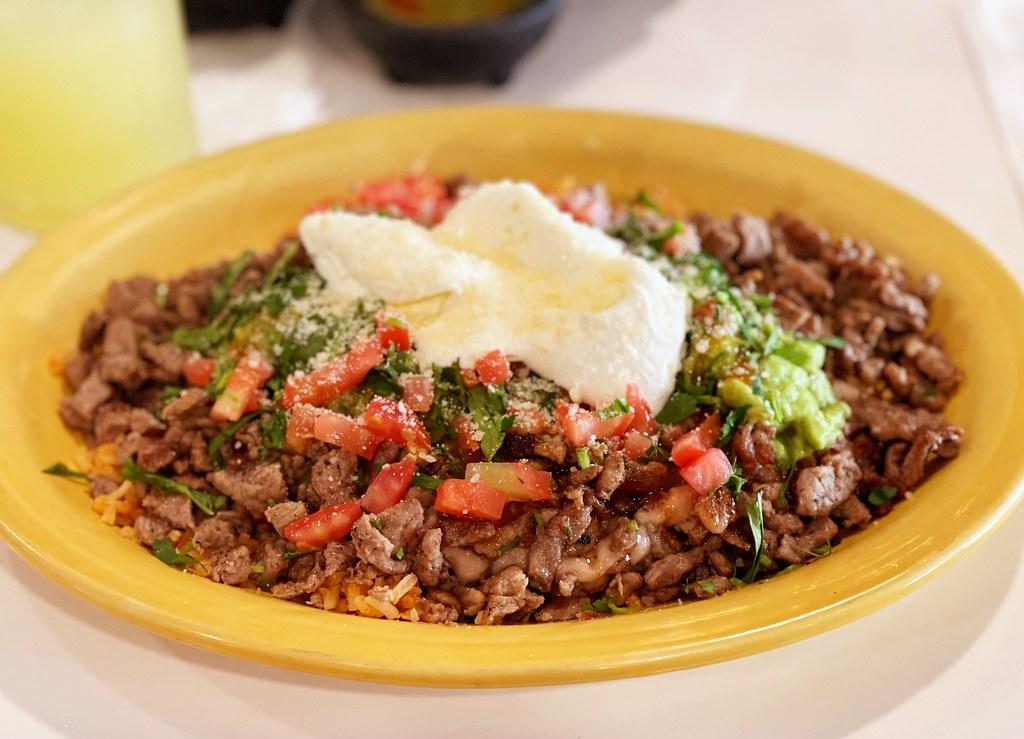
Illustrative licensed food photograph, not an official QDOBA product or evidence of current US portions, availability or prices.Steak burrito bowl. Photo: sarahstierch · Source · CC BY 2.0 · Display cropped to fit.
Official portions for this comparison
| Item / serving | Calories | Protein | Carbs | Fat | Sodium |
|---|---|---|---|---|---|
| Queso Diablo (2 oz.) | 90 | 2 g | 3 g | 7 g | 320 mg |
| Three Cheese Queso (2 oz.) | 80 | 3 g | 3 g | 8 g | 340 mg |
| Three Cheese Queso (4 oz.) | 170 | 6 g | 5 g | 17 g | 670 mg |
Ingredient portions are not complete entrées. Standard-portion combinations are calculated totals; changed portions are estimates. US source published February 26, 2026, checked November 8, 2026. Prices remain Varies without a verified local amount.
Official nutrition brochureWhat this guide covers
- QDOBA queso calories: the direct answer
- The exact source and how these figures are used
- Three Cheese Queso: 2 ounces versus 4 ounces
- Queso Diablo versus Three Cheese at 2 ounces
- What can and cannot be said about 4-ounce Diablo
- Chips and queso: calculate the entire combination
- A fixed bowl shows the queso change clearly
- A larger queso serving versus additional toppings
- Portion accounting when queso is served separately
- FAQ: calories, carbs and sodium
- FAQ: logging bowls, sides and missing serving sizes
QDOBA queso calories: the direct answer
QDOBA Three Cheese Queso has 80 calories per published 2-ounce serving and 170 calories per published 4-ounce serving. Queso Diablo has 90 calories per published 2-ounce serving. The checked source does not provide a separate 4-ounce Diablo entry, so there is no independently published value to present for that size. At the directly comparable 2-ounce size, Diablo has 10 more calories than Three Cheese. These are queso-only figures, not totals for chips, bowls or burritos. A 4-ounce serving of tortilla chips contributes another 560 calories before any dip is added. The distinction between a topping and a chips-and-dip order therefore matters much more than the 10-calorie difference between the two 2-ounce quesos. Start with the actual queso name and documented serving size, then add the other ingredients you intend to eat. Do not treat an unspecified cup or scoop as a verified ounce measurement.
The exact source and how these figures are used
These US figures come from the QDOBA US Nutrition Brochure dated February 26, 2026, checked November 8, 2026. The official document is available at the linked official QDOBA source Its individual serving entries are the reference for every comparison here. Published calories remain unchanged even when the listed protein, carbohydrate and fat grams would produce a different result under a simple calorie formula. Adding ingredient calories is appropriate for an illustrative custom bowl; rewriting the restaurant's calorie entry from rounded macros is not. This guide also distinguishes a restaurant-published serving from arithmetic involving that serving. The former is source data, while the latter is a calculated combination or portion estimate. The check date identifies the source review, not a guarantee that every US restaurant offers every item or serves an identical measured amount.
Three Cheese Queso: 2 ounces versus 4 ounces
The published 2-ounce Three Cheese Queso serving contains 80 calories, 3 grams of protein, 3 grams of carbohydrate, 8 grams of fat and 340 milligrams of sodium. The independently listed 4-ounce serving contains 170 calories, 6 grams of protein, 5 grams of carbohydrate, 17 grams of fat and 670 milligrams of sodium. Moving between those two published sizes adds 90 calories, 3 grams of protein, 2 grams of carbohydrate, 9 grams of fat and 330 milligrams of sodium. Those differences come from subtraction, not from assuming that every value doubles. In particular, doubling the smaller serving's 80 calories would incorrectly replace the published 170-calorie larger serving with 160 calories. Likewise, doubling 340 milligrams would yield 680 milligrams rather than the larger serving's listed 670. Use the full entry for the size you select, including its own calorie and sodium values.
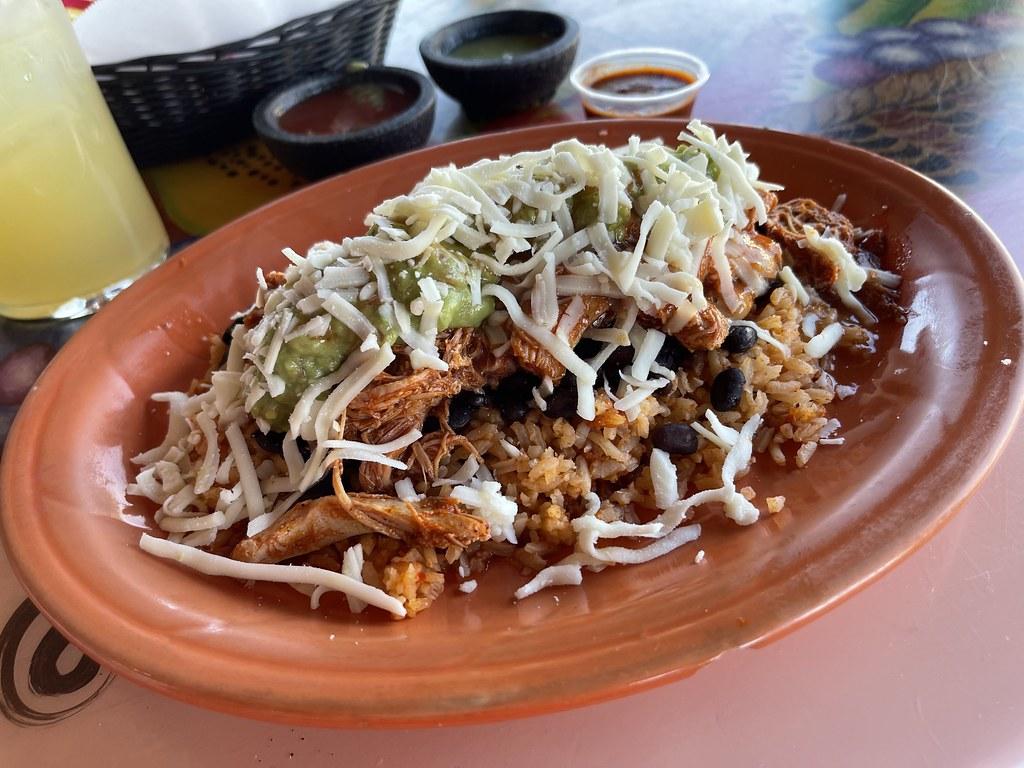
Illustrative licensed food photograph, not an official QDOBA product or evidence of current US portions, availability or prices.Shreddex chicken burrito bowl. Photo: sarahstierch · Source · CC BY 2.0 · Display cropped to fit.
Queso Diablo versus Three Cheese at 2 ounces
At 2 ounces, Queso Diablo contains 90 calories, 2 grams of protein, 3 grams of carbohydrate, 7 grams of fat and 320 milligrams of sodium. Compared with 2 ounces of Three Cheese, that means 10 more calories, 1 gram less protein, the same carbohydrate, 1 gram less fat and 20 milligrams less sodium. This is a useful example of why one number cannot stand in for the whole comparison. Diablo has the higher published calorie value even though its listed fat is lower. Retain both facts rather than adjusting the calories to make the labels appear more intuitive. If your only goal is the lower listed calorie addition at this size, Three Cheese is the answer. If you are comparing sodium instead, Diablo is lower by 20 milligrams. Neither comparison establishes a universal winner, and neither tells you the total nutrition of the meal underneath.
What can and cannot be said about 4-ounce Diablo
There is no separate 4-ounce Queso Diablo listing in the checked data. A mathematical model using twice the 2-ounce entry would produce an estimated 180 calories, 4 grams of protein, 6 grams of carbohydrate, 14 grams of fat and 640 milligrams of sodium. Those are calculated estimates for two reference portions, not official facts for an independently documented 4-ounce product. Keep that distinction visible if you use the model for planning. The Three Cheese entries demonstrate exactly why it matters: its actual published larger serving differs from simple doubling in calories, carbohydrate, fat and sodium. Do not create a side-by-side table that labels 170-calorie Three Cheese and estimated 180-calorie Diablo as equally sourced 4-ounce values. A more accurate comparison lists the verified Three Cheese size, identifies the missing Diablo entry and, only if needed, places the two-portion estimate in a separately labeled explanation.
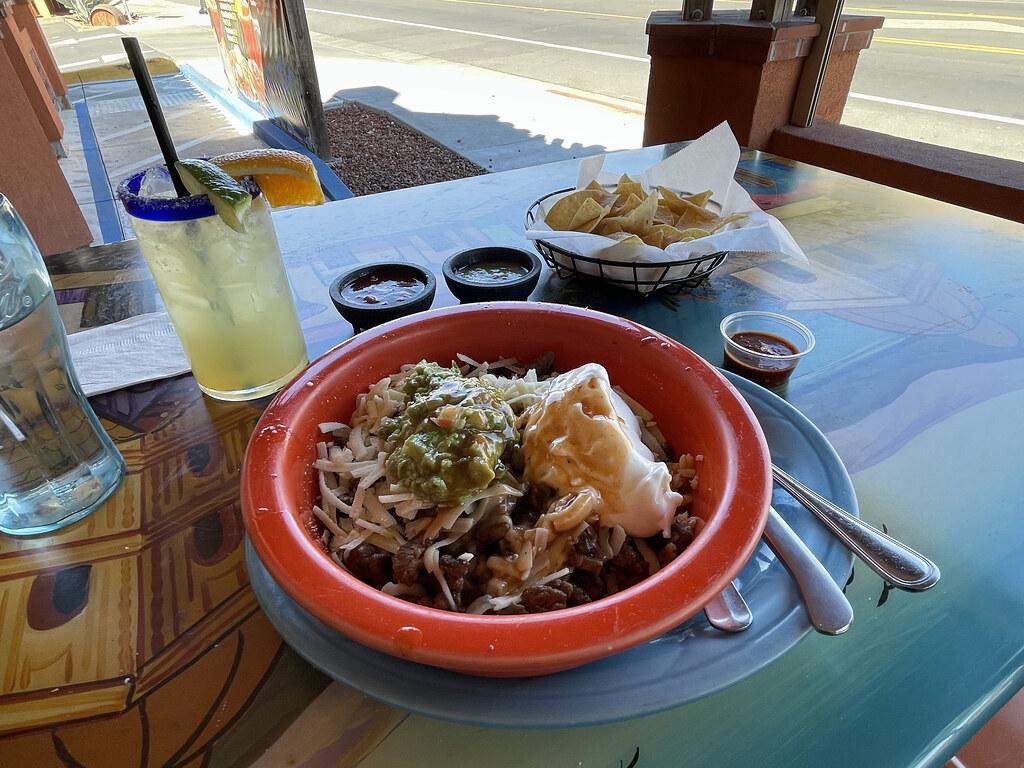
Illustrative licensed food photograph, not an official QDOBA product or evidence of current US portions, availability or prices.Steak burrito bowl. Photo: sarahstierch · Source · CC BY 2.0 · Display cropped to fit.
Chips and queso: calculate the entire combination
QDOBA lists 4 ounces of Tortilla Chips at 560 calories, 7 grams of protein, 75 grams of carbohydrate, 26 grams of fat and 220 milligrams of sodium. Adding 2 ounces of Three Cheese produces a calculated chips-and-queso total of 640 calories, 10 grams of protein, 78 grams of carbohydrate, 34 grams of fat and 560 milligrams of sodium. Using the published 4-ounce Three Cheese serving instead produces 730 calories, 13 grams of protein, 80 grams of carbohydrate, 43 grams of fat and 890 milligrams of sodium. With 2 ounces of Diablo, the combination is 650 calories, 9 grams of protein, 78 grams of carbohydrate, 33 grams of fat and 540 milligrams of sodium. These totals include exactly one published 4-ounce chip portion. They do not describe every bag, basket or shared appetizer a restaurant might serve, and they do not include a drink or entrée.
A fixed bowl shows the queso change clearly
Consider a custom bowl containing 4 ounces of Seasoned Brown Rice, 4 ounces of Black Beans, 3.5 ounces of Grilled Adobo Chicken and 1 ounce of Pico de Gallo. Before queso, the calculated total is 505 calories, 32 grams of protein, 63 grams of carbohydrate, 14.5 grams of fat and 1,090 milligrams of sodium. Adding 2 ounces of Three Cheese changes it to 585 calories, 35 grams of protein, 66 grams of carbohydrate, 22.5 grams of fat and 1,430 milligrams of sodium. Keeping everything else fixed but choosing 2 ounces of Diablo gives 595 calories, 34 grams of protein, 66 grams of carbohydrate, 21.5 grams of fat and 1,410 milligrams of sodium. These are ingredient-sum examples, not named restaurant menu bowls. Because the base is identical, the difference between the finished bowls is exactly the difference between the two published queso portions.
Illustrative licensed food photograph, not an official restaurant product or evidence of serving size, availability or prices.Burrito chihuahuense de chile verde.jpg. Photo: Levi bernardo · Source · CC BY-SA 4.0 · Display cropped to fit.
A larger queso serving versus additional toppings
Using that same 505-calorie baseline bowl with the published 4-ounce Three Cheese serving gives 675 calories and 1,760 milligrams of sodium. That is 90 calories and 330 milligrams more sodium than the version with 2 ounces of Three Cheese. Adding shredded cheese instead of enlarging the queso is a different calculation: the published 1-ounce Shredded Cheese entry contributes 110 calories, 7 grams of protein, 1 gram of carbohydrate, 9 grams of fat and 180 milligrams of sodium. A baseline bowl with both 2 ounces of Three Cheese and that shredded cheese therefore reaches 695 calories and 1,610 milligrams of sodium. Compared with the 4-ounce queso version, it has 20 more calories but 150 milligrams less sodium. This comparison does not imply that either combination is preferable. It shows why extra queso and an extra cheese topping should not be entered as interchangeable choices.
Portion accounting when queso is served separately
Ordering queso on the side changes how you track consumption, not the nutrition of the documented portion. If you eat the entire independently listed 4-ounce Three Cheese serving, use 170 calories. If you estimate eating half of that serving, a proportional allocation is 85 calories and 335 milligrams of sodium. That allocation is not the same thing as the separately published 2-ounce serving, which is 80 calories and 340 milligrams. Both calculations can be internally consistent because they answer different questions: allocating half of a documented larger serving versus selecting the smaller source entry. Avoid switching methods mid-meal to obtain whichever number is lower. For shared chips and dip, allocate each component separately. Eating half the chips does not establish that you also ate half the queso, particularly when other people are sharing the same dip.
Illustrative licensed food photograph, not an official restaurant product or evidence of serving size, availability or prices.Homemade salsa with nachos 1.jpg. Photo: 에그란 · Source · CC BY 4.0 · Display cropped to fit.
FAQ: calories, carbs and sodium
Which QDOBA queso has fewer calories? At the directly comparable published 2-ounce size, Three Cheese has fewer: 80 versus Diablo's 90. Which has less sodium? Diablo has 320 milligrams versus Three Cheese's 340, a difference of 20 milligrams. Is 4 ounces of Three Cheese 160 calories? No. Its separate published entry is 170 calories, and that is the value to retain. Does queso have carbohydrate? Both 2-ounce entries list 3 grams; 4-ounce Three Cheese lists 5 grams. Is the larger Three Cheese portion exactly double in every nutrient? No, as the published calorie, carbohydrate, fat and sodium values demonstrate. Can the supplied figures establish sugar content? No. The checked data used here do not provide sugars for these entries, so this guide does not supply a sugar number. It also does not infer fiber or make a net-carbohydrate calculation from missing information.
FAQ: logging bowls, sides and missing serving sizes
Should queso be counted separately in a custom bowl? Yes, when the bowl total is being built ingredient by ingredient. Do not add it again if an existing complete-item nutrition entry already includes the same queso. Are chips included in the 80-calorie figure? No, that is only the published 2-ounce Three Cheese portion. A full listed chip serving plus that queso totals 640 calories. Can you log a 4-ounce Diablo cup as an official 180-calorie item? Not from this source. You can label 180 calories as an estimate based on two 2-ounce reference portions, but there is no independently listed larger Diablo entry here. What is the simplest comparison method? Choose the documented queso size first, keep the rest of the meal fixed and add chips only if you actually include them. That preserves the source's original calories while making each change in the order easy to identify.
See the full QDOBA menu
Prices, calories and macros for every item, or build a meal in the calculator.
Sources and corrections
Nutrition figures on Well.now come from official US restaurant sources, linked on each brand page with a last-checked date. Prices use verified local amounts first, then clearly labeled sourced estimates; Varies appears when neither is available. See our sources and methodology, or email be@well.now with a correction.
About the Well.now Editorial Team
This article was written and fact-checked by the Well.now Editorial Team. We check nutrition claims against each chain's official US information and never publish prices we cannot confirm. Well.now is independent and not paid by any restaurant. Read our editorial policy.