 Nutrition
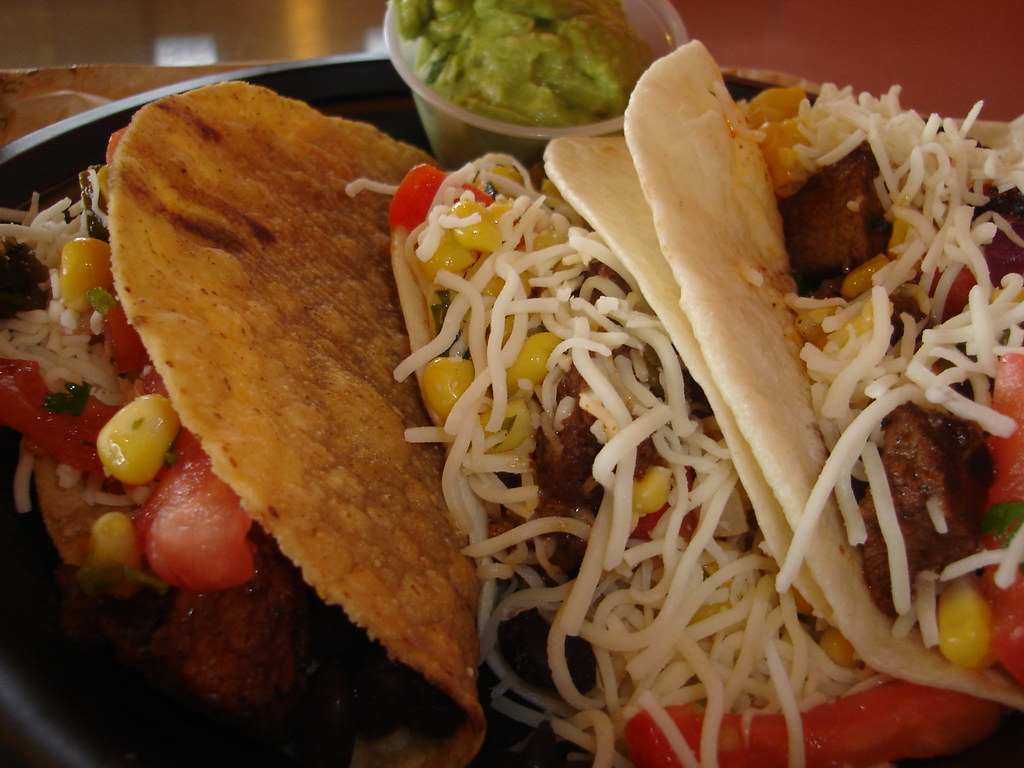
Illustrative licensed food photograph, not an official QDOBA product or evidence of current US portions, availability or prices.Tacos. Photo: Vancouver Bites! · Source · CC BY-SA 2.0 · Display cropped to fit.
Official portions for this comparison
| Item / serving | Calories | Protein | Carbs | Fat | Sodium |
|---|---|---|---|---|---|
| Black Beans (4 oz.) | 140 | 9 g | 24 g | 1 g | 330 mg |
| Pinto Beans (4 oz.) | 130 | 8 g | 23 g | 1 g | 350 mg |
Ingredient portions are not complete entrées. Standard-portion combinations are calculated totals; changed portions are estimates. US source published February 26, 2026, checked November 8, 2026. Prices remain Varies without a verified local amount.
Official nutrition brochureWhat this guide covers
- QDOBA black beans versus pinto: the direct answer
- Source, check date and what is actually documented
- Black Beans: the complete 4-ounce entry
- Pinto Beans: the complete 4-ounce entry
- Half portions: exact arithmetic, estimated servings
- Mixed beans: half of each versus full portions of both
- A fixed bowl isolates the black-to-pinto swap
- Full, half and no beans in that same bowl
- Beans in place of rice: compare both foods, not just one
- FAQ: protein, carbs, fiber and sugars
- FAQ: logging half servings and avoiding double counting
QDOBA black beans versus pinto: the direct answer
QDOBA Black Beans contain 140 calories per published 4-ounce serving, while Pinto Beans contain 130 calories at the same published weight. Black beans have 9 grams of protein, 24 grams of carbohydrate, 1 gram of fat and 330 milligrams of sodium. Pinto beans have 8 grams of protein, 23 grams of carbohydrate, 1 gram of fat and 350 milligrams of sodium. Choosing pinto therefore lowers calories by 10 and protein and carbohydrate by 1 gram each, leaves fat unchanged and raises sodium by 20 milligrams. A half portion can be modeled as an estimated 70 calories for black beans or 65 for pinto, but neither is an independently published 2-ounce entry in the checked data. These are close alternatives with different trade-offs, not a case where one choice is lower in every listed nutrient. Keep the full published serving and the estimated smaller serving clearly separated.
Source, check date and what is actually documented
This comparison uses the QDOBA US Nutrition Brochure published February 26, 2026, checked November 8, 2026. The source document is the linked official QDOBA source The checked dataset gives one 4-ounce entry for each bean variety. It does not supply independent half-serving values, fiber figures or sugars for these entries. This article therefore retains the source's calorie totals, compares the available nutrients and labels proportional portions as estimates. It does not borrow fiber from canned beans, home-cooked beans or another restaurant's recipe. A calculated bowl is also distinct from a published complete entrée: its total comes from summing the selected ingredient entries. Keeping those categories separate prevents a precise-looking custom number from being mistaken for a restaurant-published meal specification or a measured portion from an individual visit.
Black Beans: the complete 4-ounce entry
A published 4-ounce Black Beans serving contributes 140 calories, 9 grams of protein, 24 grams of carbohydrate, 1 gram of fat and 330 milligrams of sodium. Those numbers apply to the prepared QDOBA ingredient, not to a generic dry-bean weight or a different cooking method. In a custom bowl, beans add both carbohydrate and protein, so it would be incomplete to count only their protein contribution. For example, adding this serving to an otherwise 400-calorie ingredient combination makes a calculated 540-calorie bowl and adds the full 24 grams of carbohydrate. The bean sodium should also remain in the total even when the rest of the bowl is built from ingredients that seem minimally sauced. No rice, meat, cheese or salsa is included in the 140-calorie figure. Each remains a separate selection unless you are using a complete-item entry that already incorporates the beans.
Illustrative licensed food photograph, not an official QDOBA product or evidence of current US portions, availability or prices.Tacos. Photo: Vancouver Bites! · Source · CC BY-SA 2.0 · Display cropped to fit.
Pinto Beans: the complete 4-ounce entry
A published 4-ounce Pinto Beans serving contains 130 calories, 8 grams of protein, 23 grams of carbohydrate, 1 gram of fat and 350 milligrams of sodium. Against the same weight of black beans, pinto saves 10 calories but adds 20 milligrams of sodium. Black beans provide 1 gram more protein for those additional 10 calories, though that small difference does not make pinto a negligible protein contributor. The source lists the same fat value for both. If you prefer pinto, there is no need to treat its nutrition as interchangeable with black beans merely because the values are close. Conversely, describing pinto as lower in everything would be incorrect because its sodium is higher. The most useful comparison is the complete set of differences at the same weight. That lets you choose based on the nutrient you are actually tracking without implying that a single bean variety wins every category.
Half portions: exact arithmetic, estimated servings
Half of the black bean reference entry is an estimated 70 calories, 4.5 grams of protein, 12 grams of carbohydrate, 0.5 gram of fat and 165 milligrams of sodium. Half of the pinto entry is an estimated 65 calories, 4 grams of protein, 11.5 grams of carbohydrate, 0.5 gram of fat and 175 milligrams of sodium. These figures come from dividing each complete 4-ounce entry by two. They do not establish that an actual request for light beans results in exactly 2 ounces, and they are not independent published smaller-serving nutrition facts. The estimated black-versus-pinto difference at this modeled quantity is 5 calories, 0.5 gram of protein, 0.5 gram of carbohydrate, no fat difference and 10 milligrams less sodium for black beans. Decimal grams describe the calculation, not a level of portion control that can be assumed from a scoop served at the counter.
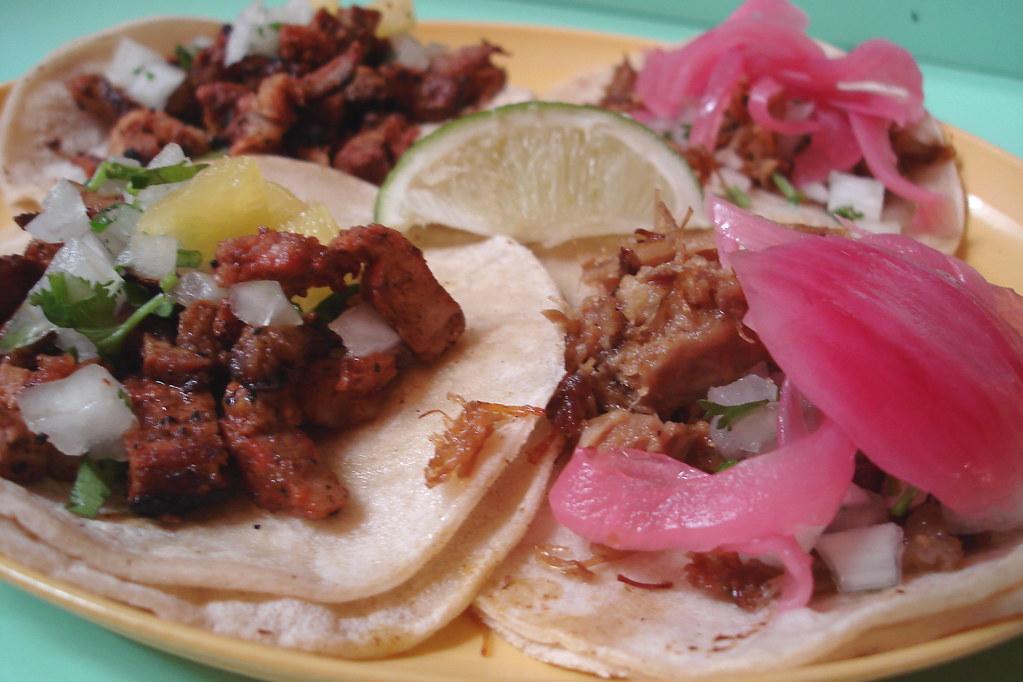
Illustrative licensed food photograph, not an official QDOBA product or evidence of current US portions, availability or prices.Taco. Photo: TheCulinaryGeek · Source · CC BY 2.0 · Display cropped to fit.
Mixed beans: half of each versus full portions of both
A modeled combination of 2 ounces of black beans and 2 ounces of pinto beans totals an estimated 135 calories, 8.5 grams of protein, 23.5 grams of carbohydrate, 1 gram of fat and 340 milligrams of sodium. That is one combined 4-ounce amount built from proportional halves. It is not an independently listed mixed-bean product. By contrast, combining a full published 4-ounce serving of each totals 270 calories, 17 grams of protein, 47 grams of carbohydrate, 2 grams of fat and 680 milligrams of sodium. Those two interpretations of both beans differ by an entire combined reference portion. When planning an order, state whether both means a split serving or two full servings. The phrase alone does not settle the nutrition calculation. If the restaurant serves a different combined amount, neither model becomes a measurement simply because its arithmetic is exact.
A fixed bowl isolates the black-to-pinto swap
Start with 4 ounces of Seasoned Brown Rice, 3.5 ounces of Grilled Adobo Chicken, 2 ounces of Fajita Veggies and 1 ounce of Pico de Gallo. Before beans, those entries sum to 405 calories, 24 grams of protein, 42 grams of carbohydrate, 16.5 grams of fat and 875 milligrams of sodium. Adding 4 ounces of Black Beans produces 545 calories, 33 grams of protein, 66 grams of carbohydrate, 17.5 grams of fat and 1,205 milligrams of sodium. Using 4 ounces of Pinto Beans instead produces 535 calories, 32 grams of protein, 65 grams of carbohydrate, 17.5 grams of fat and 1,225 milligrams of sodium. These are calculated custom bowls, not official named recipes. The 10-calorie and 20-milligram sodium differences come entirely from the bean substitution because rice, chicken, vegetables and pico remain unchanged. No topping change is hidden in the comparison.
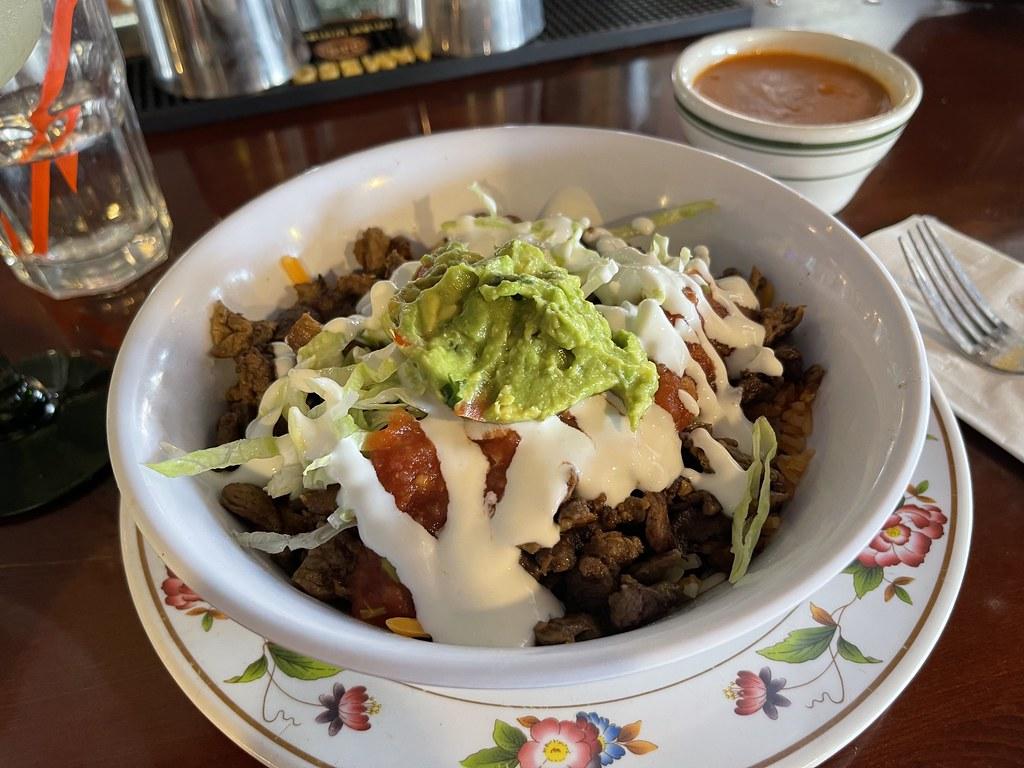
Illustrative licensed food photograph, not an official restaurant product or evidence of serving size, availability or prices.Burrito chihuahuense de chile verde.jpg. Photo: Levi bernardo · Source · CC BY-SA 4.0 · Display cropped to fit.
Full, half and no beans in that same bowl
Using the same 405-calorie bean-free baseline, an estimated half portion of black beans gives 475 calories, 28.5 grams of protein, 54 grams of carbohydrate, 17 grams of fat and 1,040 milligrams of sodium. An estimated half portion of pinto gives 470 calories, 28 grams of protein, 53.5 grams of carbohydrate, 17 grams of fat and 1,050 milligrams of sodium. Omitting beans leaves the original baseline rather than creating a bowl with no carbohydrate or no protein. Rice, chicken and vegetables still contribute their listed nutrients. Moving from full black beans to half black beans reduces the modeled bowl by 70 calories and 4.5 grams of protein. The corresponding pinto reduction is 65 calories and 4 grams of protein. These are quantity changes, which are larger than the 10-calorie difference between full servings of the two bean varieties. Track the serving decision separately from the variety decision.
Beans in place of rice: compare both foods, not just one
Replacing a published 4-ounce Seasoned Brown Rice serving with a published 4-ounce Black Beans serving reduces calories by 30, reduces carbohydrate by 12 grams, increases protein by 5 grams, reduces fat by 0.5 gram and increases sodium by 80 milligrams. Replacing that rice with Pinto Beans reduces calories by 40 and carbohydrate by 13 grams, increases protein by 4 grams, reduces fat by 0.5 gram and increases sodium by 100 milligrams. These comparisons show why lower calories do not automatically mean lower sodium. They also differ from simply adding beans to an existing rice bowl. If the rice stays, no rice calories have been removed. If the bowl already has beans, replacing rice with another bean portion creates a larger total bean amount. Write the removal and addition explicitly so that the resulting bowl represents the actual change rather than counting the benefit of a substitution that never occurred.
Illustrative licensed food photograph, not an official restaurant product or evidence of serving size, availability or prices.Homemade salsa with nachos 1.jpg. Photo: 에그란 · Source · CC BY 4.0 · Display cropped to fit.
FAQ: protein, carbs, fiber and sugars
Which QDOBA beans have more protein? Black beans list 9 grams per 4 ounces, compared with 8 grams for pinto. Which have fewer calories? Pinto beans, at 130 versus 140. Which have less sodium? Black beans, at 330 versus 350 milligrams. Are beans carbohydrate-free? No. Black beans list 24 grams of carbohydrate and pinto 23 grams per published serving. Can their net carbs be calculated from this data? No, because the supplied entries do not give fiber. A general statement that beans contain fiber is not a substitute for the exact amount needed in that calculation. Are sugar values available? Not in the checked entries used here. This guide does not infer them from an ingredient list, a generic food table or the difference between calories and macros. The complete supported comparison consists of the published calories, protein, total carbohydrate, fat and sodium at the stated serving size.
FAQ: logging half servings and avoiding double counting
Is a 2-ounce black bean serving officially listed at 70 calories? No. Seventy calories is a proportional estimate from the published 4-ounce entry. Is a split serving of both beans 270 calories? Only if it contains a full 4-ounce reference serving of each; a modeled half-and-half total of 4 ounces is 135 calories. Should beans be entered separately when logging a named bowl? Only when building that meal ingredient by ingredient or adding a portion not already represented in its complete-item total. Otherwise, you risk counting the same beans twice. What is the clearest way to save a custom order? Record bean variety, the number of full reference portions and any fractional assumption separately. Keep original source calories for the full entries, and label halves or mixed portions as estimates. That approach preserves the small but real black-versus-pinto differences without overstating how precisely an individual restaurant portion was measured.
See the full QDOBA menu
Prices, calories and macros for every item, or build a meal in the calculator.
Sources and corrections
Nutrition figures on Well.now come from official US restaurant sources, linked on each brand page with a last-checked date. Prices use verified local amounts first, then clearly labeled sourced estimates; Varies appears when neither is available. See our sources and methodology, or email be@well.now with a correction.
About the Well.now Editorial Team
This article was written and fact-checked by the Well.now Editorial Team. We check nutrition claims against each chain's official US information and never publish prices we cannot confirm. Well.now is independent and not paid by any restaurant. Read our editorial policy.