 Nutrition
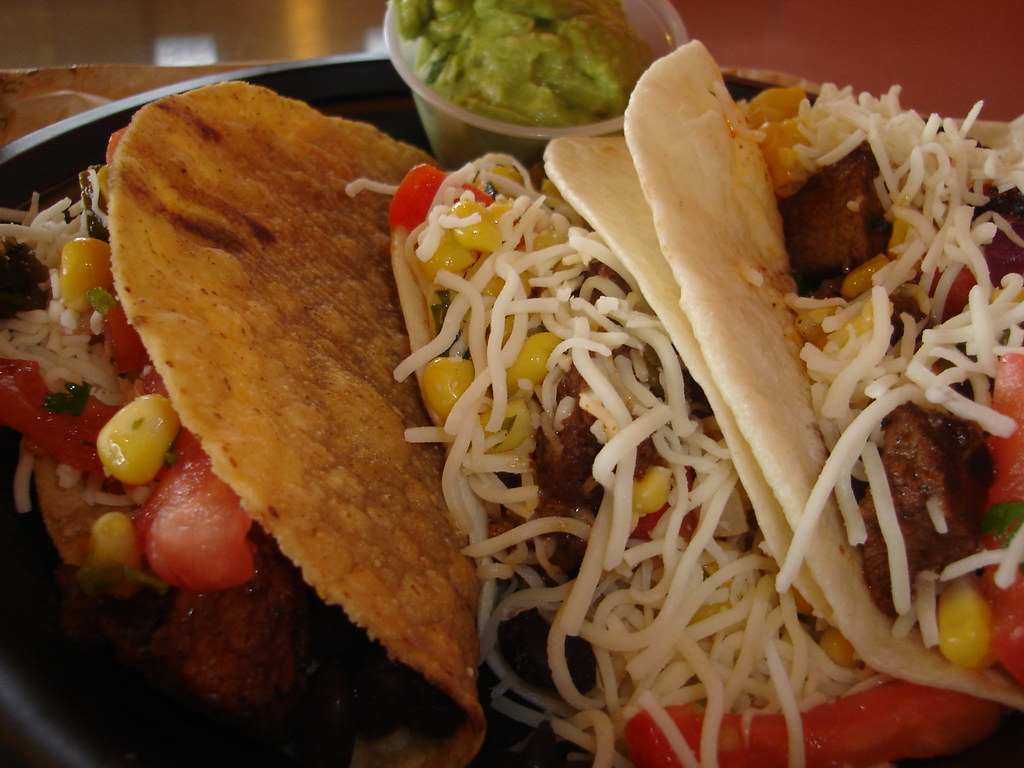
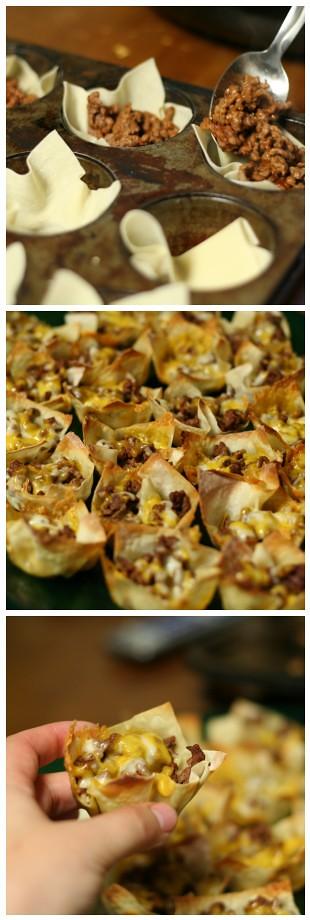
Illustrative licensed food photograph, not an official QDOBA product or evidence of current US portions, availability or prices.mini tacos - step by step. Photo: ginnerobot · Source · CC BY-SA 2.0 · Display cropped to fit.
Official portions for this comparison
| Item / serving | Calories | Protein | Carbs | Fat | Sodium |
|---|---|---|---|---|---|
| Chile Corn Salsa (1 oz.) | 25 | 1 g | 5 g | 0 g | 75 mg |
| Habanero Salsa (1 oz.) | 10 | 0 g | 2 g | 0 g | 110 mg |
| Pico de Gallo (1 oz.) | 5 | 0 g | 1 g | 0 g | 70 mg |
| Roasted Tomato Salsa (1 oz.) | 5 | 0 g | 1 g | 0 g | 190 mg |
| Salsa Roja (1 oz.) | 5 | 0 g | 2 g | 0 g | 85 mg |
| Salsa Verde (1 oz.) | 10 | 0 g | 0 g | 0 g | 240 mg |
Ingredient portions are not complete entrées. Standard-portion combinations are calculated totals; changed portions are estimates. US source published February 26, 2026, checked November 8, 2026. Prices remain Varies without a verified local amount.
Official nutrition brochureWhat this guide covers
- QDOBA salsa calories and sodium: the direct answer
- The exact official source and comparison method
- Pico de Gallo, Roasted Tomato and Roja: equal calories
- Habanero and Verde: the two 10-calorie entries
- Chile Corn Salsa and the exact sodium ranking
- Adding multiple salsas: calculate the stack
- A fixed bowl comparison isolates the salsa
- Chips and salsa: the chips remain a separate component
- Portion changes and useful salsa substitutions
- FAQ: lowest calories, lowest sodium and zero macros
- FAQ: combining salsas and logging a complete order
QDOBA salsa calories and sodium: the direct answer
At the published 1-ounce serving size, QDOBA Pico de Gallo, Roasted Tomato Salsa and Salsa Roja each have 5 calories. Habanero Salsa and Salsa Verde each have 10 calories, while Chile Corn Salsa has 25. Sodium differs much more than those calorie figures suggest: Pico de Gallo has 70 milligrams, Chile Corn Salsa 75, Salsa Roja 85, Habanero Salsa 110, Roasted Tomato Salsa 190 and Salsa Verde 240. Pico is the lowest-sodium option among these six checked entries, and verde is the highest. The difference between them is 170 milligrams of sodium and only 5 calories per reference serving. A low calorie value therefore does not identify the lowest-sodium salsa. Compare the actual names and the same 1-ounce amount, then decide whether you are replacing one salsa with another or adding several. Those are different meal calculations even when every individual salsa looks small on a calorie list.
The exact official source and comparison method
All values come from the QDOBA US Nutrition Brochure dated February 26, 2026, checked November 8, 2026. The official document is the official brochure linked in the source panel. Each of the six entries compared here specifies 1 ounce, so the serving weights align without a conversion. The calorie figures remain exactly as published. This matters for entries whose rounded macro grams do not reconstruct the listed calories through a simple formula. Our local calculator dataset omits fiber and sugars, although the official brochure reports both. This article compares calories, protein, total carbohydrate, fat and sodium without importing values from generic foods. Combinations of multiple listed servings are calculated sums. Fractions or multiples of a single serving are proportional estimates unless independently documented. The source check applies to the nutrition reference, not to an assumed portion in every individual restaurant order.
Pico de Gallo, Roasted Tomato and Roja: equal calories
Pico de Gallo contains 5 calories, 0 grams of protein, 1 gram of carbohydrate, 0 grams of fat and 70 milligrams of sodium per published ounce. Roasted Tomato Salsa also contains 5 calories, 0 grams of protein, 1 gram of carbohydrate and 0 grams of fat, but it lists 190 milligrams of sodium. Salsa Roja contains 5 calories, 0 grams of protein, 2 grams of carbohydrate, 0 grams of fat and 85 milligrams of sodium. Switching from roasted tomato to pico therefore leaves the listed calories and macros unchanged while lowering sodium by 120 milligrams. Switching from roasted tomato to roja also leaves calories unchanged, lowers sodium by 105 milligrams and raises listed carbohydrate by 1 gram. These three entries demonstrate why a five-calorie label is not a complete nutritional comparison. The sodium column distinguishes them more clearly than calories, and roja's published carbohydrate should not be rewritten to match the other two.
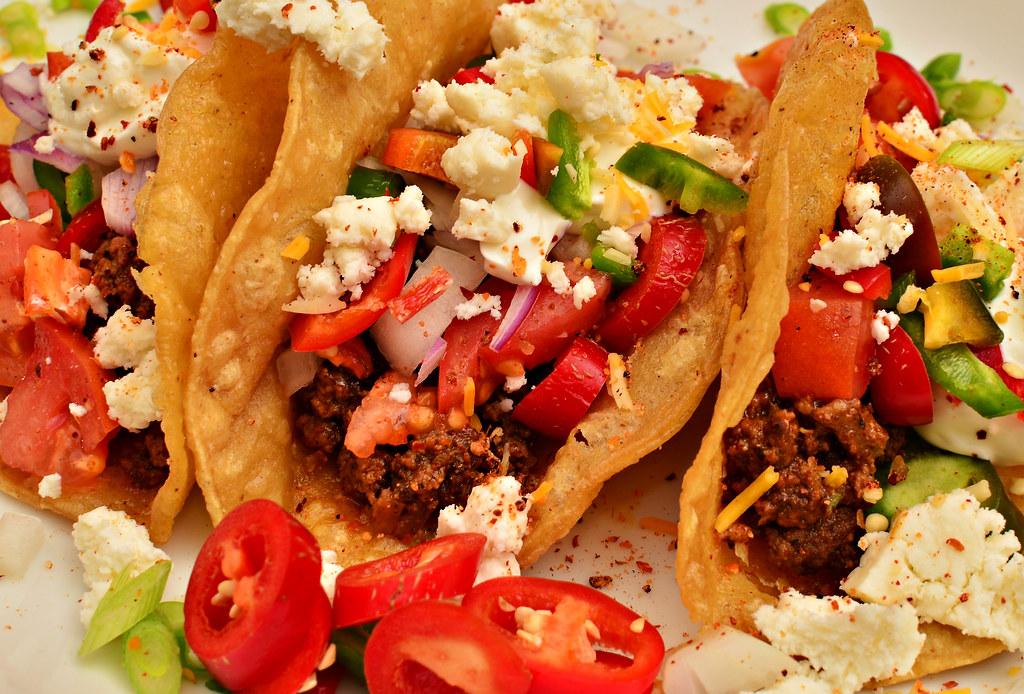
Illustrative licensed food photograph, not an official QDOBA product or evidence of current US portions, availability or prices.Mmm... Tacos - chorizo, queso fresco, onions, tomatoes, jalapenos, sour cream, corn tortillas. Photo: jeffreyw · Source · CC BY 2.0 · Display cropped to fit.
Habanero and Verde: the two 10-calorie entries
Habanero Salsa lists 10 calories, 0 grams of protein, 2 grams of carbohydrate, 0 grams of fat and 110 milligrams of sodium per ounce. Salsa Verde lists 10 calories, 0 grams of protein, 0 grams of carbohydrate, 0 grams of fat and 240 milligrams of sodium. The two have equal published calories but a 130-milligram sodium difference, with habanero lower. Verde's listed zero grams of carbohydrate does not authorize changing its published 10 calories to zero. It also should not be treated as proof that unlimited amounts contribute nothing to a meal. The values are serving-specific nutrition entries with reported precision, not a complete chemical analysis of every possible amount. If your comparison is specifically sodium, habanero is lower at the same documented weight. If you compare carbohydrate, verde's listed value is lower. Retain both observations rather than trying to force the entries into a single best-to-worst ranking.
Chile Corn Salsa and the exact sodium ranking
Chile Corn Salsa contains 25 calories, 1 gram of protein, 5 grams of carbohydrate, 0 grams of fat and 75 milligrams of sodium per published ounce. It has the most calories and carbohydrate among these six entries, yet the second-lowest sodium. The ascending sodium order is Pico de Gallo at 70 milligrams, Chile Corn Salsa at 75, Salsa Roja at 85, Habanero Salsa at 110, Roasted Tomato Salsa at 190 and Salsa Verde at 240. Corn salsa has 20 more calories than pico but only 5 milligrams more sodium. Compared with verde, corn has 15 more calories and 165 milligrams less sodium. Those differences make it especially important not to use calorie ranking as a substitute for sodium ranking. The source supports these numeric comparisons; it does not require a conclusion that the lowest-calorie or lowest-sodium item is automatically the right flavor or portion for every order.
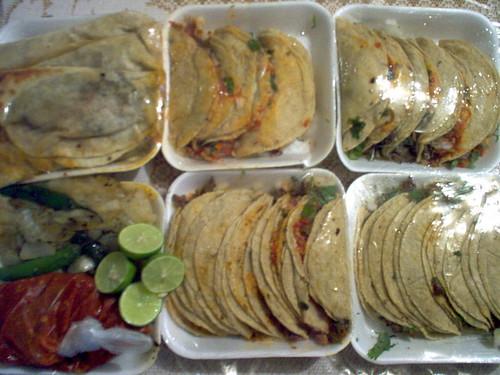
Illustrative licensed food photograph, not an official QDOBA product or evidence of current US portions, availability or prices.Tacos!. Photo: marthax · Source · CC BY-SA 2.0 · Display cropped to fit.
Adding multiple salsas: calculate the stack
One published ounce each of Pico de Gallo and Salsa Roja produces a calculated 10 calories, 0 grams of protein, 3 grams of carbohydrate, 0 grams of fat and 155 milligrams of sodium. Pico plus Salsa Verde totals 15 calories, 1 gram of carbohydrate and 310 milligrams of sodium, with zero listed protein and fat. Roasted Tomato Salsa plus Salsa Verde also totals 15 calories and 1 gram of carbohydrate, but reaches 430 milligrams of sodium. For a three-salsa example, pico, roja and corn together contribute 35 calories, 1 gram of protein, 8 grams of carbohydrate, 0 grams of fat and 230 milligrams of sodium. These are sums of three full reference portions, not a mixed single-ounce serving. A request for several salsas does not establish the total weight served. The examples make the assumption explicit so that low individual calorie values do not conceal a meaningful accumulation of sodium.
A fixed bowl comparison isolates the salsa
Use a custom baseline of 4 ounces of Seasoned Brown Rice, 4 ounces of Black Beans and 3.5 ounces of Grilled Adobo Chicken. Before salsa, the entries sum to 500 calories, 32 grams of protein, 62 grams of carbohydrate, 14.5 grams of fat and 1,020 milligrams of sodium. Add 1 ounce of Pico de Gallo and the bowl becomes 505 calories with 1,090 milligrams of sodium. Roasted Tomato Salsa gives the same 505 calories but 1,210 milligrams of sodium. Salsa Roja gives 505 calories and 1,105 milligrams. Habanero gives 510 calories and 1,130 milligrams; verde gives 510 calories and 1,260 milligrams. Corn gives 525 calories and 1,095 milligrams. These are ingredient-sum examples rather than official named bowls. Keeping rice, beans and chicken unchanged makes every difference traceable to the salsa instead of combining a salsa swap with changes in meat, rice quantity or toppings.
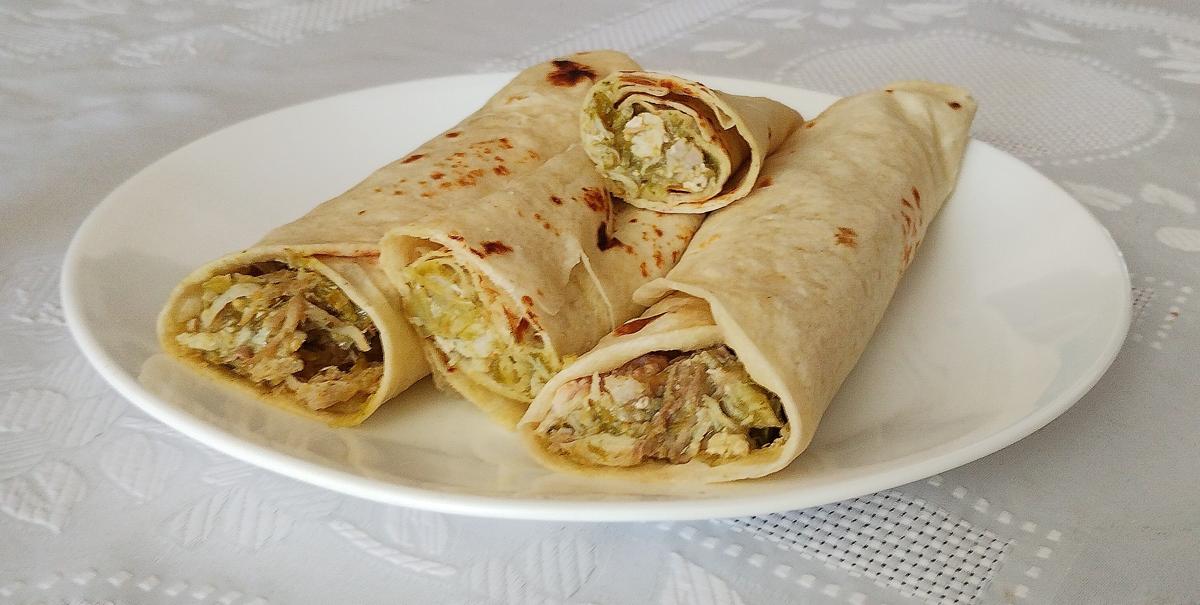
Illustrative licensed food photograph, not an official restaurant product or evidence of serving size, availability or prices.Burrito chihuahuense de chile verde.jpg. Photo: Levi bernardo · Source · CC BY-SA 4.0 · Display cropped to fit.
Chips and salsa: the chips remain a separate component
A published 4-ounce Tortilla Chips serving contains 560 calories, 7 grams of protein, 75 grams of carbohydrate, 26 grams of fat and 220 milligrams of sodium. Add 1 ounce of Pico de Gallo and the combination totals 565 calories and 290 milligrams of sodium. With Roasted Tomato Salsa, it is 565 calories and 410 milligrams; with Salsa Roja, 565 calories and 305 milligrams. Habanero produces 570 calories and 330 milligrams, while verde produces 570 calories and 460 milligrams. Corn produces 585 calories and 295 milligrams. These totals show two different scales: salsa choice changes the side's calories by up to 20, while the full chip reference portion contributes 560 before salsa. Sodium still varies substantially with the dip. If you share the chips, allocate the chip portion separately rather than assuming that your fraction of chips exactly matches your fraction of salsa.
Portion changes and useful salsa substitutions
There are no independent 2-ounce salsa entries in the checked data. Modeling twice the reference portion therefore gives estimates, such as 10 calories and 140 milligrams of sodium for 2 ounces of pico, or 20 calories and 480 milligrams for 2 ounces of verde. A blend containing an estimated half ounce each of pico and verde totals 7.5 calories and 155 milligrams of sodium. That is not the same as a full ounce of each, which totals 15 calories and 310 milligrams. Substitution calculations also require removing the original ingredient. Replacing the published 1-ounce Sour Cream serving, at 50 calories and 10 milligrams of sodium, with 1 ounce of pico lowers calories by 45 but raises sodium by 60 milligrams. Adding pico while retaining sour cream does not produce that calorie reduction. Make the serving assumption and the removed ingredient explicit before describing any change as a saving.
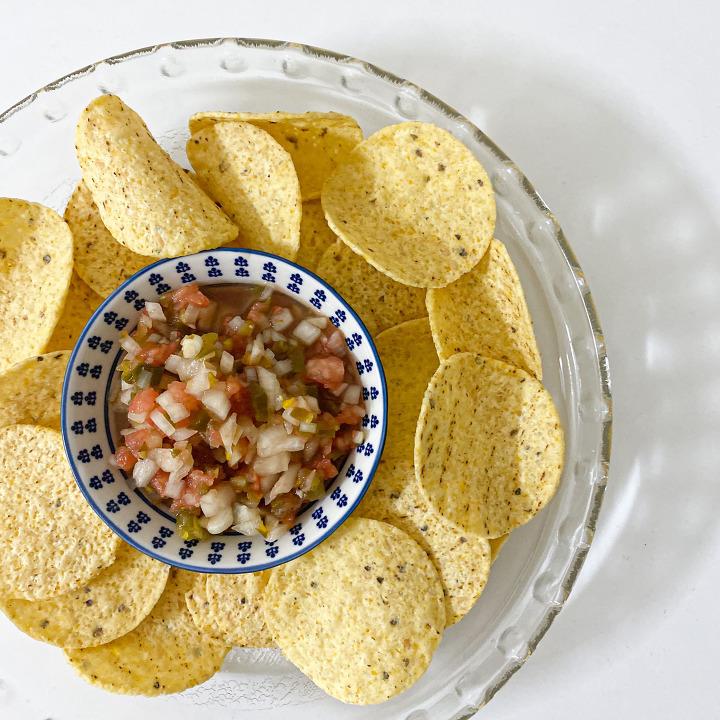
Illustrative licensed food photograph, not an official restaurant product or evidence of serving size, availability or prices.Homemade salsa with nachos 1.jpg. Photo: 에그란 · Source · CC BY 4.0 · Display cropped to fit.
FAQ: lowest calories, lowest sodium and zero macros
Which QDOBA salsa has the fewest calories? Pico de Gallo, Roasted Tomato Salsa and Salsa Roja tie at 5 calories per published ounce. Which has the least sodium? Pico, at 70 milligrams, followed closely by corn at 75. Is verde a low-sodium choice because it has only 10 calories? No. It has the highest sodium among these six entries at 240 milligrams per ounce. Why does verde list calories with zero grams of protein, carbohydrate and fat? The source provides those values at its reported precision; this guide retains them rather than reverse-engineering or correcting the calorie entry. Does a zero fat listing establish that every possible portion contains exactly no fat? It describes the published serving entry and should not be extended into an unlimited-portion claim. Are sugars or fiber available? Not in the supplied entries, so neither is invented and no net-carbohydrate figure is calculated.
FAQ: combining salsas and logging a complete order
Does choosing two salsas replace one with the other? Only if one is actually removed. If both are included, count both portions using a stated weight assumption. Can corn salsa have more calories but less sodium than roasted tomato? Yes: corn lists 25 calories and 75 milligrams, while roasted tomato lists 5 calories and 190 milligrams per ounce. Should salsa be added to a named bowl's published total? Only when it is an extra portion not already included in that complete-item entry. For a custom bowl, select each ingredient once and keep chips outside the bowl calculation unless they are part of the meal being totaled. What is the simplest practical comparison? Hold the bowl fixed, compare one published ounce of each salsa and examine calories and sodium separately. That method preserves the exact source values while avoiding the misleading assumption that every five- or ten-calorie topping makes the same nutritional contribution.
See the full QDOBA menu
Prices, calories and macros for every item, or build a meal in the calculator.
Sources and corrections
Nutrition figures on Well.now come from official US restaurant sources, linked on each brand page with a last-checked date. Prices use verified local amounts first, then clearly labeled sourced estimates; Varies appears when neither is available. See our sources and methodology, or email be@well.now with a correction.
About the Well.now Editorial Team
This article was written and fact-checked by the Well.now Editorial Team. We check nutrition claims against each chain's official US information and never publish prices we cannot confirm. Well.now is independent and not paid by any restaurant. Read our editorial policy.