 Menu Prices
Illustrative licensed food photograph, not an official QDOBA product or evidence of current US portions, availability or prices.Mmm... beef brisket burrito with beans. Photo: jeffreyw · Source · CC BY 2.0 · Display cropped to fit.
Your QDOBA order, with sources
Ingredient portions are not complete entrées. Standard-portion combinations are calculated totals; changed portions are estimates. US source published February 26, 2026, checked November 8, 2026. Prices remain Varies without a verified local amount.
Official nutrition brochureWhat this guide covers
- Choose the service format before comparing prices
- Turn attendance into an ordering conversation
- Understand the Hot Bar ingredient categories
- Clarify toppings, shells, and add-ons
- Compare the complete quote, not only food
- Confirm order timing with the selected restaurant
- Separate arrival, setup, and serving time
- Verify equipment and table requirements
- Plan dietary needs before finalizing the package
- Understand why individual nutrition totals do not scale neatly
- Organize the serving line around real guest behavior
- Ask about changes, leftovers, and rewards separately
- Use a final confirmation that covers the whole event
Choose the service format before comparing prices
QDOBA’s official catering page presents customizable Hot Bars, Boxed Meals, and Build Your Own Taco Kits. These formats solve different event problems, so begin with how people will eat rather than looking for one universal catering price. A shared Hot Bar supports individual assembly, while boxed meals can simplify distribution when guests have limited time or eat in different places. Taco kits may suit a group that wants a shared meal built around that format. Ask the selected restaurant which options it currently offers and what each package includes. Availability and prices vary by market. A useful comparison requires matching the format to the event, then obtaining a local quote for the actual order rather than applying a generic per-person figure found elsewhere.
Turn attendance into an ordering conversation
Give the restaurant a realistic expected headcount and explain the event’s structure. Is catering the main meal, part of a larger spread, or food available over an extended gathering? Are guests arriving together or in waves? Those details help the location recommend an appropriate package and quantity. Do not treat a tray’s apparent size or an individual restaurant portion as a reliable serving calculator. Confirm package headcounts, minimums, and any quantity increments directly with the catering team. If attendance is uncertain, ask how and when the count can be adjusted. Separate confirmed guests from possible additions so you can understand the budget implications. An accurate event description is more useful than arbitrarily adding a large buffer that may create unnecessary cost and leftovers.
Understand the Hot Bar ingredient categories
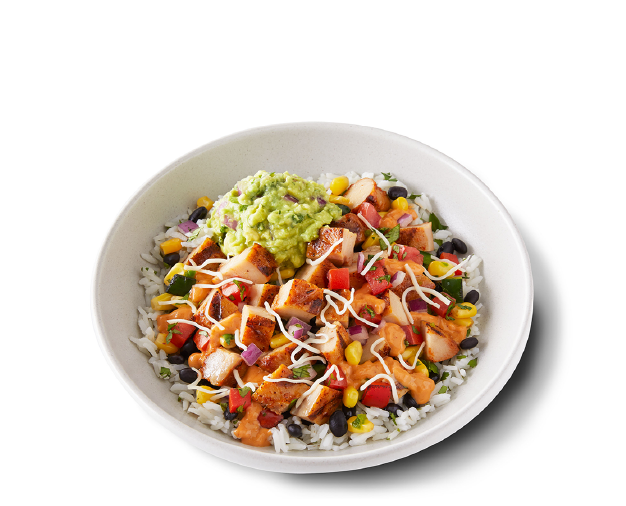
The official catering page lists proteins, rice and beans, toppings, and salsas as the main Hot Bar building blocks. Protein examples include grilled adobo chicken, grilled steak, ground beef, pulled pork, Cholula Hot and Sweet Chicken, and brisket birria. Rice choices shown include cilantro lime and seasoned brown rice, with black or pinto beans. These national descriptions are useful for planning a preferred combination, but the restaurant must confirm what is available for your order and which selections are included in the quoted package. Ask how many choices are allowed within each category and whether a particular protein changes the price. Do not assume that every listed ingredient is included simultaneously or that a menu photograph represents the exact quantities and selections in the local quote.
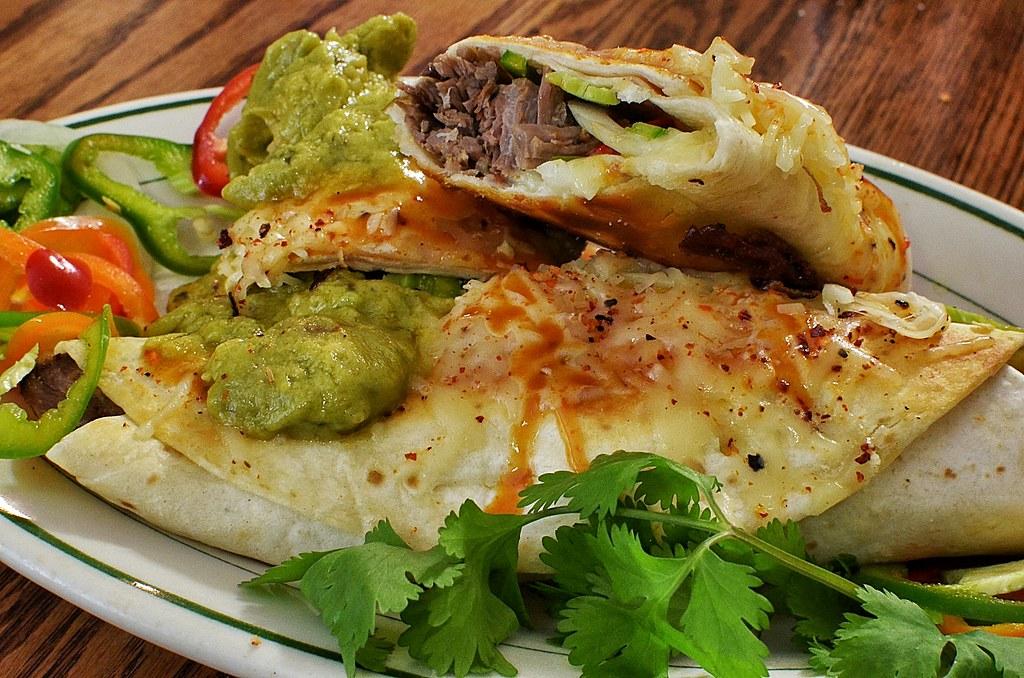
Illustrative licensed food photograph, not an official QDOBA product or evidence of current US portions, availability or prices.Mmm... beef brisket burritos. Photo: jeffreyw · Source · CC BY 2.0 · Display cropped to fit.
Clarify toppings, shells, and add-ons
QDOBA’s catering page describes toppings such as guacamole, romaine, shredded cheese, sour cream, and several salsas. It separately highlights add-ons including signature quesos, fajita vegetables, crispy corn taco shells, and warm flour tortillas. The distinction makes it important to ask what your specific package includes rather than assuming every pictured component is standard. Request an itemized description of any additions and their charges. For example, a group expecting both bowls and tacos needs the appropriate serving items and tortillas or shells confirmed in advance. If you want multiple sauces, ask how they are portioned and whether the quoted amount matches the intended headcount. Clear package boundaries prevent a seemingly inexpensive quote from changing substantially once the ingredients guests expect are added.
Compare the complete quote, not only food
A realistic catering budget includes the food package and every applicable local charge. Ask about tax, delivery, service-related fees, optional gratuity, add-ons, and any other charges shown in the checkout or written quote. Do not assume a fee is included because another location included it previously. If comparing pickup with delivery, compare the final totals and the work each option leaves to the host. A lower food subtotal may not be the lower-cost arrangement once transport, setup supplies, or staff time are considered. This guide does not provide invented catering prices because QDOBA states that prices vary by market. Save the final itemized quote and confirm that the location, event date, headcount, package, and service arrangement all match your plan before approving payment.
Confirm order timing with the selected restaurant
QDOBA’s catering FAQs discuss advance ordering and short-notice requests, but event planning should still rely on confirmation from the restaurant fulfilling the order. Ask what notice is required for your chosen format, quantity, date, and pickup or delivery arrangement. Busy periods, local capacity, and a large order can affect what is feasible. If the event is soon, explain that immediately rather than completing a detailed menu plan before asking about capacity. Confirm the deadline for changes and what happens if attendance shifts. Do not assume that an online time slot establishes every setup detail or that a general national guideline guarantees acceptance. A direct confirmation gives you a usable plan and a clear point of contact if the event schedule changes after the order is placed.
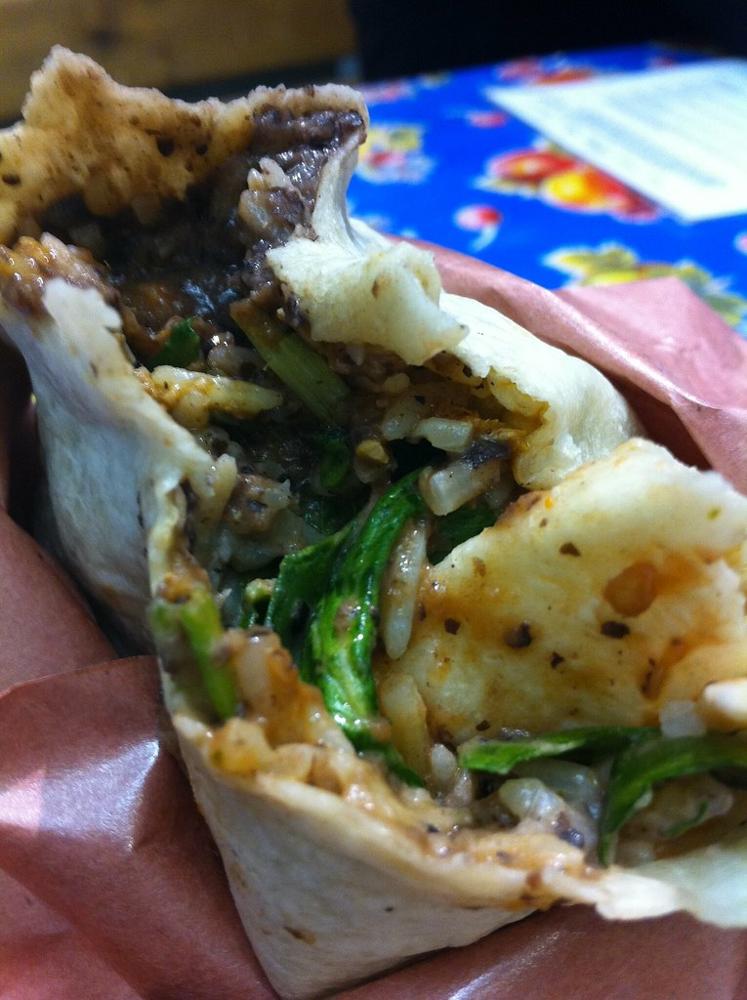
Illustrative licensed food photograph, not an official QDOBA product or evidence of current US portions, availability or prices.Burrito puerco. Photo: jenarrr · Source · CC BY-SA 2.0 · Display cropped to fit.
Separate arrival, setup, and serving time
Food arriving at the venue is not the same as a buffet being ready for guests. Tell the restaurant when you want service to begin and ask how arrival and setup should be scheduled locally. Confirm who carries the order inside, where setup occurs, and what access the driver or team needs. Building security, elevators, parking restrictions, loading areas, and long walks can complicate a seemingly simple delivery. Provide a reachable event contact rather than only the organization’s main phone number. If pickup is the plan, identify who will collect the food and whether their vehicle can transport it appropriately. Ask how many containers to expect. Working backward from the desired serving time helps avoid a common problem: guests arriving while the host is still unpacking the order.
Verify equipment and table requirements
The catering FAQs describe Hot Bar equipment and serving supplies, but confirm the contents of your order rather than extrapolating those details to every catering format. Ask about warming equipment, fuel, serving utensils, plates, forks, napkins, and any bowls or other items your format requires. Check venue rules before planning to use fuel-based warmers, since building policies may affect the setup. Ask the restaurant how much table space the specific order needs and whether separate areas are useful for drinks or utensils. A photograph does not establish the footprint of a larger order. Confirm who assembles the warming arrangement and what instructions the host should follow. These details turn a food purchase into a workable service plan and reduce the chance of discovering missing essentials as guests line up.
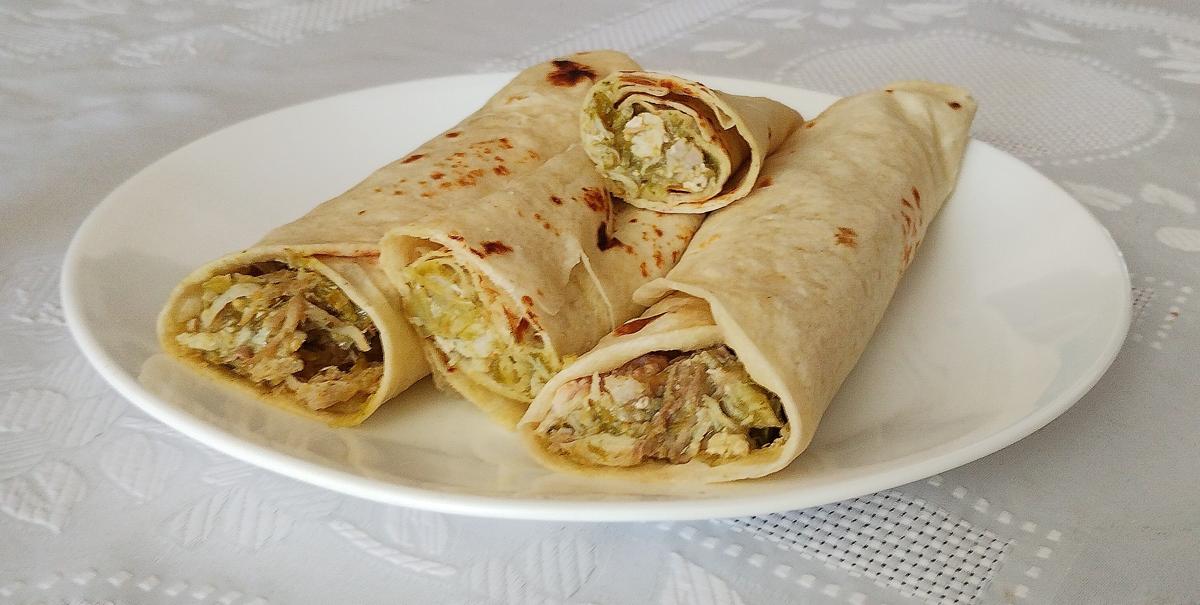
Illustrative licensed food photograph, not an official restaurant product or evidence of serving size, availability or prices.Burrito chihuahuense de chile verde.jpg. Photo: Levi bernardo · Source · CC BY-SA 4.0 · Display cropped to fit.
Plan dietary needs before finalizing the package
Ask guests about dietary restrictions early enough to discuss them with the restaurant. A customizable spread offers choices, but it does not automatically meet every allergy, gluten-related, vegetarian, or vegan need. QDOBA’s gluten-friendly guidance includes a cross-contamination qualification, and a shared buffet introduces additional opportunities for utensils and ingredients to mix after delivery. Tell the catering team the specific requirements and ask what current ingredient information and preparation options are available. Do not label the whole event allergy-safe based on a general menu category. If a guest needs a separately prepared meal, discuss that directly and clarify the limits of the arrangement. Clear ingredient labels and dedicated utensils can reduce confusion at service, but they do not replace verification of the restaurant’s preparation process.
Understand why individual nutrition totals do not scale neatly
The supporting dataset uses the QDOBA US nutrition brochure dated February 26, 2026, checked November 8, 2026. Its ingredient values describe stated portions, and its complete meal entries describe specified builds. Neither automatically establishes what each guest will eat from a catering tray. Buffet portions vary, guests may return for more, and the ratio of rice, protein, toppings, and sauces differs across plates. You can share current ingredient-level information when appropriate, but avoid publishing a precise per-guest calorie count without a verified catering serving basis. The dataset also does not contain usable catering prices or package headcounts. Keep nutrition reference material separate from the local quote, and ask the restaurant for any catering-specific information needed for an event disclosure or an attendee’s individual planning.
Organize the serving line around real guest behavior
A well-organized buffet reduces congestion and ingredient mix-ups. Think through where guests collect their plate or bowl, how they move through the main components, and where drinks and utensils belong. Keep serving utensils with their assigned containers and label ingredients clearly using information confirmed with the restaurant. If the room allows, place drinks away from the food line so one slow decision does not stop everyone. For an office meeting, consider whether all guests must eat within a short break or can arrive gradually. Boxed meals may solve a distribution problem that a larger Hot Bar would not. The best format is not necessarily the one with the most customization. It is the one that fits the space, available time, and level of host supervision.
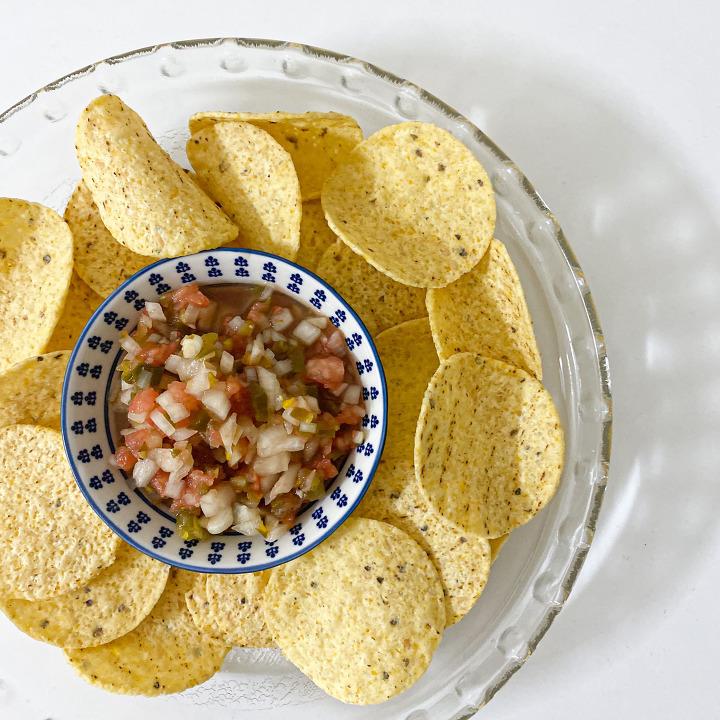
Illustrative licensed food photograph, not an official restaurant product or evidence of serving size, availability or prices.Homemade salsa with nachos 1.jpg. Photo: 에그란 · Source · CC BY 4.0 · Display cropped to fit.
Ask about changes, leftovers, and rewards separately
Before approving the order, confirm how changes or cancellations are handled and keep a copy of the applicable terms. Ask what to do if the delivery contact changes or the venue moves the serving area. Plan appropriate handling and refrigeration for leftovers rather than assuming buffet food can remain out throughout a long event. Catering rewards also deserve their own conversation: QDOBA’s FAQs describe a catering rewards program, but you should verify current enrollment, earning, redemption, and receipt requirements for the order. Do not subtract an unconfirmed reward from the event budget or assume that a consumer app offer applies to catering. A reward may add value later, but the event should remain affordable based on the confirmed amount due and the services actually included.
Use a final confirmation that covers the whole event
A complete final confirmation should identify the restaurant, event date, guest count, selected format, ingredient choices, additions, dietary discussions, and itemized total. It should also establish pickup or delivery details, the event contact, setup expectations, included supplies, and the plan for any required warming equipment. Confirm local timing, fees, headcounts, and change policies directly rather than treating a national overview as a binding local arrangement. Keep the confirmation accessible to the person receiving the order, not only the person who paid. When the food arrives, check containers and supplies against that record before service begins. QDOBA’s catering menu provides a useful range of formats, but a successful event depends on translating that menu into a locally confirmed plan with no major assumptions left unresolved.
See the full QDOBA menu
Prices, calories and macros for every item, or build a meal in the calculator.
Sources and corrections
Nutrition figures on Well.now come from official US restaurant sources, linked on each brand page with a last-checked date. Prices use verified local amounts first, then clearly labeled sourced estimates; Varies appears when neither is available. See our sources and methodology, or email be@well.now with a correction.
About the Well.now Editorial Team
This article was written and fact-checked by the Well.now Editorial Team. We check nutrition claims against each chain's official US information and never publish prices we cannot confirm. Well.now is independent and not paid by any restaurant. Read our editorial policy.