 Nutrition
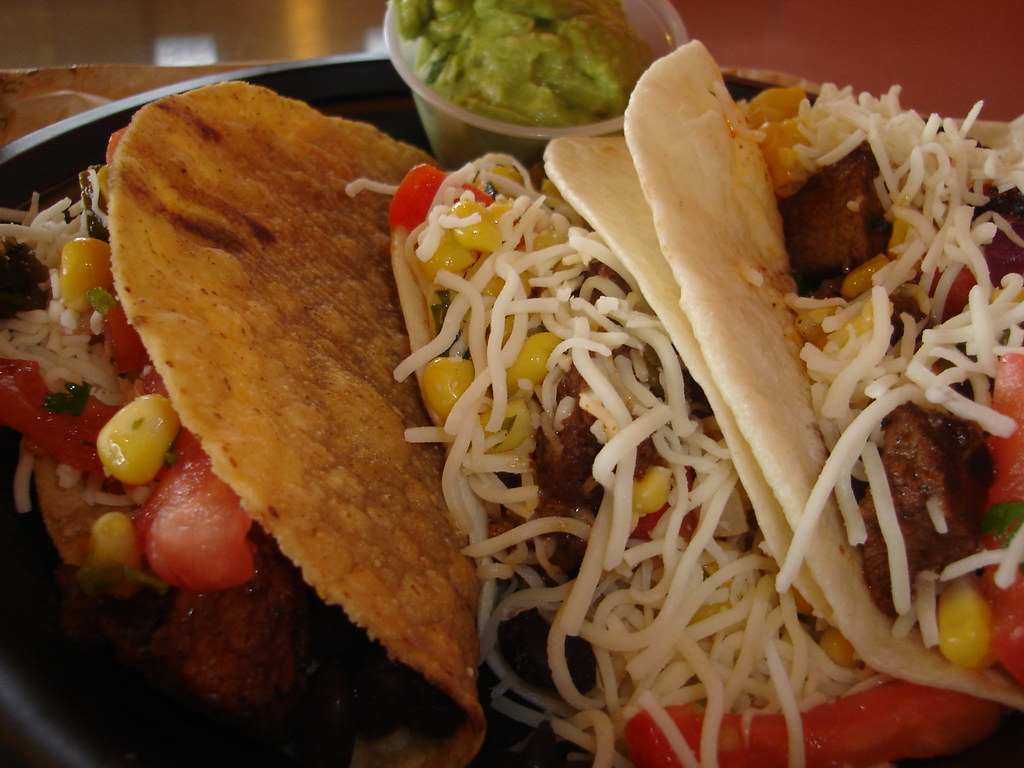
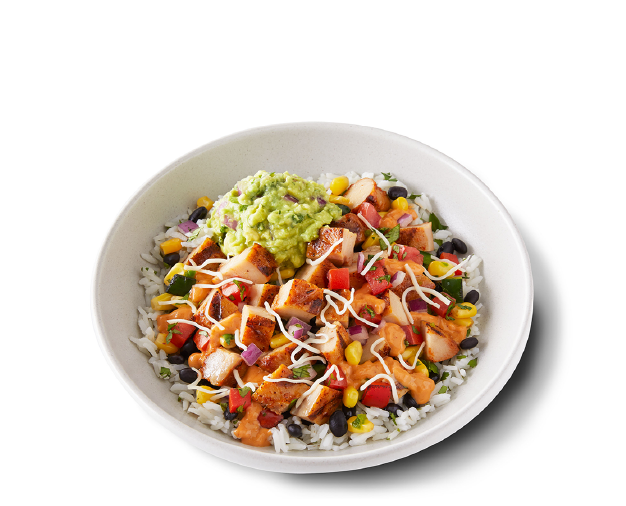
Illustrative licensed food photograph, not an official QDOBA product or evidence of current US portions, availability or prices.Guacamole. Photo: Lorena Betta · Source · CC BY 2.0 · Display cropped to fit.
Your QDOBA order, with sources
Ingredient portions are not complete entrées. Standard-portion combinations are calculated totals; changed portions are estimates. US source published February 26, 2026, checked November 8, 2026. Prices remain Varies without a verified local amount.
Official nutrition brochureWhat this guide covers
- Start with total carbohydrate, not a keto promise
- Establish the source chicken bowl baseline
- Rice swaps: small substitution versus complete removal
- Beans are a separate decision from rice
- A defined 11-gram chicken and guacamole bowl
- Protein swaps can change carbohydrates and other totals
- Count sauces by their actual portions
- Salad bases and crunchy additions change the result
- A meatless comparison without a net-carb claim
- FAQs: named keto bowls, drinks, and half portions
- A dairy swap with unchanged calorie totals
Start with total carbohydrate, not a keto promise
This guide uses total carbohydrate exactly as reported in the QDOBA US nutrition dataset. It does not calculate net carbs because the supplied data does not include the fiber information needed for that calculation. Lower-carb means lower than a clearly identified comparison, not a universal threshold or a guarantee of ketosis. All examples use the February 26, 2026 US brochure, checked November 8, 2026, rather than a live menu. Listed ingredient portions are added together, so totals describe a specific recipe, not every bowl carrying a similar name. Rice, beans, tortillas, sauces, and drinks all remain part of the arithmetic. A meal with fewer carbohydrates can still contain substantial calories or sodium, which is why several examples show those figures too. Decide what total-carbohydrate range you are comparing against, then choose fixed substitutions instead of relying on phrases such as light, protein-style, or keto-friendly.
Establish the source chicken bowl baseline
The source chicken and black bean bowl contains 4 ounces of cilantro lime rice, 4 ounces of black beans, 3.5 ounces of grilled adobo chicken, and 1 ounce of pico. Its total carbohydrate is 38 + 24 + 2 + 1 = 65 grams. It also contains 525 calories, 31 grams of protein, and 1,230 milligrams of sodium. Put that same filling into the listed 12.5-inch flour tortilla and the carbohydrate total becomes 117 grams because the tortilla contributes 52. Calories rise to 825 and sodium to 1,990 milligrams. This pair is useful because only the format changes. Switching from that burrito to the otherwise identical bowl removes exactly the tortilla's published contribution. It does not remove rice or beans. If your intended order already comes in a bowl, claiming the tortilla savings again would double-count a change you have already made.
Rice swaps: small substitution versus complete removal
Cilantro lime rice contains 38 grams of total carbohydrate per 4 ounces, while seasoned brown rice contains 36 grams for the same listed weight. Swapping brown rice into the baseline chicken bowl reduces its total from 65 to 63 grams, a 2-gram difference. It also changes calories from 525 to 505 and sodium from 1,230 to 1,090 milligrams. Removing cilantro lime rice entirely is a much larger carbohydrate change: the baseline becomes 27 grams, 335 calories, and 840 milligrams of sodium. These are separate actions with different results. Brown rice is not a near-zero-carbohydrate substitute for cilantro lime rice in this dataset. If you replace the removed rice with the listed 2-ounce fajita vegetable portion, add back 3 grams of carbohydrate and 40 calories. That produces the source no-rice chicken build at 30 grams of carbohydrate and 375 calories.
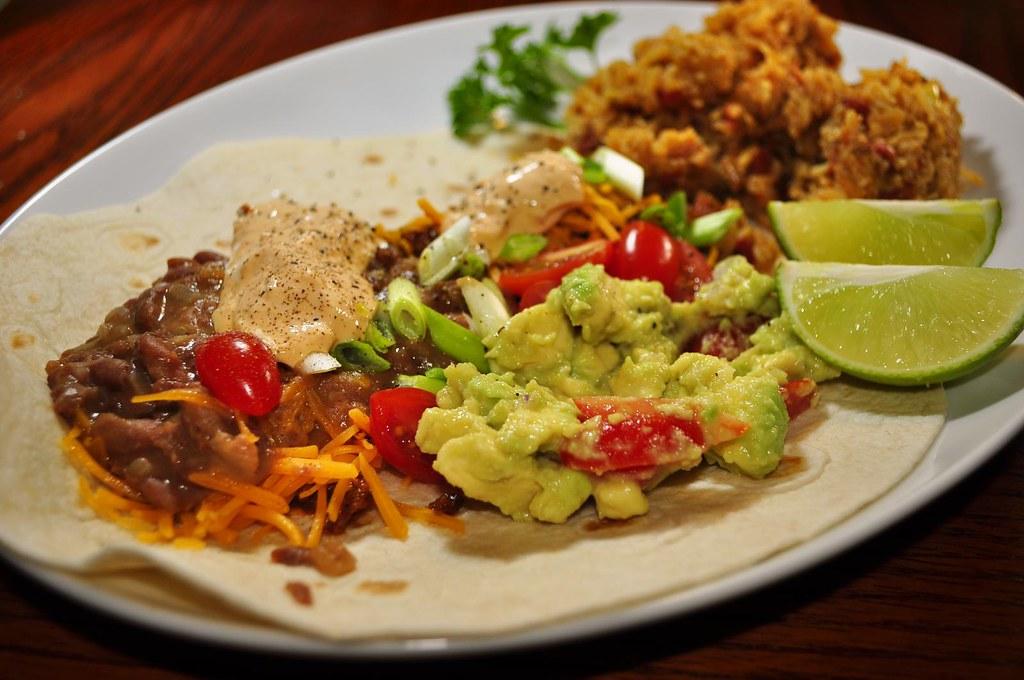
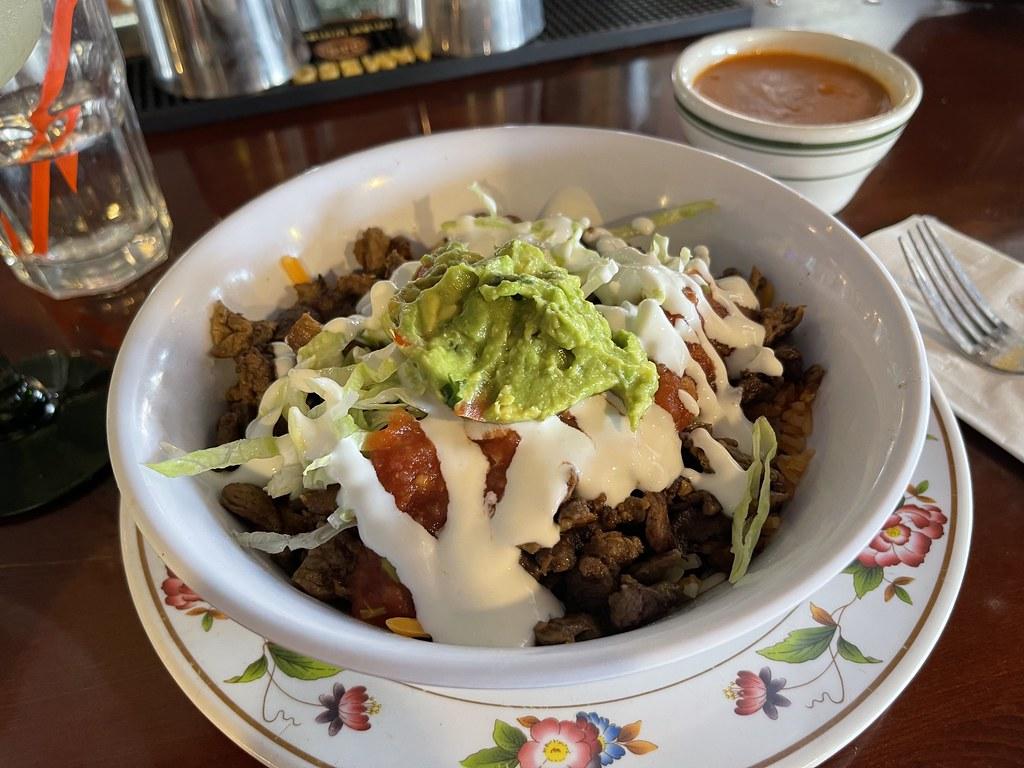
Illustrative licensed food photograph, not an official QDOBA product or evidence of current US portions, availability or prices.Mmm...bean burrito with chorizo and guacamole. Photo: jeffreyw · Source · CC BY 2.0 · Display cropped to fit.
Beans are a separate decision from rice
Black beans contribute 24 grams of total carbohydrate, 9 grams of protein, and 140 calories per 4-ounce portion. Pinto beans contribute 23 grams of carbohydrate, 8 grams of protein, and 130 calories at the same listed weight. A black-to-pinto substitution therefore reduces carbohydrate by just 1 gram. In the 30-gram no-rice chicken bowl, that substitution produces 29 grams, not a dramatically different meal. Removing black beans from that build instead gives chicken, fajita vegetables, and pico at 6 grams of carbohydrate, 235 calories, and 20 grams of protein. You have also removed the beans' listed protein contribution and 330 milligrams of sodium. These tradeoffs are why a fixed recipe is more useful than simply saying skip the carbs. Rice and beans can be adjusted independently, and a person who wants beans can keep them while removing a tortilla or changing another part of the order.
A defined 11-gram chicken and guacamole bowl
For a custom bowl without rice or beans, combine grilled adobo chicken, fajita vegetables, pico, and the 2-ounce guacamole serving. The carbohydrate calculation is 2 + 3 + 1 + 5 = 11 grams. Calories total 190 + 40 + 5 + 80 = 315, protein totals 21 grams, and sodium totals 785 milligrams. Order the chicken at its listed 3.5-ounce portion, vegetables at 2 ounces, pico at 1 ounce, and guacamole at 2 ounces. This recipe is not the same thing as the published Keto Bowl - Chicken, even though both happen to show 11 grams of carbohydrate. The published complete meal has 400 calories, 33 grams of protein, and 990 milligrams of sodium. Matching one nutrient does not establish matching ingredients or portions. Use the custom calculation only for the custom ingredients listed here, and use the complete entry for the named complete meal.
Illustrative licensed food photograph, not an official QDOBA product or evidence of current US portions, availability or prices.jalapeno guacamole. Photo: johnnycochran · Source · CC BY 2.0 · Display cropped to fit.
Protein swaps can change carbohydrates and other totals
Using the 11-gram custom chicken bowl as the fixed reference, substitute one listed protein portion while leaving vegetables, pico, and 2-ounce guacamole unchanged. Pork carnitas has zero grams of carbohydrate per 3.5 ounces, so that version totals 9 grams, 235 calories, and 905 milligrams of sodium. Brisket birria has 3 grams, producing 12 grams, 265 calories, and 795 milligrams of sodium. Grilled steak has 5 grams, producing 14 grams, 485 calories, and 945 milligrams of sodium. Cholula Hot & Sweet Chicken has 10 grams, producing 19 grams, 315 calories, and 885 milligrams of sodium. These comparisons show why all chicken preparations should not share one assumed carbohydrate value. They also show why fewer carbohydrates do not automatically mean less sodium. Carnitas reduces carbohydrate relative to adobo chicken in this recipe while increasing the sodium total by 120 milligrams.
Count sauces by their actual portions
The listed 1-ounce salsa portions vary: salsa verde has zero grams of carbohydrate, pico and roasted tomato salsa each have 1, salsa roja and habanero each have 2, and chile corn salsa has 5. Replacing pico with chile corn salsa in the 11-gram chicken and guacamole bowl produces 15 grams of carbohydrate. Replacing pico with salsa verde produces 10 grams, but sodium rises from 785 to 955 milligrams because verde has 240 milligrams versus pico's 70. Three Cheese Queso contributes 3 grams of carbohydrate per 2 ounces; sour cream contributes 3 per ounce; shredded cheese contributes 1 per ounce. Adding all three to the 11-gram bowl brings it to 18 grams and adds 240 calories. A small carbohydrate increase can accompany a larger calorie increase. Decide which sauce or dairy addition you want rather than treating every low-carbohydrate topping as numerically interchangeable.
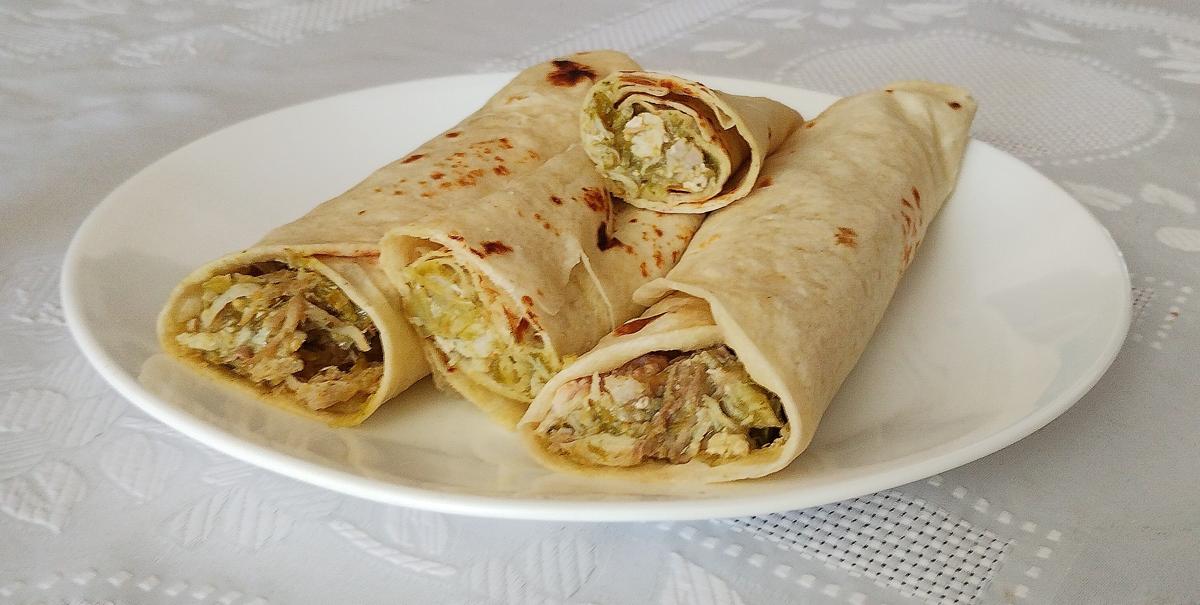
Illustrative licensed food photograph, not an official restaurant product or evidence of serving size, availability or prices.Burrito chihuahuense de chile verde.jpg. Photo: Levi bernardo · Source · CC BY-SA 4.0 · Display cropped to fit.
Salad bases and crunchy additions change the result
The dataset distinguishes a quarter-ounce romaine garnish from a 3.5-ounce salad portion. The garnish is listed at zero grams of carbohydrate, while the salad portion has 3 grams, 15 calories, and 10 milligrams of sodium. Add the salad portion to the 11-gram custom chicken and guacamole build and it becomes 14 grams and 330 calories before dressing. Citrus vinaigrette contributes another 7 grams per 1.5 ounces, bringing that version to 21 grams and 430 calories. Picante ranch contributes 3 grams per 1.5 ounces, producing 17 grams and 410 calories instead. Tortilla strips add 8 grams per half-ounce. The crunchy tortilla shell adds 41 grams, and the 12.5-inch flour tortilla adds 52. A salad with dressing and a shell therefore requires its own calculation. The word salad alone does not identify a carbohydrate total or mean that the bowl and salad versions are equivalent.
A meatless comparison without a net-carb claim
The source veggie bowl combines brown rice, black beans, fajita vegetables, pico, and 2-ounce guacamole for 69 grams of total carbohydrate, 435 calories, and 15 grams of protein. Removing only brown rice produces 33 grams, 265 calories, and 11 grams of protein. At select locations, adding the listed 3.1-ounce Plant-Based Impossible portion to that no-rice version produces 41 grams of carbohydrate, 435 calories, and 24 grams of protein. If both rice and beans are omitted instead, Impossible with vegetables, pico, and guacamole totals 17 grams of carbohydrate, 295 calories, and 15 grams of protein. These are ingredient calculations, not confirmation that every component meets a particular vegetarian or vegan standard. Verify ingredients and preparation if that matters to your order. Impossible is explicitly marked select locations only, and availability cannot be inferred from its presence in the nutrition brochure.
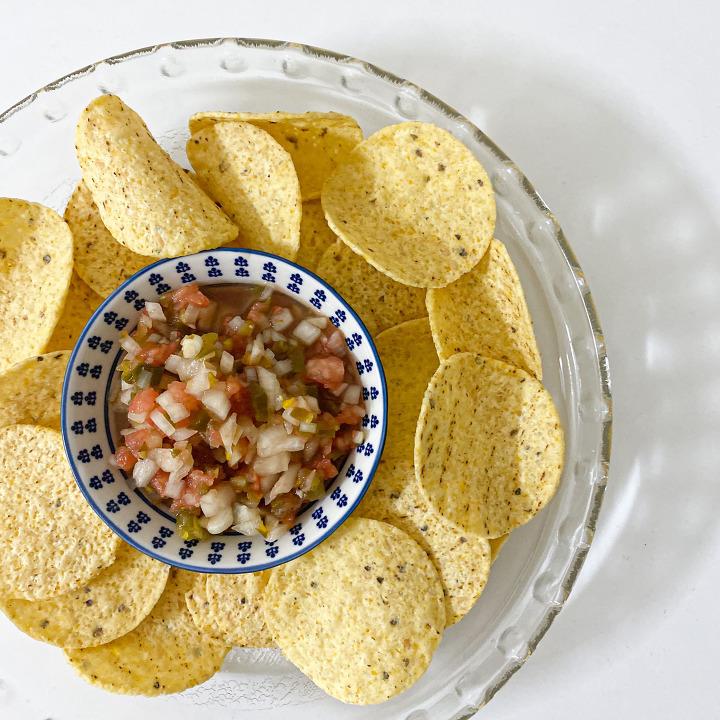
Illustrative licensed food photograph, not an official restaurant product or evidence of serving size, availability or prices.Homemade salsa with nachos 1.jpg. Photo: 에그란 · Source · CC BY 4.0 · Display cropped to fit.
FAQs: named keto bowls, drinks, and half portions
Does a named keto bowl guarantee ketosis? No. The dataset lists Keto Bowl - Chicken at 11 grams of total carbohydrate and Keto Bowl - Steak at 13, but a menu name cannot establish an individual metabolic outcome. Can drinks change the comparison substantially? Yes. A 20-fluid-ounce Coca Cola adds 67 grams of carbohydrate, taking the custom 11-gram bowl plus drink to 78 grams. The listed Diet Coke has zero grams, although it contributes 65 milligrams of sodium. Can you count half rice? Half the published brown rice serving would mathematically contribute 18 grams of carbohydrate, but that assumes a measured 2-ounce portion. A casual half scoop is not a verified weight. What should you say when ordering? Name the included ingredients and exclusions: bowl, no rice or beans, adobo chicken, fajita vegetables, pico, and 2-ounce guacamole. Then count any dressing, tortilla, drink, or side separately.
A dairy swap with unchanged calorie totals
For the custom 315-calorie chicken, vegetable, pico and guacamole example, replacing the 2-ounce guacamole portion with 2 ounces of Three Cheese Queso leaves calories at 315. Total carbohydrates change from 11 to 9 grams because guacamole contributes 5 and queso contributes 3. Protein changes from 21 to 23 grams, while sodium rises from 785 to 965 milligrams. This narrowly defined comparison illustrates why a smaller carbohydrate number does not establish a better meal in every other respect. If you retain guacamole and add queso, the result is instead 395 calories and 14 grams of total carbohydrate. Review the selected ingredients to confirm whether you made an addition or replacement. These figures apply to the stated source portions only; local scoops and extra charges remain separate questions. Use the calculator to compare both lists, and consult current official ingredients for dairy-related restrictions.
See the full QDOBA menu
Prices, calories and macros for every item, or build a meal in the calculator.
Sources and corrections
Nutrition figures on Well.now come from official US restaurant sources, linked on each brand page with a last-checked date. Prices use verified local amounts first, then clearly labeled sourced estimates; Varies appears when neither is available. See our sources and methodology, or email be@well.now with a correction.
About the Well.now Editorial Team
This article was written and fact-checked by the Well.now Editorial Team. We check nutrition claims against each chain's official US information and never publish prices we cannot confirm. Well.now is independent and not paid by any restaurant. Read our editorial policy.