 Nutrition
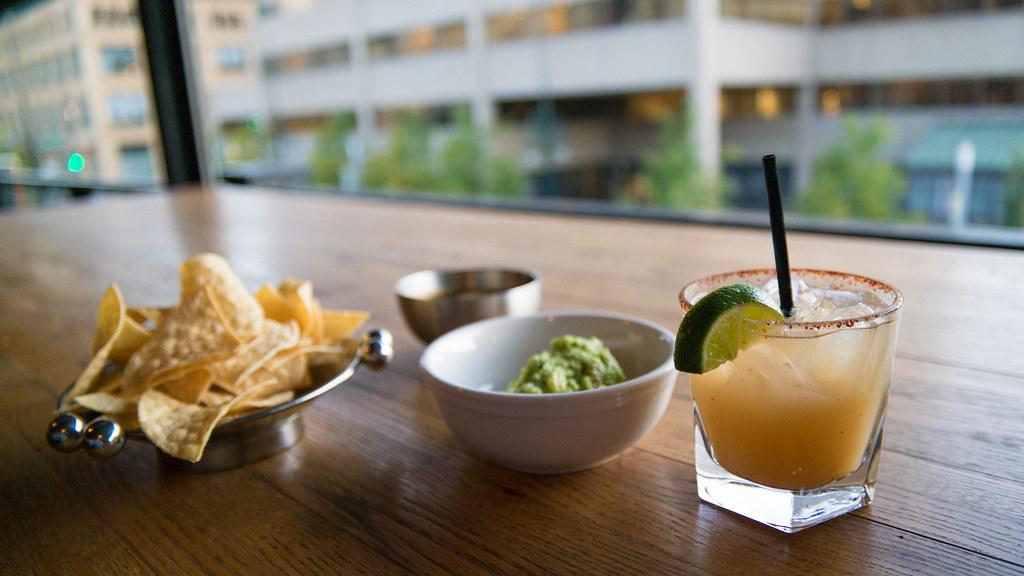
Illustrative licensed food photograph, not an official QDOBA product or evidence of current US portions, availability or prices.Tortilla Chips, Salsa, Guacamole at Tamayo Restaurant. Photo: nan palmero · Source · CC BY 2.0 · Display cropped to fit.
Your QDOBA order, with sources
Ingredient portions are not complete entrées. Standard-portion combinations are calculated totals; changed portions are estimates. US source published February 26, 2026, checked November 8, 2026. Prices remain Varies without a verified local amount.
Official nutrition brochureWhat this guide covers
- Read sodium as a portion-based calculation
- The source chicken bowl starts at 1,230 milligrams
- Rice: a 140-milligram fixed substitution
- Beans and vegetables have their own sodium
- Compare proteins at the published serving weights
- Salsa choices can reverse an expected saving
- Dairy sauces, crema, and dressing add distinct amounts
- Guacamole, tortillas, and chips belong in the total
- Work through a multi-swap example without losing track
- FAQs: complete meals, drinks, and smaller portions
- Compare dips independently of chips
Read sodium as a portion-based calculation
Sodium comparisons are most useful when the portion and starting recipe stay visible. This guide uses the QDOBA US Nutrition Brochure dated February 26, 2026, with source data checked November 8, 2026. It is not a live menu, and the figures cannot establish the exact sodium in an individual restaurant serving. Every sodium figure below is in milligrams. Custom meal totals add the listed ingredient values; complete menu items retain their separately published totals. Lower sodium means lower than a stated alternative, not sodium-free, universally low, or suitable for a medical prescription. If you have an individual sodium limit, use the numbers within the guidance you already follow rather than treating these examples as medical advice. The practical approach is straightforward: identify your regular order, change one component at a time, and recalculate. Rice, protein, sauces, and tortillas can each make a material difference even when a meal's name stays similar.
The source chicken bowl starts at 1,230 milligrams
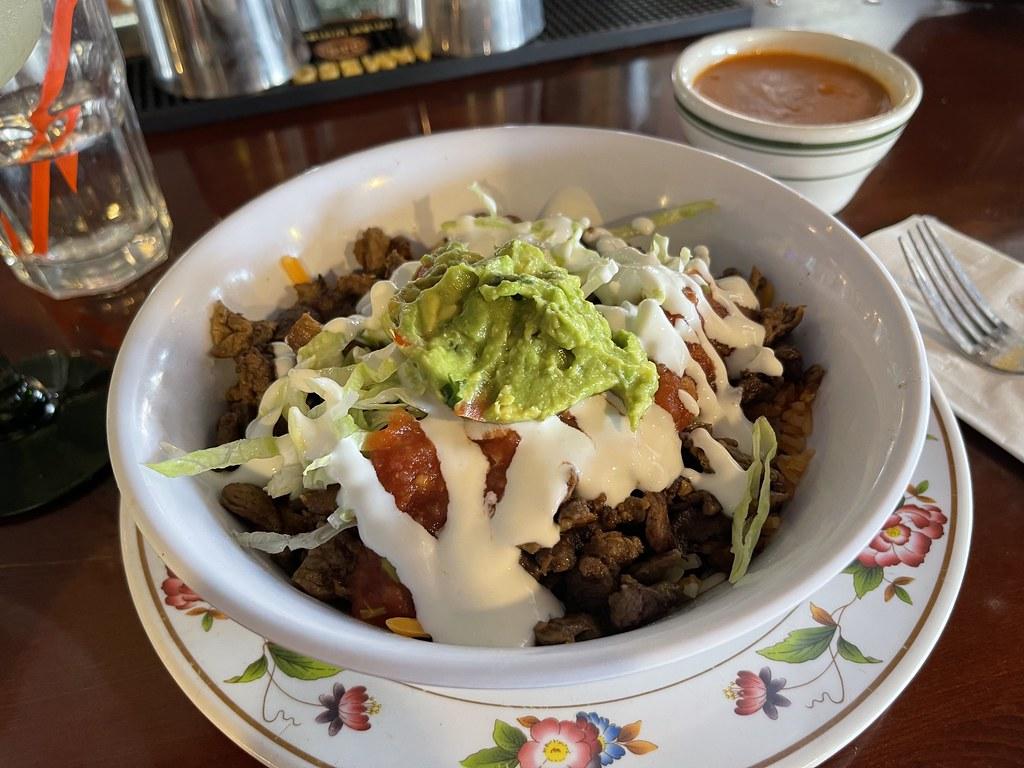
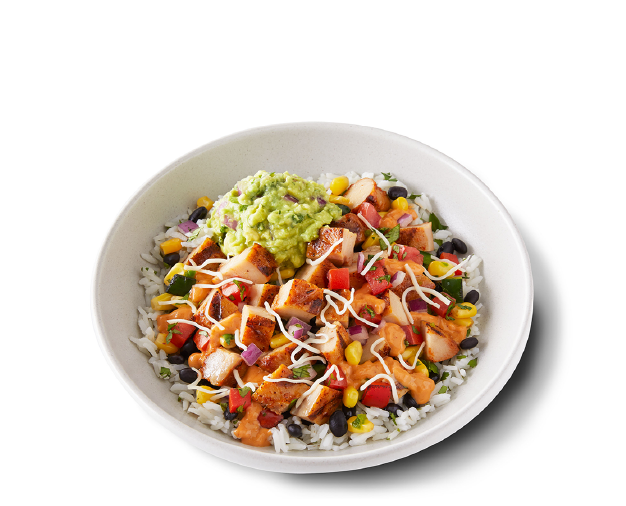
The source chicken and black bean bowl contains cilantro lime rice, black beans, grilled adobo chicken, and pico de gallo. Their listed sodium values are 390, 330, 440, and 70 milligrams, respectively. Together that is 1,230 milligrams, alongside 525 calories, 31 grams of protein, and 65 grams of total carbohydrate. The serving weights are 4 ounces each of rice and beans, 3.5 ounces of chicken, and 1 ounce of pico. This baseline makes later swaps reproducible. Without those details, two chicken bowls could have different rice, sauces, or dairy toppings and still be described with the same shorthand. The source no-rice chicken bowl is also a different recipe: it removes rice but adds 2 ounces of fajita vegetables. Its sodium is 330 + 440 + 115 + 70 = 955 milligrams. That change reduces sodium by 275 milligrams, not the full rice contribution.
Rice: a 140-milligram fixed substitution
Cilantro lime rice contains 390 milligrams of sodium per 4 ounces. Seasoned brown rice contains 250 milligrams at the same listed serving weight. Replacing only the rice in the 1,230-milligram chicken bowl therefore reduces its total to 1,090 milligrams, a difference of 140. Calories move from 525 to 505, and total carbohydrate from 65 to 63 grams. Removing the cilantro lime rice without replacing it produces 840 milligrams. Replacing that rice with fajita vegetables instead produces the 955-milligram source no-rice build because the vegetables add back 115. These three choices should not be bundled into one vague instruction to change the base. They represent a same-weight rice swap, a deletion, and a substitution with a different serving weight. If you want to keep rice, brown rice supplies a specific reduction in this dataset without requiring you to remove beans or alter the chicken portion.
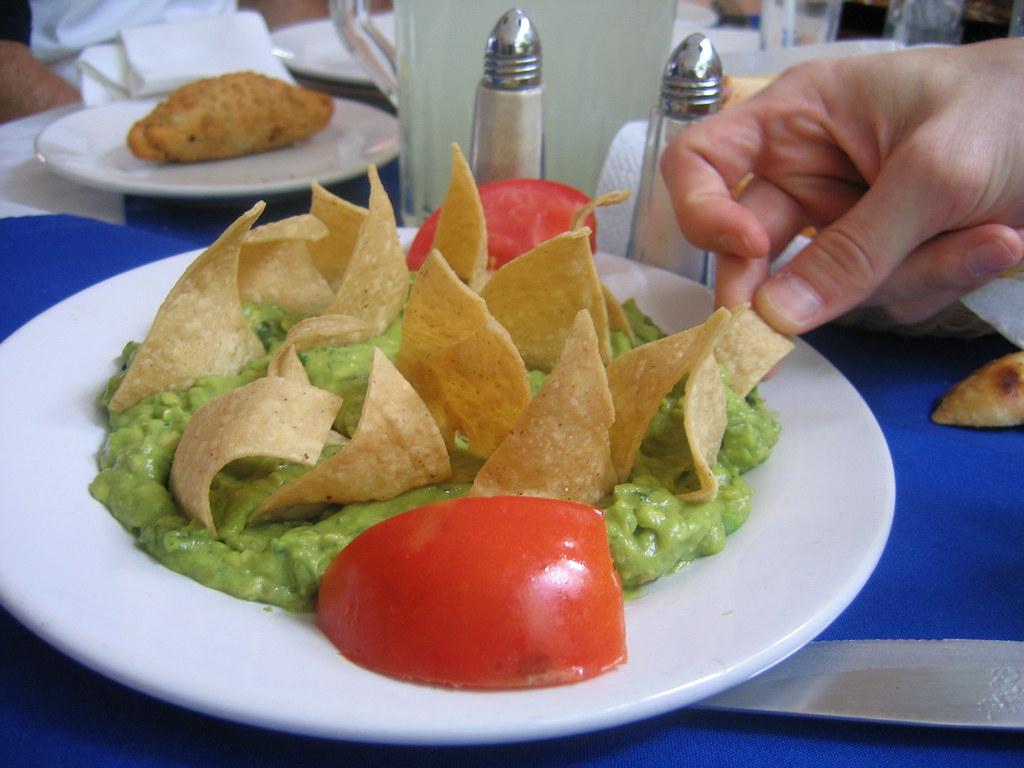
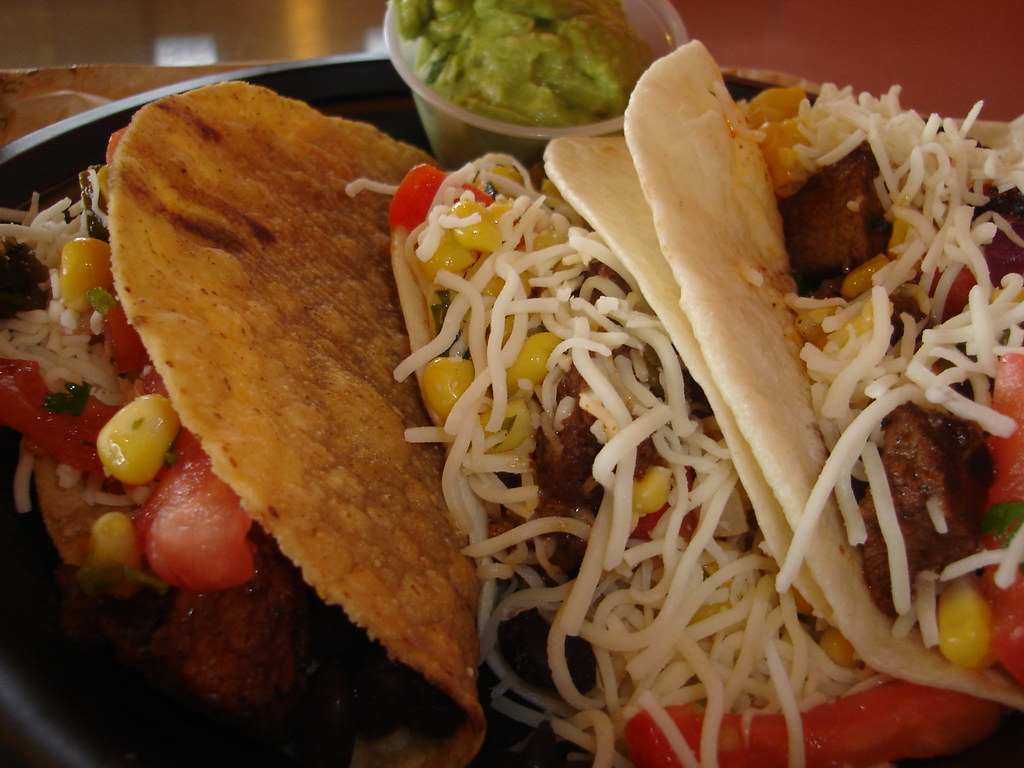
Illustrative licensed food photograph, not an official QDOBA product or evidence of current US portions, availability or prices.Guacamole y totopos. Photo: sfllaw · Source · CC BY-SA 2.0 · Display cropped to fit.
Beans and vegetables have their own sodium
Black beans contain 330 milligrams of sodium per 4 ounces, compared with 350 for pinto beans. Replacing black beans with pinto beans in the baseline chicken bowl increases sodium from 1,230 to 1,250 milligrams. That is a 20-milligram change, much smaller than the rice substitution. Fajita vegetables contribute 115 milligrams per 2 ounces, while the quarter-ounce romaine garnish and 0.12-ounce cilantro serving are each listed at zero. The larger 3.5-ounce romaine salad portion is listed at 10 milligrams. Plant ingredients are therefore not interchangeable sodium categories. In the source veggie bowl, brown rice, black beans, fajita vegetables, pico, and 2-ounce guacamole contribute 250 + 330 + 115 + 70 + 160 = 925 milligrams. Switching only black beans to pinto beans makes that 945. Adding vegetables to a bowl increases its ingredient total unless another component is removed; the word vegetable does not make that contribution disappear.
Compare proteins at the published serving weights
Among the listed portions used here, grilled adobo chicken supplies 440 milligrams of sodium per 3.5 ounces, brisket birria 450, Cholula Hot & Sweet Chicken 540, pork carnitas 560, grilled steak 600, and ground beef 610. Plant-Based Impossible supplies 350 milligrams per 3.1 ounces and is limited to select locations. These are serving comparisons, not equal-weight laboratory comparisons across every item. Keep brown rice, black beans, and pico fixed at a combined 650 milligrams, then choose a protein. The resulting totals are 1,090 with adobo chicken, 1,100 with brisket, 1,190 with Cholula chicken, 1,210 with carnitas, 1,250 with steak, 1,260 with ground beef, or 1,000 with Impossible. Availability and dietary suitability still need separate confirmation. The numbers identify the sodium effect of each listed serving; they do not rank taste, overall nutrition, animal versus plant ingredients, or suitability for a particular person's needs.
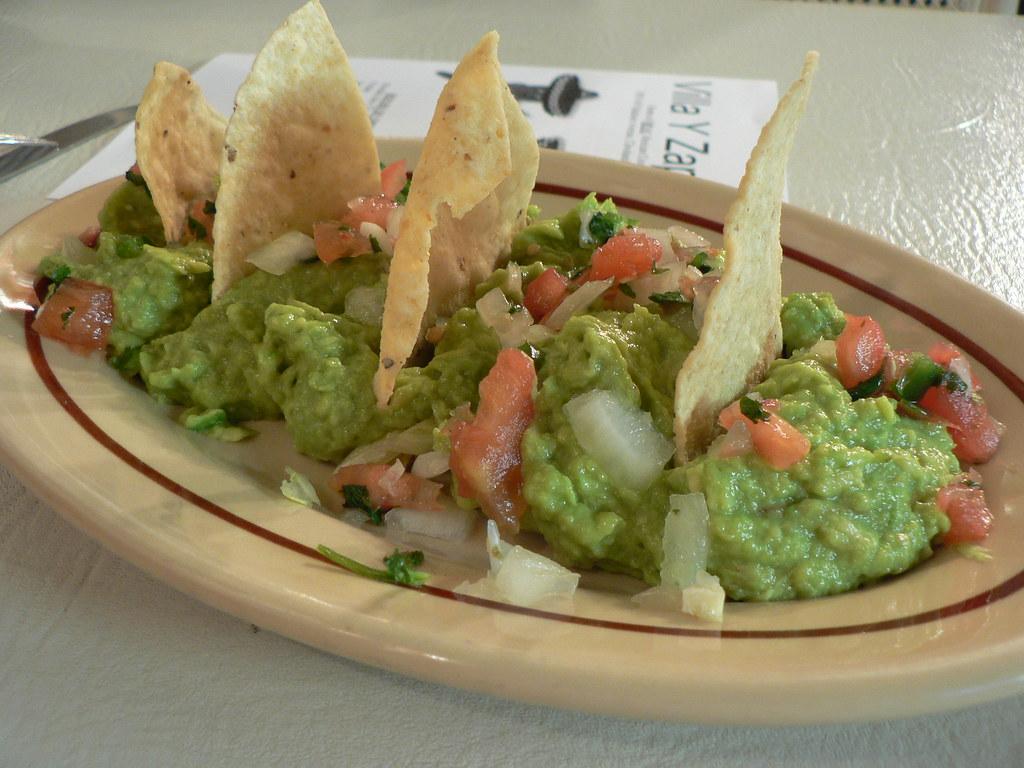
Illustrative licensed food photograph, not an official QDOBA product or evidence of current US portions, availability or prices.guacamole. Photo: stu_spivack · Source · CC BY-SA 2.0 · Display cropped to fit.
Salsa choices can reverse an expected saving
At the listed 1-ounce portions, pico contains 70 milligrams of sodium, chile corn salsa 75, salsa roja 85, habanero salsa 110, roasted tomato salsa 190, and salsa verde 240. Replacing pico with salsa verde in the baseline chicken bowl raises sodium from 1,230 to 1,400 milligrams. Replacing pico with roasted tomato salsa raises it to 1,350. Choosing chile corn salsa instead produces 1,235. Salsa verde has zero listed grams of carbohydrate, but that does not mean zero sodium. Pico and roasted tomato salsa each have 5 calories, yet their sodium differs by 120 milligrams per portion. Those examples explain why a calorie or carbohydrate comparison cannot stand in for a sodium comparison. If you keep pico and add a second salsa, count both. Adding salsa verde to the baseline is an additional 240 milligrams, producing 1,470, rather than the 1,400 calculated for replacing pico with verde.
Dairy sauces, crema, and dressing add distinct amounts
Three Cheese Queso contributes 340 milligrams of sodium per 2 ounces and 670 per 4 ounces. Queso Diablo contributes 320 per 2 ounces. Shredded cheese adds 180 per ounce, cotija 95 per quarter-ounce, sour cream 10 per ounce, and chile crema 290 per ounce. On the 955-milligram no-rice chicken bowl, adding 2 ounces of Three Cheese Queso produces 1,295 milligrams; using 4 ounces instead produces 1,625. Adding sour cream alone produces 965, although it also adds 50 calories and 3 grams of carbohydrate. Dressings need their own entries: citrus vinaigrette contributes 330 milligrams per 1.5 ounces, while picante ranch contributes 180 for the same listed volume by weight. A sauce served on the side is not automatically a smaller sodium contribution. The calculation only decreases if you consume a known smaller amount, and a visual drizzle does not provide an exact serving measurement.
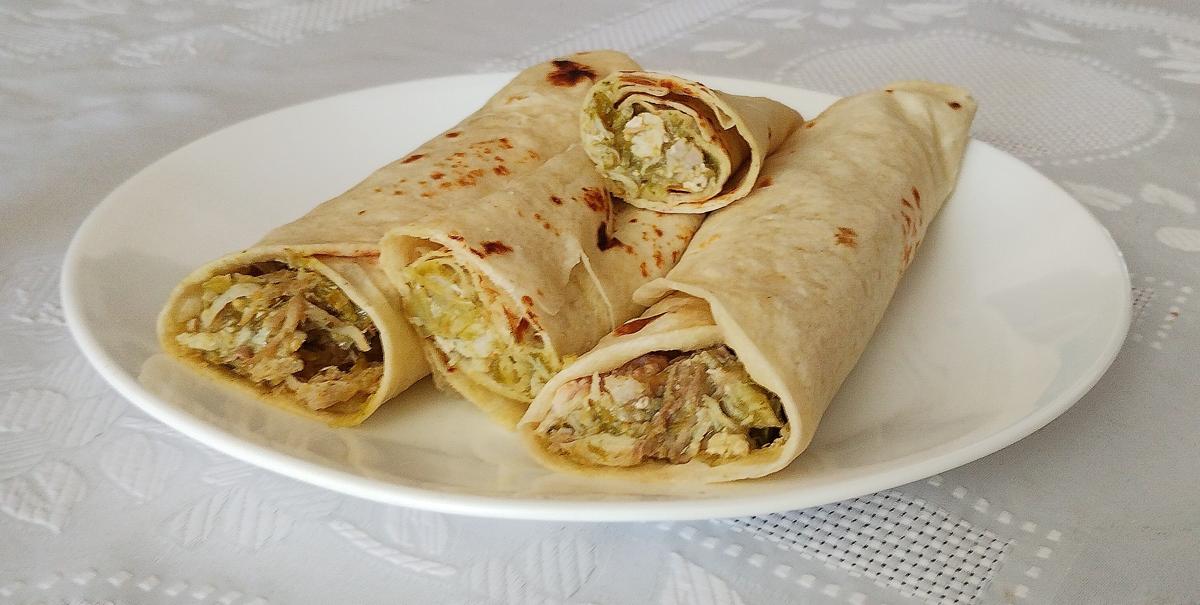
Illustrative licensed food photograph, not an official restaurant product or evidence of serving size, availability or prices.Burrito chihuahuense de chile verde.jpg. Photo: Levi bernardo · Source · CC BY-SA 4.0 · Display cropped to fit.
Guacamole, tortillas, and chips belong in the total
The listed 2-ounce guacamole portion contains 160 milligrams of sodium, while the 4-ounce portion contains 330. Use the published serving you intend to order rather than automatically doubling the rounded smaller value. A 12.5-inch flour tortilla adds 760 milligrams, taking the baseline chicken filling from 1,230 to 1,990. The 10-inch flour tortilla adds 490, and the 5.5-inch flour tortilla adds 170. The crunchy tortilla shell contributes 150 milligrams but also 390 calories, illustrating that sodium is only one dimension of a comparison. A crispy taco shell is listed at zero sodium, but its filling and toppings still count. Tortilla chips contribute 220 milligrams per 4 ounces. Chips with 2 ounces of Three Cheese Queso therefore total 560 milligrams before the entree. They also total 640 calories, so a relatively smaller sodium number should not be mistaken for a complete nutritional description of the side.
Work through a multi-swap example without losing track
Start with the baseline chicken bowl at 1,230 milligrams. Swap cilantro lime rice for brown rice and subtract 140, reaching 1,090. Next, replace pico with salsa verde and add the 170-milligram difference, reaching 1,260. Despite the rice substitution, the finished bowl is now 30 milligrams above the original. Alternatively, keep pico after the brown rice swap and add 2-ounce guacamole: 1,090 + 160 = 1,250. That version is 20 milligrams above the baseline, not below it. For a different fixed configuration, brown rice, adobo chicken, fajita vegetables, and pico total 250 + 440 + 115 + 70 = 875 milligrams. Adding 2-ounce guacamole makes 1,035. This last recipe omits beans, so it also changes protein and carbohydrate. Track the complete set of changes rather than assigning a blanket sodium label to brown rice, guacamole, or a no-bean bowl.
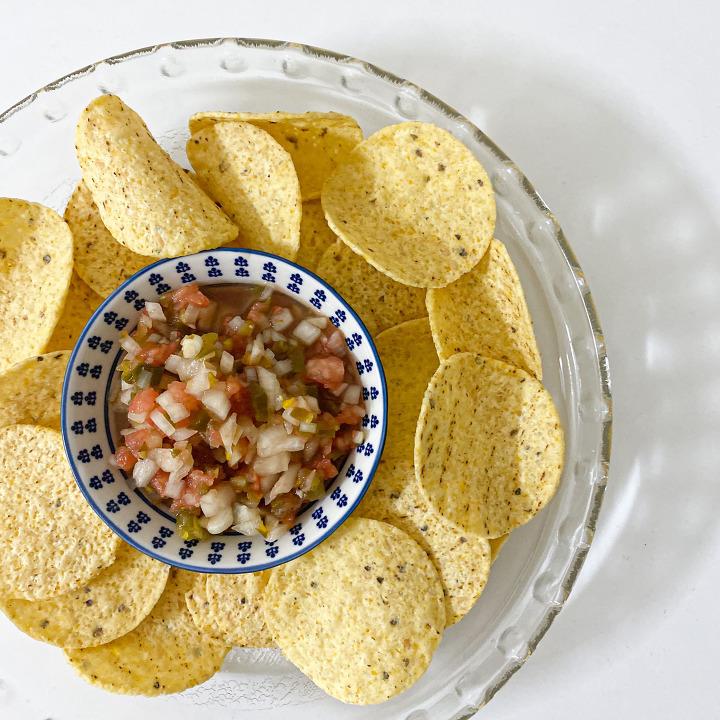
Illustrative licensed food photograph, not an official restaurant product or evidence of serving size, availability or prices.Homemade salsa with nachos 1.jpg. Photo: 에그란 · Source · CC BY 4.0 · Display cropped to fit.
FAQs: complete meals, drinks, and smaller portions
Can a published complete meal replace ingredient math? Use its own entry when ordering that named item. The dataset lists Chicken Queso Bowl at 1,820 milligrams, Chicken Queso Burrito at 2,580, and Fajita Vegan Bowl at 1,350. Do not substitute the 925-milligram custom veggie bowl for that last item. Do zero-calorie drinks always have zero sodium? No. The listed 20-fluid-ounce Diet Coke has zero calories and 65 milligrams of sodium. Can half portions reduce sodium? Mathematically, half of the 250-milligram brown rice serving would contribute 125 milligrams, but that assumes a measured half serving rather than an unspecified scoop. Is there a universally best order? Not from sodium figures alone. Choose a clear recipe, add the milligrams, and consider any other nutrients relevant to your decision. Confirm local portions and availability, especially for select-location proteins, because the November 8 source check is not a live restaurant inventory.
Compare dips independently of chips
Two ounces of guacamole and two ounces of Three Cheese Queso both contribute 80 published calories, but their sodium differs: 160 versus 340 milligrams. With the same 4-ounce tortilla chips portion, guacamole gives a calculated 380 milligrams of sodium and queso gives 560. If you eat the full documented chips portion with both dips, add both: the combination reaches 720 calories and 720 milligrams of sodium. Sharing chips does not establish how much of each dip you eat. Enter your own assumed share separately, especially if another diner favors one dip. A local bundle price also does not establish the nutrition portion. Confirm the package and sauce sizes before treating a listed basket as equivalent to this calculation. The dedicated menu-price page separates those purchase questions from nutrient information so a convenient side name does not hide the quantities being compared.
See the full QDOBA menu
Prices, calories and macros for every item, or build a meal in the calculator.
Sources and corrections
Nutrition figures on Well.now come from official US restaurant sources, linked on each brand page with a last-checked date. Prices use verified local amounts first, then clearly labeled sourced estimates; Varies appears when neither is available. See our sources and methodology, or email be@well.now with a correction.
About the Well.now Editorial Team
This article was written and fact-checked by the Well.now Editorial Team. We check nutrition claims against each chain's official US information and never publish prices we cannot confirm. Well.now is independent and not paid by any restaurant. Read our editorial policy.