 Nutrition
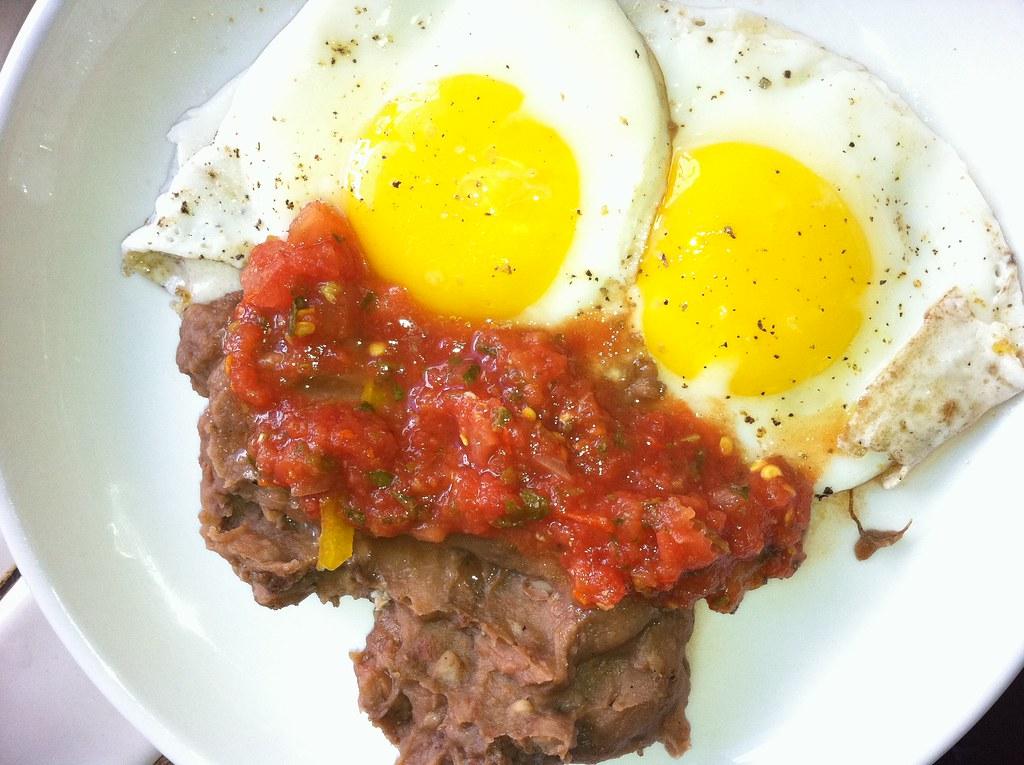
Illustrative licensed food photograph, not an official Golden Corral product or evidence of US portions, current availability or prices.4-hour body breakfast: eggs, refried beans, fermented salsa. Photo: cheeseslave · Source · CC BY 2.0 · Display cropped to fit.
Golden Corral sources and plate planning
Official US nutrition database checked 2026-11-15. No separate nutrition effective date confirmed. These are published recipe servings, not weighed buffet portions or guaranteed local offerings. Plate totals are calculated estimates. Blank allergen records do not mean allergen-free. Unconfirmed admission prices remain Varies.
Golden Corral official nutrition database ↗What this guide covers
- Make lower-calorie a comparison, not a promise
- Use source values with the right expectations
- Concrete source servings to compare
- Look around before filling the plate
- Choose an entrée you want to finish
- Let vegetables occupy a real role
- Keep a favorite side in the plan
- Control the serving rather than chasing perfect foods
- Use toppings where they add the most
- Choose the drink before forgetting it
- Leave room for dessert intentionally
- Pause before deciding about another trip
- Check the meal for other priorities
- Keep practical limits in view
- Aim for a plate you can repeat comfortably
Make lower-calorie a comparison, not a promise
A lower-calorie Golden Corral plate is best understood relative to another meal you might choose. It might mean a smaller serving of the same entrée, a different side combination, or a drink choice that leaves more room for the foods you enjoy. It does not require a universal calorie cutoff or a plate composed only of foods with certain names. Begin by imagining your usual buffet meal, then identify one or two changes you would genuinely welcome. This keeps the plan practical. A meal that looks restrained on paper but leaves out everything you wanted may simply lead to an unplanned second plate that is harder to estimate.
Use source values with the right expectations
Golden Corral provides dish-level serving and nutrient information on its official nutrition page. Those values can support comparisons, but your plate is self-served and may not match the reference portions. This guide uses the supplied dataset edition labeled checked November 15, 2026; no separate nutrition-data effective date is confirmed. Treat the listed serving values as published source information and your assembled plate total as a calculated estimate. That distinction is especially important when a proposed swap produces only a small difference, because variation in a scoop, slice, or ladle may be more meaningful than the apparent precision of the calculator result.
Concrete source servings to compare
The source lists Baked Potatoes (1 each) at 160 calories, 4 grams protein, 37 grams carbohydrate, 0 grams fat and 15 milligrams sodium, with a stated weight of 173g. The source lists Mashed Potatoes (1/2 cup) at 200 calories, 2 grams protein, 16 grams carbohydrate, 15 grams fat and 660 milligrams sodium, with a stated weight of 113g. These are exact published reference servings, not measurements of the food on your buffet plate. Keep the different weights visible rather than ranking unequal amounts as though they were identical. Select the matching entries in the calculator to compare the whole meal, including any separately added toppings. The resulting plate total remains a calculated estimate because self-served quantities can differ from the source. Current local availability must also be confirmed separately; a database listing is not a promise that the dish is on today’s buffet.
Look around before filling the plate
A brief look at the available choices helps you avoid building a meal in the order you encounter the stations. Decide which entrée and side you most want before taking portions of several alternatives. If dessert is important to you, notice the options early enough to include that preference in your plan. This is not about inspecting every dish or delaying the meal indefinitely. It is about replacing automatic accumulation with a few intentional choices. The official website can provide background, but the actual offerings at your location should guide the final plate. A nutrition listing is not a guarantee that an item is present during your visit.
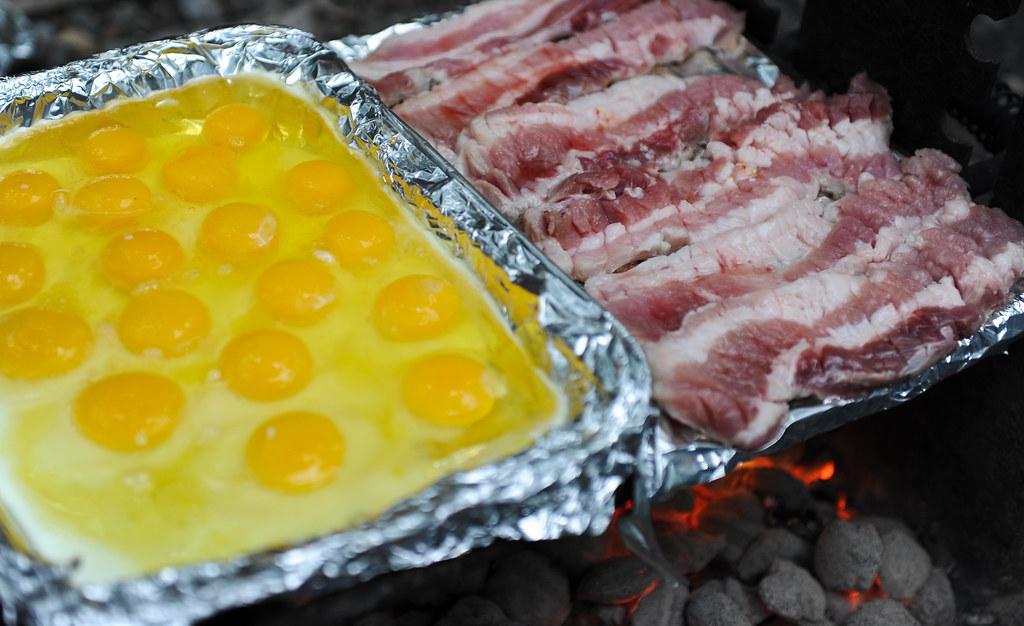
Illustrative licensed food photograph, not an official Golden Corral product or evidence of US portions, current availability or prices.Day 2 Breakfast: Eggs + Samgyopsal. Photo: bigbirdz · Source · CC BY 2.0 · Display cropped to fit.
Choose an entrée you want to finish
Pick a main dish that makes the plate feel like a meal rather than a collection of substitutions. Then match the exact preparation in the nutrition information. Do not assume that grilled, baked, or salad automatically means the lowest-calorie option, because recipes and serving amounts still matter. Compare the published entries for foods that are actually available and appealing to you. If two entrées both sound good, keep the sides constant while comparing realistic portions. The Golden Corral nutrition calculator makes that comparison easier to organize. Choosing an entrée deliberately can also reduce the urge to take small portions of several mains that become difficult to track.
Let vegetables occupy a real role
Vegetables can help create a varied plate, but choose them by their actual preparation rather than treating the category as nutritionally interchangeable. A vegetable dish with cheese or sauce needs its own matching entry, while separate salad-bar ingredients should be combined with the toppings you add. Select options you enjoy enough to eat, and give them a defined place instead of using them as decoration beside an overloaded plate. You can compare a preferred vegetable side with another side while leaving the entrée unchanged. The useful question is how that specific swap affects the meal, not whether every vegetable preparation must be lower in calories than every alternative.
Keep a favorite side in the plan
A lower-calorie approach does not require excluding the side you came for. Consider serving a deliberate amount of that favorite and choosing the remaining components more selectively. This often produces a clearer decision than taking a little of every rich side and trying to remember the quantities afterward. If you want variety, make the tasting portions distinct enough to identify and enter separately. If you mainly want one dish, give yourself permission to choose it without surrounding it with several substitutes. Compare the resulting plate with your usual combination in the calculator. The most useful change is one that reduces the estimated total while still leaving you pleased with the meal.
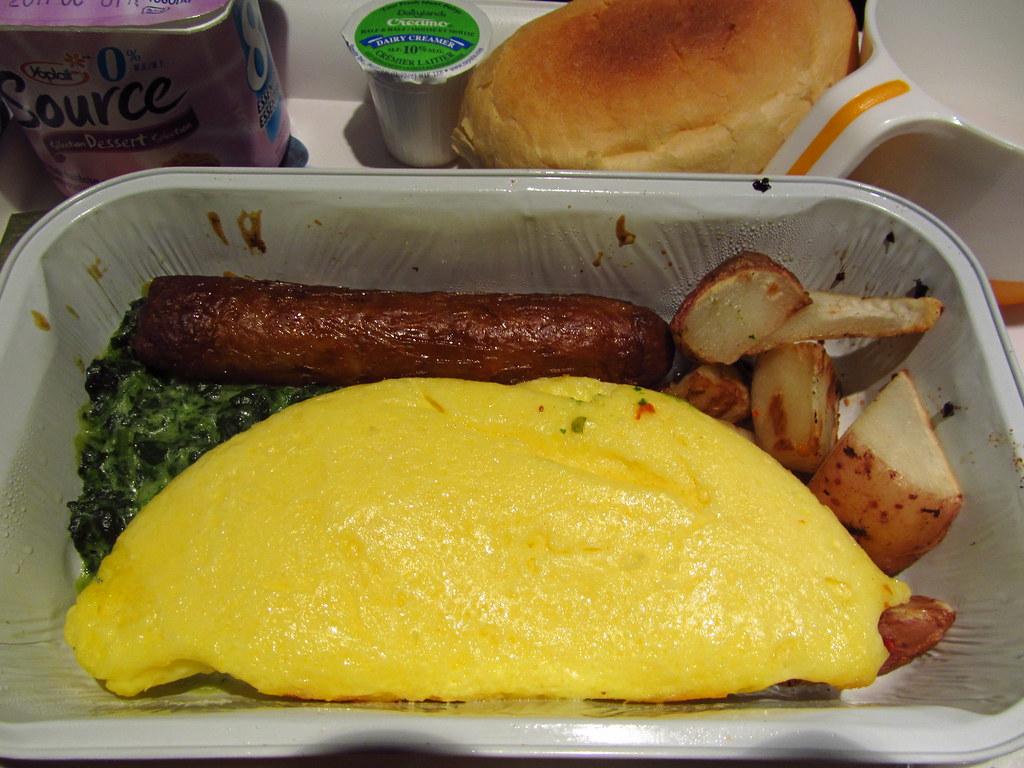
Illustrative licensed food photograph, not an official Golden Corral product or evidence of US portions, current availability or prices.Lufthansa Hot Breakfast - Eggs. Photo: Calgary Reviews · Source · CC BY 2.0 · Display cropped to fit.
Control the serving rather than chasing perfect foods
Portion size is a direct way to change the estimated calories of the same dish without inventing a different recipe. A smaller amount of a favorite may be more realistic than replacing it with something you do not enjoy. The challenge is to relate your portion to the published unit, which might be weight, volume, or a count-based serving. Do not assume one buffet spoon equals one listed serving. The portion-size guide explains these distinctions in more detail. When exact measurement is unavailable, aim for a consistent, visible serving decision rather than a highly specific multiplier that your plate cannot actually support.
Use toppings where they add the most
Dressings, gravy, butter, cheese, and other additions can be chosen intentionally rather than spread across every component by habit. Decide where a topping improves the meal most, then include it in the estimate when it is separate from the published dish. Read the source description first so you do not count an included sauce twice. If you want less of an added topping, serve less rather than subtracting an imagined amount from a complete prepared entrée. Recipe changes cannot be calculated reliably without ingredient-level information. This approach keeps the plate flavorful while making the estimate more transparent about what was part of the original preparation and what you added yourself.
Choose the drink before forgetting it
Beverages can change the whole-meal comparison even when the food stays the same. Water is a simple choice if you want to keep the estimate focused on the plate, but another beverage can still fit your preferences when it is included honestly. Count refills and additions rather than treating the first glass as the entire drink portion. If the exact beverage or cup size is unclear, recognize that uncertainty instead of selecting a convenient unrelated entry. A lower-calorie plate paired with an unrecorded drink is not a complete meal estimate. The calories guide explains why the glass and the plate belong in the same calculation.
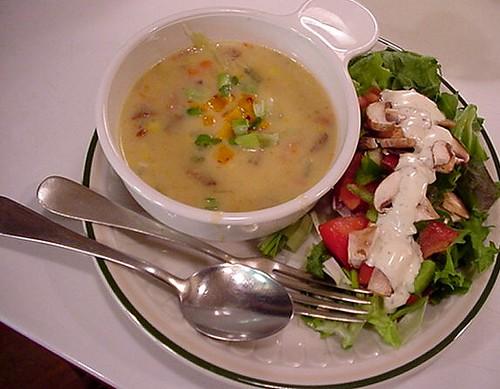
Illustrative licensed food photo, not an official Golden Corral product, portion or price.3 cheese & chiles vegetable soup with salad. Photo: EraPhernalia Vintage . . . [''playin' hook-y''] ;o · Source · CC BY-SA 2.0 · Display cropped to fit.
Leave room for dessert intentionally
If you want dessert, plan for it rather than treating it as evidence that the meal has gone wrong. You might prefer a smaller first plate, fewer sides, or a single dessert you particularly enjoy. Match the actual dessert and serving description, including separate toppings where appropriate. A mixed dessert assembled from several items is not the same as one published plain serving. Avoid assuming that a sugar-related label automatically answers the calorie question; read the relevant nutrient entry. The practical aim is to choose a sweet finish on purpose and understand how it changes the estimated meal, not to turn dessert into an uncounted exception or a reward you must earn.
Pause before deciding about another trip
The buffet remains available, but that does not mean your first plate must be followed by another assortment. After eating, consider whether you want more food, another taste of something specific, or simply more time at the table. If you do return, choose the purpose before approaching the stations. A targeted serving is easier to estimate than another plate assembled from whatever catches your attention. Add it to the original meal calculation, even if the portion is small. There is no need to make the first plate so sparse that seconds become inevitable. A satisfying initial meal and an optional, deliberate return are more useful than alternating restriction and unplanned accumulation.
Check the meal for other priorities
Lower calories do not automatically mean lower sodium, lower carbohydrate, or more protein. If one of those matters to you, inspect it alongside the calorie estimate rather than assuming the same changes improve every column. A protein-focused entrée may help shape the meal you want, but its preparation and serving still need to be checked. Use the high-protein foods guide for entrée comparisons, the lower-carb options guide for carbohydrate-focused decisions, and the sodium guide for a whole-meal sodium review. These are different lenses on the same plate, not competing definitions of a good meal or instructions to minimize every nutrient simultaneously.

Illustrative licensed food photo, not an official Golden Corral product, portion or price.An epic omelet to start the new year. Photo: dollen · Source · CC BY 2.0 · Display cropped to fit.
Keep practical limits in view
A nutrition-based plan cannot guarantee menu availability or establish allergy safety. Confirm dishes at your restaurant and ask staff when the preparation is unclear. Golden Corral's allergen statement describes concerns associated with changing offerings, shared preparation, and self-service. Cross-contact cannot be guaranteed absent, so a lower-calorie suggestion should never be interpreted as an allergen-free recommendation. If you also need to budget for the visit, use the separate Golden Corral menu and prices guide. Keeping these questions separate helps the nutrition plan remain focused: it estimates the food choices, while location details, costs, ingredients, and handling require their own checks.
Aim for a plate you can repeat comfortably
A useful lower-calorie strategy should survive an ordinary restaurant visit. Choose a recognizable entrée, include sides you enjoy, serve deliberate amounts, count additions and drinks, and decide about seconds after eating. Compare that meal with your usual one rather than chasing the smallest possible total. If the calculator depends on uncertain matches or highly specific portion guesses, simplify the plate or describe the result more cautiously. The calculator guide provides a complete workflow. The goal is an informed, satisfying meal whose estimated calories are lower because of choices you understand, not a fragile plan that works only when every buffet scoop happens to match a published serving exactly.
See the full Golden Corral menu
Prices, calories and macros for every item, or build a meal in the calculator.
Sources and corrections
Nutrition figures on Well.now come from official US restaurant sources, linked on each brand page with a last-checked date. Prices use verified local amounts first, then clearly labeled sourced estimates; Varies appears when neither is available. See our sources and methodology, or email be@well.now with a correction.
About the Well.now Editorial Team
This article was written and fact-checked by the Well.now Editorial Team. We check nutrition claims against each chain's official US information and never publish prices we cannot confirm. Well.now is independent and not paid by any restaurant. Read our editorial policy.