 Nutrition
Illustrative licensed food photograph, not an official Golden Corral product or evidence of US portions, current availability or prices.thanksgiving dessert cake pops and miniature cheesecakes from Shari's Berries on a plate. Photo: Berries.com · Source · CC BY 2.0 · Display cropped to fit.
Golden Corral sources and plate planning
Official US nutrition database checked 2026-11-15. No separate nutrition effective date confirmed. These are published recipe servings, not weighed buffet portions or guaranteed local offerings. Plate totals are calculated estimates. Blank allergen records do not mean allergen-free. Unconfirmed admission prices remain Varies.
Golden Corral official nutrition database ↗What this guide covers
- Make sodium a whole-meal question
- Read sodium with its published serving
- Concrete source servings to compare
- Do not use taste as a measuring tool
- Match the exact entrée preparation
- Compare like-for-like before choosing
- Give side dishes their own review
- Treat the salad bar as a combination
- Separate included gravy from an extra ladle
- Be cautious with soup and mixed dishes
- Use portion changes without losing track of repeats
- Keep drinks and other priorities in context
- Ask questions the nutrition table cannot answer
- Separate sodium planning from allergy and price questions
- Finish with a transparent estimate
Make sodium a whole-meal question
When sodium matters to your planning, looking up only the main entrée leaves much of a buffet meal unexplored. Sides, soups, salads, dressings, gravy, bread, condiments, and repeat servings can all belong in the same calculation. Begin with the complete meal you would normally choose, then identify where a different preparation or amount might make a useful difference. This guide does not prescribe a sodium target or provide medical advice. If you have an established personal limit, use that context separately. The practical goal is to make the restaurant information easier to interpret, so you can compare actual meals instead of relying on a food's appearance or a broad healthy-sounding label.
Read sodium with its published serving
Golden Corral lists sodium alongside serving descriptions and other nutrients on its official nutrition page. The number is meaningful only in relation to that serving. This article follows the supplied dataset edition labeled checked November 15, 2026; no separate nutrition-data effective date is confirmed. Published dish values should be treated as source information, while a total for your self-served plate is a calculated estimate. If your amount differs from the reference portion, scale the entry accordingly and recognize the uncertainty. A smaller published sodium value does not necessarily identify a lower-sodium choice for your meal if it describes much less food than the alternative.
Concrete source servings to compare
The source lists Green Beans (1/2 cup) at 35 calories, 1 grams protein, 4 grams carbohydrate, 1.5 grams fat and 520 milligrams sodium, with a stated weight of 121g. The source lists Broccoli, Steamed (1/2 cup) at 25 calories, 2 grams protein, 6 grams carbohydrate, 0 grams fat and 85 milligrams sodium, with a stated weight of 78g. These are exact published reference servings, not measurements of the food on your buffet plate. Keep the different weights visible rather than ranking unequal amounts as though they were identical. Select the matching entries in the calculator to compare the whole meal, including any separately added toppings. The resulting plate total remains a calculated estimate because self-served quantities can differ from the source. Current local availability must also be confirmed separately; a database listing is not a promise that the dish is on today’s buffet.
Do not use taste as a measuring tool
A food's flavor does not provide a reliable numeric sodium estimate. A dish that does not taste especially salty may still have sodium reflected in its preparation, while a pronounced flavor does not reveal the amount in the serving you take. Use the matching source entry rather than your impression of the first bite. Likewise, visible salt at the table is only one possible addition; declining it does not tell you the sodium already represented by the recipe. This distinction is useful because it directs attention toward choices you can compare with published information instead of encouraging confident assumptions about ingredients that are not visible on the buffet.

Illustrative licensed food photograph, not an official Golden Corral product or evidence of US portions, current availability or prices.Pavlova for dessert #pavlova #dessert #cake #blackberries #raspberries #meringue #russian. Photo: netzkobold · Source · CC BY-SA 2.0 · Display cropped to fit.
Match the exact entrée preparation
Search by the complete dish name, including sauces, coatings, and preparation details. A grilled meat entrée, a breaded preparation, and a meat dish with gravy should not be treated as interchangeable sodium entries. Even closely related names may represent different recipes or serving amounts. If you cannot identify the dish confidently, ask restaurant staff what it is called before selecting a calculator result. The steak nutrition guide, chicken nutrition guide, and seafood nutrition guide offer category-specific matching advice. None of those categories is automatically the preferred sodium choice; the exact published dish and the amount you intend to eat are what support the comparison.
Compare like-for-like before choosing
If one entrée appears lower in sodium, check whether its listed serving is also smaller. You can compare equivalent amounts when the source information supports that calculation, or compare the actual portions you expect to eat. Be clear about which question you are answering. A like-for-like comparison describes the preparations, while an intended-portion comparison describes your meal. The Golden Corral nutrition calculator can help keep the rest of the plate constant while you switch one entrée. This prevents a misleading conclusion in which a different drink, side, and portion size all change at once but the result is attributed only to the main dish.
Give side dishes their own review
Sides should not be assumed to be minor simply because they are not the entrée. Identify each prepared dish and its serving, then add the amount you plan to take. A vegetable preparation with sauce is not interchangeable with an unspecified plain vegetable, and a mixed side should be entered as the complete dish when that is what the source describes. If you want several sides, consider whether you prefer small tasting portions or a larger amount of one favorite. Either can be estimated, but the entries need to reflect the choice. Reviewing sides individually also reveals where a swap might preserve your preferred entrée while changing the whole-meal sodium estimate.

Illustrative licensed food photograph, not an official Golden Corral product or evidence of US portions, current availability or prices.쉐프샤우엔 둘째 날... 한국돈으로 단돈 1500원으로 즐기는 디저트... 생크림 케잌과 모로코 현지 친구가 추천해 준 자자 쥬스 #Travel #Morocco #Maroc #Chefchaouen #Dessert #Cake #Zaza #Juice. Photo: IchStyle · Source · CC BY 2.0 · Display cropped to fit.
Treat the salad bar as a combination
A salad is assembled from components unless you select a matching complete prepared salad. The vegetables, dressing, cheese, croutons, meats, and other toppings you choose may need separate entries. Do not assume the word salad answers the sodium question. At the same time, avoid adding ingredients separately when the selected source entry already represents the finished prepared dish. A clear distinction between assembled and complete items prevents both omissions and double counting. Choose toppings you enjoy, serve them deliberately, and use the available nutrient information for the actual amounts. If a topping cannot be matched, mark the estimate as uncertain instead of treating the missing component as having no effect.
Separate included gravy from an extra ladle
Sauces and gravies are a common source of confusion because they can be part of a named entrée or an addition made after serving. Read the dish description before adding a separate entry. If the preparation already includes gravy, another entry is appropriate only for an additional serving not represented in that description. Conversely, extra sauce should not vanish from the meal total because it was added at a different station. If you choose less of a separate condiment, adjust its quantity. Do not subtract an assumed ingredient contribution from a complete recipe without verified information, because leaving visible sauce behind does not reveal exactly what sodium remains in the food.
Be cautious with soup and mixed dishes
Soup, casseroles, stews, and other mixed dishes can be harder to estimate because the proportion of liquid, solids, and other ingredients in your serving may vary. Match the exact entry and read whether the source uses a volume or weight-based serving. A ladle is not automatically equivalent to the published unit, and two ladles may not contain the same balance of components. If one of these dishes is central to your meal, give its portion estimate more attention rather than focusing only on a small condiment elsewhere. The portion-size guide explains why mixed foods deserve a different level of confidence from clearly countable items.
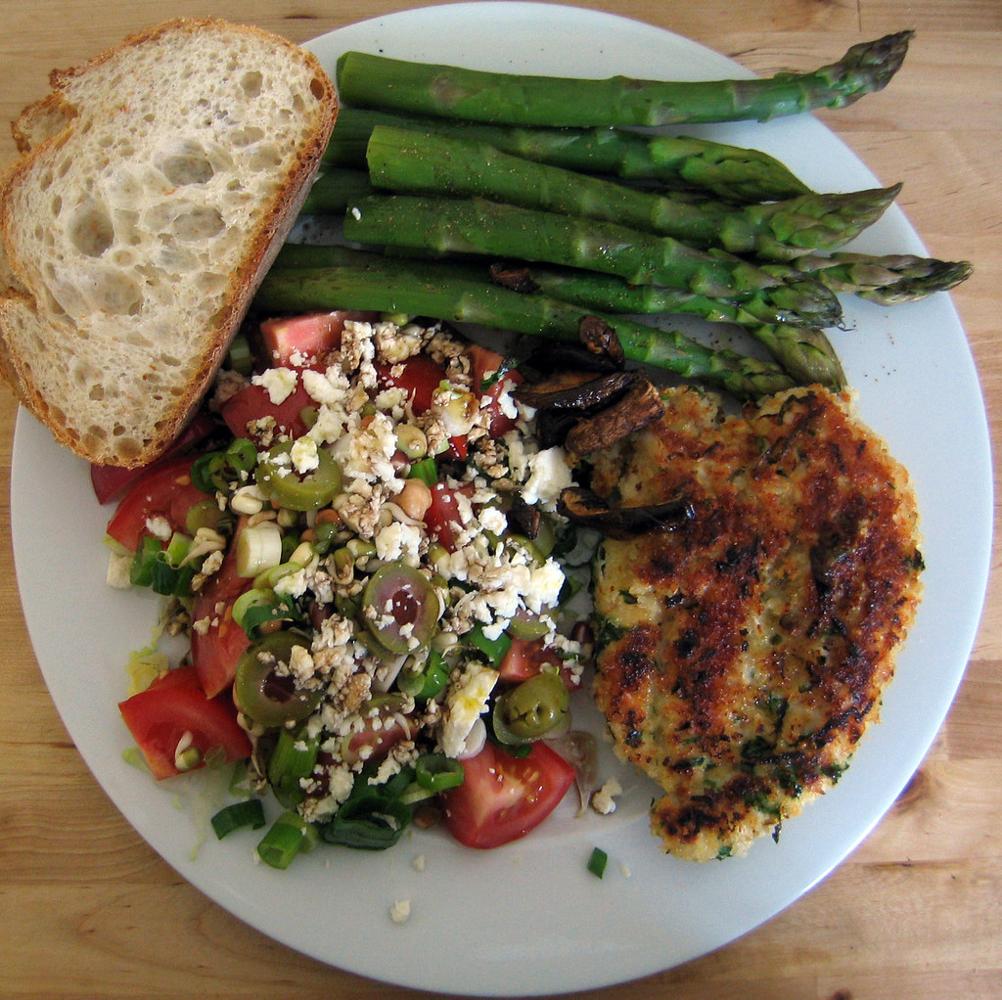
Illustrative licensed food photo, not an official Golden Corral product, portion or price.Sunday dinner. Photo: Ruth and Dave · Source · CC BY 2.0 · Display cropped to fit.
Use portion changes without losing track of repeats
Serving less of the same dish changes the estimated sodium contribution without requiring a different recipe. That can be a practical option when you want to keep a favorite food. However, the change only remains meaningful if later servings are included. A smaller first portion followed by several unrecorded tastes is not the same as choosing less overall. Add return trips to the existing meal estimate and keep the quantities distinct if that makes them easier to remember. You can decide after eating whether another serving is worth it to you. The calculation should describe your actual choices, not assume that the initial portion is the only amount consumed.
Keep drinks and other priorities in context
Water can simplify the beverage part of a meal plan, but it does not subtract sodium already present in the food. Keep the plate calculation intact regardless of what you drink. If you select another beverage, include its matching information when relevant and available. Also remember that a lower-sodium swap may change calories, protein, carbohydrate, or other nutrients. Use the calories guide and high-protein foods guide when those comparisons matter too. The purpose is not to minimize every value simultaneously, but to avoid letting one favorable comparison obscure a different change that matters to your own preferences or an established eating plan.
Ask questions the nutrition table cannot answer
The published table can describe listed servings, but it cannot confirm every detail of the food currently on a particular buffet. If you need to know whether a dish is prepared with a specific sauce, whether a label refers to the same recipe, or whether an alternative is available, ask restaurant staff. Do not assume that a request for less seasoning changes a prepared batch, and do not calculate a customized recipe without confirmed information. For general offerings, consult the official website, then verify locally. Keeping the question specific makes clarification more useful than asking whether an entire station is healthy or whether every grilled item is low in sodium.
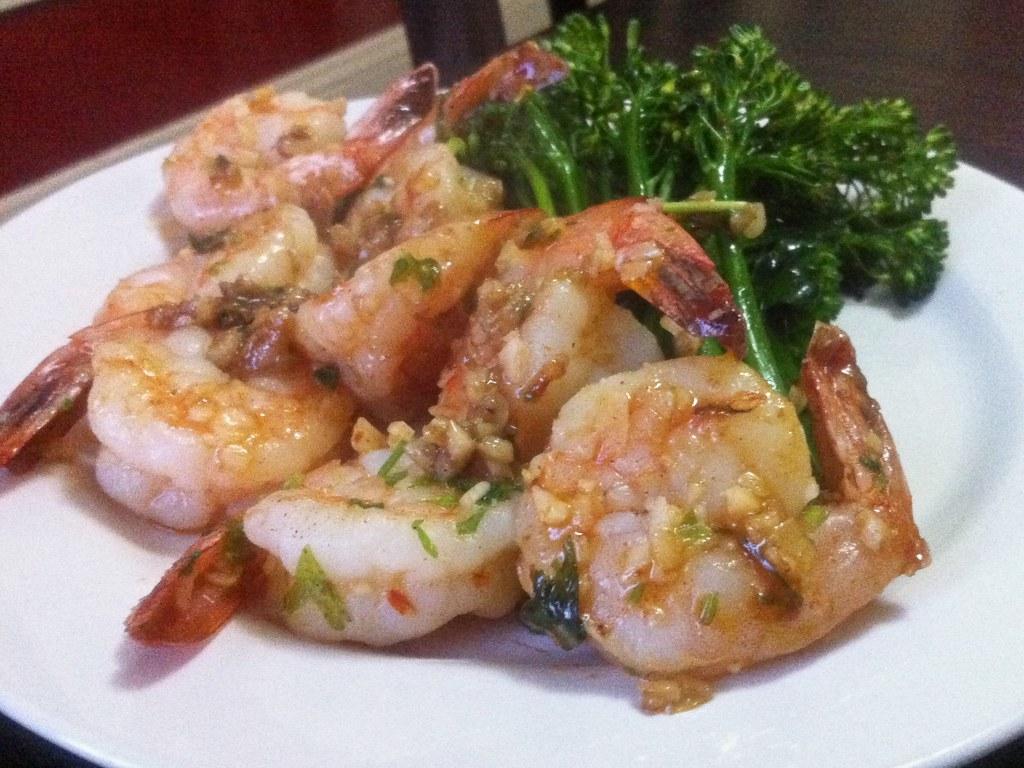
Illustrative licensed food photo, not an official Golden Corral product, portion or price.Garlic Shrimp with steamed broccolini.. Photo: jhegyessy · Source · CC BY 2.0 · Display cropped to fit.
Separate sodium planning from allergy and price questions
A lower-sodium comparison is not an allergen-safety assessment. Shared preparation and self-service create cross-contact concerns, and cross-contact cannot be guaranteed absent. Review Golden Corral's allergen statement and speak with restaurant staff about ingredients and handling when needed. Similarly, a dish's appearance in nutrition information does not confirm local availability or establish the cost of your visit. The separate Golden Corral menu and prices guide addresses budget planning. Keeping these subjects distinct avoids turning a useful nutrient comparison into a broader claim the data cannot support. Each question deserves the source and level of certainty appropriate to it.
Finish with a transparent estimate
Review the final meal for exact dish matches, serving units, sauces, sides, and repeat portions. If several components are uncertain, describe the result cautiously and focus on meaningful comparisons rather than tiny differences. A clear reduction in the amount of the same dish is easier to interpret than a complicated swap assembled from weak matches. The nutrition calculator guide provides the complete workflow. Keep published source values unchanged, label your customized total as a calculated estimate, and use it to inform a practical decision. A successful sodium comparison is one you can explain in terms of identifiable foods and realistic amounts, not one that merely produces the smallest number on screen.
See the full Golden Corral menu
Prices, calories and macros for every item, or build a meal in the calculator.
Sources and corrections
Nutrition figures on Well.now come from official US restaurant sources, linked on each brand page with a last-checked date. Prices use verified local amounts first, then clearly labeled sourced estimates; Varies appears when neither is available. See our sources and methodology, or email be@well.now with a correction.

About the Well.now Editorial Team
This article was written and fact-checked by the Well.now Editorial Team. We check nutrition claims against each chain's official US information and never publish prices we cannot confirm. Well.now is independent and not paid by any restaurant. Read our editorial policy.