 Nutrition
Illustrative licensed food photograph, not an official Golden Corral product or evidence of US portions, current availability or prices.#food #foodporn #yum #instafood #dessert #cake #like #like4like #l4l #likes4likes #photooftheday #love #likeforlike #likesforlikes #liketeam #likeback #likebackteam #instagood #likeall #likealways #liking #SquareInstaPic. Photo: RJ Bailey · Source · CC BY 2.0 · Display cropped to fit.
Published servings for this topic
| Food / serving | Calories | Protein | Carbs | Fat | Sodium |
|---|---|---|---|---|---|
| Bourbon Street Chicken (3 oz)85g | 170 cal | 19 g | 4 g | 9 g | 350 mg |
| Carved Turkey - Dark Meat (3 oz)86g | 180 cal | 23 g | 0 g | 9 g | 160 mg |
| Carved Turkey - White Meat (3 oz)86g | 170 cal | 24 g | 0 g | 7 g | 125 mg |
| Chicken Pot Pie (1 piece)113g | 130 cal | 5 g | 13 g | 7 g | 420 mg |
| Fried Chicken (3 oz)85g | 240 cal | 19 g | 6 g | 15 g | 460 mg |
| Grilled Chicken Breast (10 oz)283g | 430 cal | 83 g | 0 g | 11 g | 1370 mg |
Official US nutrition database checked 2026-11-15. No separate nutrition effective date confirmed. These are published recipe servings, not weighed buffet portions or guaranteed local offerings. Plate totals are calculated estimates. Blank allergen records do not mean allergen-free. Unconfirmed admission prices remain Varies.
Golden Corral official nutrition database ↗What this guide covers
- Chicken is a category, not one nutrition entry
- Know what the published information covers
- Match the preparation before the nutrient goal
- Read cut and piece descriptions closely
- Keep coatings and skin assumptions explicit
- Compare calories with realistic portions
- Use protein values without ignoring the rest
- Check sodium even when the dish looks plain
- Read carbohydrate beyond the word chicken
- Build sides that complement your choice
- Distinguish included sauce from extra dipping
- Count the glass, dessert, and return trip
- Confirm the offering and ask safety questions directly
- Use a repeatable chicken comparison routine
Chicken is a category, not one nutrition entry
Golden Corral chicken nutrition depends on the specific dish you choose, not simply on the fact that chicken is the main ingredient. Cuts, coatings, sauces, mixed preparations, and serving units can all distinguish one entry from another. Start with the buffet label and look for the matching complete name. A generic chicken selection may be convenient in a calculator, but convenience does not make it representative of a breaded piece, a sauced preparation, or a mixed dish. Once the exact preparation is identified, consider the amount you intend to eat. That two-step process creates a more useful estimate than choosing a familiar word and accepting the default serving without checking it.
Know what the published information covers
Golden Corral provides serving descriptions, gram weights, and nutrient values on its official nutrition page. Those entries describe published reference servings. This guide follows the supplied dataset edition labeled checked November 15, 2026; the source page itself has no confirmed update date. A customized chicken plate total is therefore a calculated estimate, because your self-served pieces and sides may not match the listed amounts exactly. Preserve that distinction when planning or recording a meal. The restaurant's published value and your quantity assumption are separate pieces of information, and uncertainty in the latter does not disappear merely because the calculator performs the arithmetic correctly.
Match the preparation before the nutrient goal
It is tempting to search for the lowest-calorie or highest-protein chicken result first, but the result must describe a dish you can actually choose. Read the whole name, including words about breading, seasoning, glaze, gravy, or accompanying ingredients. If the station label is incomplete, ask staff for clarification. Do not log a coated item as plain chicken because the plain entry better fits your target. Likewise, a sauced preparation should not be treated as a generic grilled portion without source support. The calculator guide explains why accurate matching comes before comparisons, portion multipliers, or any conclusion about which option suits your meal.

Illustrative licensed food photograph, not an official Golden Corral product or evidence of US portions, current availability or prices.Lemon cake 😊 #nelsonville #ohio #AthensCountyOhio #ohiogram #ohioigers #food #foodpics #instafood #dessert #cake #like #like4like #l4l #likes4likes #photooftheday #love #likeforlike #likesforlikes #liketeam #likeback #likebackteam #instagood #likea. Photo: RJ Bailey · Source · CC BY 2.0 · Display cropped to fit.
Read cut and piece descriptions closely
A piece-based chicken serving may refer to a particular cut or preparation rather than any piece from the tray. Size, shape, bone, and edible components can complicate the comparison. Read the source description and gram weight together instead of assuming that one piece on your plate must equal one serving in the database. If the listing does not clarify a detail that matters, avoid inventing a conversion from visible size to edible weight. You can still make a cautious estimate, but it should remain identified as such. The portion-size guide offers a broader explanation of how count-based items differ from weight-based servings and why both require an exact dish match.
Keep coatings and skin assumptions explicit
A complete chicken entry represents the preparation described by the source. If you remove skin, breading, or another visible component, you have changed what you eat, but that does not provide enough information to calculate a precise replacement value. Avoid subtracting an imagined amount or switching automatically to an unrelated plain-chicken entry. The remaining food may still differ in preparation from that alternative. If customization is important to your planning, look for a verified matching entry or acknowledge the estimate's limits. This is especially useful when comparing options: choosing a clearly identified preparation can yield a more understandable result than trying to reconstruct a modified recipe from appearance.
Compare calories with realistic portions
A lower listed calorie value may reflect a smaller reference serving, a different preparation, or both. Decide whether you want to compare equal amounts of chicken dishes or the portions you would actually eat. The first comparison helps describe the preparations; the second helps estimate dinner. Keep the sides and drink constant while changing the chicken entry so the source of the difference stays clear. The Golden Corral nutrition calculator can organize this process, while the calories guide provides more context. Treat small differences cautiously when the pieces themselves vary enough that your portion estimate is less precise than the displayed totals.

Illustrative licensed food photograph, not an official Golden Corral product or evidence of US portions, current availability or prices.Γλυκιά καλημέρα! #Dessert #Cake #Indulge #HomeMade #NoFilter #CloseUp #Birthday #WPphoto. Photo: spyridonkagkas · Source · CC BY-SA 2.0 · Display cropped to fit.
Use protein values without ignoring the rest
Chicken can serve as the main protein component of a meal, but use the published value for the exact dish and serving rather than a generic assumption. A larger portion may provide more protein while also changing calories, sodium, fat, or other nutrients. Compare those fields according to your priorities. If you are choosing between chicken and another entrée, keep the side combination the same to make the comparison easier to interpret. The high-protein foods guide explains how to build a protein-focused plate without automatically maximizing the meat portion. The practical goal is a satisfying meal with a defensible estimate, not the highest possible number in one nutrient column.
Check sodium even when the dish looks plain
Appearance does not reveal the sodium represented by a chicken preparation. A dish without a visible sauce should still be matched to its published entry, and a flavorful dish should not be assigned a numeric estimate based on taste. If sodium matters to you, include the chicken, sides, dressings, gravy, and additional servings in one review. Declining table salt does not remove what is already included in the preparation. The sodium guide walks through whole-meal comparisons and explains why a broad cooking label is not enough. Use the actual source information rather than assuming every grilled or baked chicken option has the same sodium profile.
Read carbohydrate beyond the word chicken
A chicken-based dish can include coatings, sauces, vegetables, starches, or other ingredients, so the main ingredient alone does not establish its carbohydrate value. Read the exact published entry and serving, especially when comparing breaded or mixed preparations. Do not subtract visible ingredients without a verified breakdown, and do not assume that a sugar-related description answers the total carbohydrate question. If you want a lower-carb meal relative to your usual choice, compare the full plates you would actually eat. The lower-carb options guide explains how to include sides, sauces, and beverages without turning a broad category label into an unsupported claim about the finished meal.

Illustrative licensed food photo, not an official Golden Corral product, portion or price.Stuffed Baked Potato. Photo: Stefano A · Source · CC BY 2.0 · Display cropped to fit.
Build sides that complement your choice
Once the chicken is selected, decide which sides make the plate feel complete. A vegetable preparation, a favorite starch, a salad, or another combination can all be evaluated through their exact entries and intended amounts. Do not let the chicken's reputation substitute for checking the rest of the meal. If you want to change the estimated calories while keeping your preferred entrée, compare side swaps one at a time. The lower-calorie plate guide offers a practical framework. It encourages deliberate choices rather than a rule that every component must be the smallest or plainest option, which can make the meal less satisfying and harder to sustain.
Distinguish included sauce from extra dipping
A named sauced chicken dish may already include its coating or sauce in the published value. A separate dipping sauce or extra ladle added at the buffet may require another entry. Read the description before deciding so you avoid both omission and double counting. If you use a little sauce repeatedly, the total amount can be harder to remember than one deliberate serving. Keep the estimate connected to the quantity you actually use, not merely the presence of a small cup or a light-looking drizzle. When the source does not clarify whether a component is included, preserve that uncertainty instead of manufacturing a recipe breakdown to force a precise answer.
Count the glass, dessert, and return trip
A chicken plate is only one part of the meal if you also have a beverage, bread, dessert, or another serving. Enter drinks and refills using the closest verified serving information, and include separate additions where relevant. Water can simplify the beverage decision, but another drink can still be part of an honest estimate. If you return for chicken, the next piece may differ from the first, so consider recording it separately rather than doubling the original entry automatically. Decide what you want before returning to the stations. A targeted second serving is easier to identify than another assortment, and it remains part of the same meal calculation.
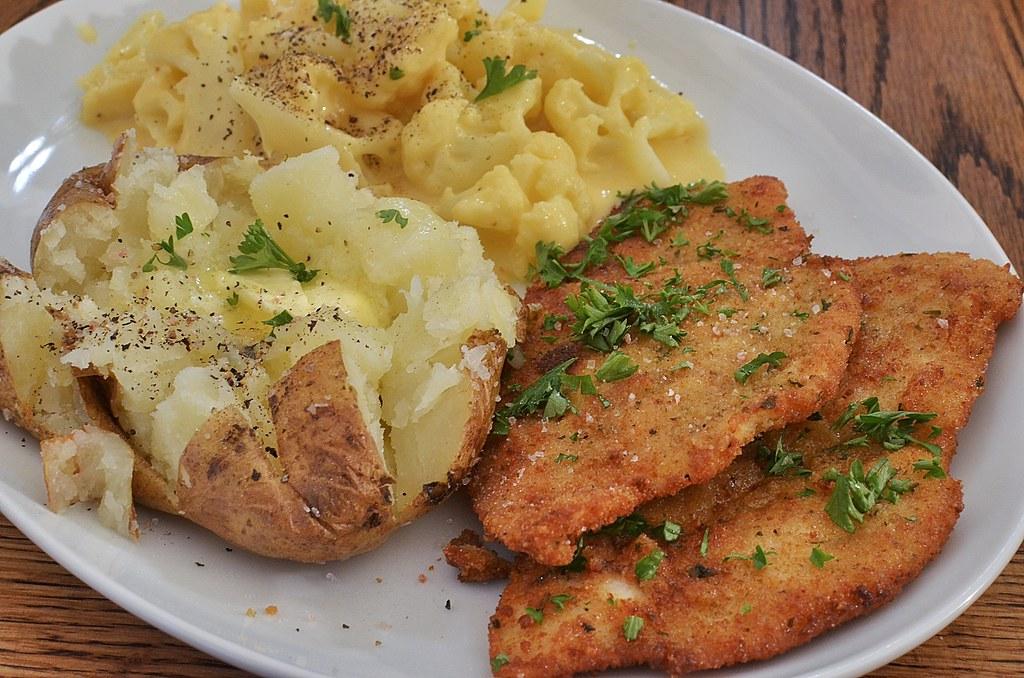
Illustrative licensed food photo, not an official Golden Corral product, portion or price.Mmm... pork tenderloin, baked potato, and cheesy cauliflower. Photo: jeffreyw · Source · CC BY 2.0 · Display cropped to fit.
Confirm the offering and ask safety questions directly
The official website can help you explore possible chicken choices, but a nutrition entry does not guarantee availability at every restaurant or service. Confirm the current dish locally, and use the separate menu and prices guide for cost planning. Ingredient and allergy questions require their own conversation with staff. Golden Corral's allergen statement describes concerns related to changing offerings, shared preparation, and self-service. Cross-contact cannot be guaranteed absent. A grilled, unbreaded, or otherwise simply described chicken dish should not be presented as allergen-free or safe for a particular allergy solely because of its name or nutrient listing.
Use a repeatable chicken comparison routine
Before relying on a chicken meal estimate, check the preparation name, cut or piece description, serving unit, quantity, included sauce, separate toppings, sides, drinks, and any return serving. If a component cannot be matched confidently, say so and avoid treating a tiny numerical difference as decisive. You can revise the meal in the nutrition calculator after seeing what is available. The strongest comparison is one you can explain using identifiable dishes and realistic portions. Keep the restaurant's published serving values distinct from your own scaling assumptions, and use the result to support a meal you enjoy rather than to claim an unweighed buffet plate has been measured exactly.
See the full Golden Corral menu
Prices, calories and macros for every item, or build a meal in the calculator.
Sources and corrections
Nutrition figures on Well.now come from official US restaurant sources, linked on each brand page with a last-checked date. Prices use verified local amounts first, then clearly labeled sourced estimates; Varies appears when neither is available. See our sources and methodology, or email be@well.now with a correction.

About the Well.now Editorial Team
This article was written and fact-checked by the Well.now Editorial Team. We check nutrition claims against each chain's official US information and never publish prices we cannot confirm. Well.now is independent and not paid by any restaurant. Read our editorial policy.