 Nutrition
Illustrative licensed food photograph, not an official Golden Corral product or evidence of US portions, current availability or prices.#food #foodpics #instafood #dessert #cake #like #like4like #l4l #likes4likes #photooftheday #love #likeforlike #likesforlikes #liketeam #likeback #likebackteam #instagood #likeall #likealways #liking. Photo: RJ Bailey · Source · CC BY 2.0 · Display cropped to fit.
Published servings for this topic
| Food / serving | Calories | Protein | Carbs | Fat | Sodium |
|---|---|---|---|---|---|
| Baked Fish (1 each)85g | 150 cal | 20 g | 1 g | 8 g | 330 mg |
| Butterfly Shrimp (3 each)82g | 210 cal | 9 g | 20 g | 9 g | 470 mg |
| Fried Breaded Fish (1 piece)57g | 90 cal | 8 g | 4 g | 5 g | 360 mg |
| Golden Delicious Shrimp (6 each)84g | 210 cal | 9 g | 23 g | 9 g | 330 mg |
Official US nutrition database checked 2026-11-15. No separate nutrition effective date confirmed. These are published recipe servings, not weighed buffet portions or guaranteed local offerings. Plate totals are calculated estimates. Blank allergen records do not mean allergen-free. Unconfirmed admission prices remain Varies.
Golden Corral official nutrition database ↗What this guide covers
- Begin with the seafood dish, not the category
- Understand the published reference serving
- Concrete source servings to compare
- Search by species or full preparation when available
- Distinguish fish fillets from piece-based servings
- Keep breading and coatings in the match
- Compare protein using realistic amounts
- Read calories without relying on cooking labels
- Check sodium in the complete preparation
- Review carbohydrate beyond the seafood itself
- Count dipping sauces and added butter separately
- Build a plate that complements the seafood
- Make return trips easier to estimate
- Take seafood allergy and availability questions separately
- Finish with an honest seafood meal estimate
Begin with the seafood dish, not the category
Golden Corral seafood nutrition is most useful when you identify the specific fish or shellfish preparation being served. Seafood is a broad category, and a plain-looking fillet, a breaded piece, a sauced dish, and a mixed preparation should not share one generic calculator entry. Start by reading the buffet label and matching its complete wording to the source. If the label is vague, ask staff what the dish is called. Then consider the portion you intend to eat. This order matters: a carefully estimated quantity of the wrong seafood entry can still produce a misleading result, while an honest approximation of the correct dish is easier to interpret.
Understand the published reference serving
Golden Corral's official nutrition page provides serving descriptions, gram weights, and nutrient values for listed foods. This guide follows the supplied dataset edition labeled checked November 15, 2026; no separate nutrition-data effective date is confirmed. The posted figures describe the published serving, not every fillet, spoonful, or pile of seafood taken from the buffet. Your complete plate total should therefore be described as a calculated estimate. The source values and your portion assumptions are separate layers. Keeping them distinct helps you judge whether a comparison is robust or depends heavily on an uncertain amount of a food you have not measured.
Concrete source servings to compare
The source lists Baked Fish (1 each) at 150 calories, 20 grams protein, 1 grams carbohydrate, 8 grams fat and 330 milligrams sodium, with a stated weight of 85g. The source lists Golden Delicious Shrimp (6 each) at 210 calories, 9 grams protein, 23 grams carbohydrate, 9 grams fat and 330 milligrams sodium, with a stated weight of 84g. These are exact published reference servings, not measurements of the food on your buffet plate. Keep the different weights visible rather than ranking unequal amounts as though they were identical. Select the matching entries in the calculator to compare the whole meal, including any separately added toppings. The resulting plate total remains a calculated estimate because self-served quantities can differ from the source. Current local availability must also be confirmed separately; a database listing is not a promise that the dish is on today’s buffet.
Search by species or full preparation when available
When the label identifies a fish or shellfish type, include that information in your search rather than selecting the first result under fish or seafood. Also read words describing seasoning, sauce, breading, or accompanying ingredients. A close-sounding name is not necessarily an exact match. If multiple entries remain plausible, compare their serving descriptions and ask for clarification rather than averaging them. A nutrition database can contain several preparations that are not all served during your visit. The calculator guide explains how to handle uncertain matches without inventing a value or quietly substituting a generic seafood assumption from another source.

Illustrative licensed food photograph, not an official Golden Corral product or evidence of US portions, current availability or prices.#dessert #cake #food #foodporn #melbourne. Photo: knster · Source · CC BY 2.0 · Display cropped to fit.
Distinguish fish fillets from piece-based servings
A fillet can vary in thickness and size, while smaller seafood pieces can be difficult to estimate as a pile. Read whether the published entry uses weight, count, or another unit. One fillet on your plate is not automatically one reference serving if the source specifies an amount by weight. Similarly, a count-based entry should only be used when the pieces match the described preparation. Do not convert a loosely filled spoon into a fixed serving without support. The portion-size guide explains how shape, spacing, and overlapping pieces can make visual estimates uncertain even when the food appears easy to recognize.
Keep breading and coatings in the match
If the seafood is breaded or coated, use an entry that describes that preparation. Logging it as plain fish or shellfish omits part of the complete food represented by the restaurant dish. Removing some coating changes what you eat, but it does not provide enough information to calculate a precise replacement value or justify using an unrelated plain entry. The remaining food may still differ in cooking method and preparation. When comparing options, a clearly identified complete preparation is more defensible than a reconstructed recipe based on visible leftovers. This approach avoids both exaggerating and minimizing the effect of a coating whose exact contribution has not been separately verified.
Compare protein using realistic amounts
Seafood may be the protein anchor you prefer, but compare the published protein value for the exact dish and serving rather than assigning a generic category value. A higher listing can reflect a larger reference portion, so decide whether you want an equal-amount comparison or an estimate of the portions you would actually choose. Keep the sides and drink constant while comparing entrées. Review other relevant nutrients alongside protein, especially if the preparations differ substantially. The high-protein foods guide develops this method across entrée categories. The aim is a satisfying plate with an understandable estimate, not a ranking that assumes the same seafood dish is best for every person's priorities.

Illustrative licensed food photograph, not an official Golden Corral product or evidence of US portions, current availability or prices.Creamy yellow desserts/ cakes decorated with white cream swirls, blueberries, and seeds, along with a chocolate cake placed on the side.. Photo: Mitesh V. Rughnathwala · Source · CC CC0 1.0 · Display cropped to fit.
Read calories without relying on cooking labels
Words such as baked, grilled, or fried help identify a preparation, but they do not replace the published calorie information. Recipes, included ingredients, and serving amounts still matter. Compare exact entries and realistic portions rather than declaring one cooking word a complete nutrition verdict. If you want to change the estimated meal total while keeping your preferred seafood, adjust one side or a separate topping and compare again. The Golden Corral nutrition calculator can hold the rest of the meal constant. The calories guide explains why the complete meal, including drinks and return trips, is the more useful comparison than the entrée number alone.
Check sodium in the complete preparation
A seafood dish's appearance and flavor do not reveal its numeric sodium value. Use the matching published entry, whether the food looks plain, seasoned, breaded, or sauced. If sodium is part of your planning, include the sides, dressings, condiments, and additional servings as well. Declining table salt does not change the sodium already represented by a prepared dish. The sodium guide offers a full-plate workflow and explains why smaller published servings can make comparisons misleading. A lower listing is only meaningful when you understand the amount it describes and how that amount relates to the portion you actually intend to eat.
Review carbohydrate beyond the seafood itself
A seafood-based meal should not automatically be treated as lower-carb. Coatings, sauces, mixed preparations, sides, and beverages can all affect the comparison. Read the published carbohydrate field for the exact entrée and include separate components that are not already represented. If you want to keep a favorite side in a smaller amount, enter that portion rather than treating the choice as all or nothing. The lower-carb options guide explains how to use total carbohydrate information without expanding a sugar-related label into a broader claim. Your actual plate and your own approach are the relevant context, not a blanket assumption about fish or shellfish.
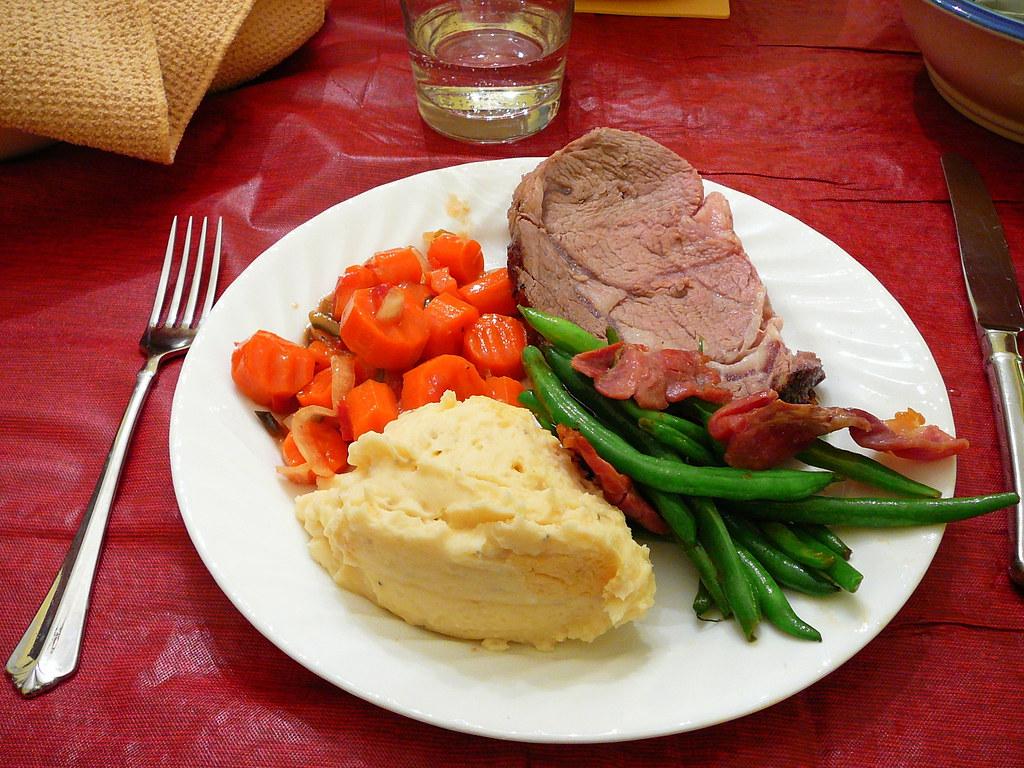
Illustrative licensed food photo, not an official Golden Corral product, portion or price.Christmas Day Dinner. Photo: krossbow · Source · CC BY 2.0 · Display cropped to fit.
Count dipping sauces and added butter separately
Seafood accompaniments can be part of a named preparation or additions you choose after serving. Read the entry before deciding which applies. An included sauce should not automatically be counted again, while a separate dipping sauce, dressing, or butter addition may need its own entry. Use a realistic quantity and include later refills of the sauce cup if you have them. A small container does not establish how much you consumed, and a drizzle is not a standardized unit. If the source does not clarify what is included, preserve that uncertainty instead of subtracting or adding assumed ingredients to create a falsely exact total.
Build a plate that complements the seafood
Choose sides that make the meal enjoyable and complete rather than selecting seafood and leaving the rest to habit. A vegetable preparation, a salad, a favorite starch, or another combination can all be compared through exact entries and deliberate portions. If you want a lower-calorie version of your usual meal, hold the seafood constant and change one side at a time. The lower-calorie plate guide offers a practical framework for those decisions. Include your beverage too: water can simplify the comparison, while another drink should be entered with its refills and additions when relevant. The plate and glass together describe the meal more accurately than either one alone.
Make return trips easier to estimate
Before returning for seafood, decide whether you want another serving of the same dish or a taste of something different. The next fillet or pile of pieces may not match the first portion, so a separate entry can be clearer than doubling the original quantity automatically. Add new sides and sauces as well. You can pause and decide whether you want more food rather than treating another trip as part of the buffet routine. If dessert follows, include that too. The calculator should remain a record of the complete meal, not a snapshot of the first plate that ignores everything selected after you sit down.
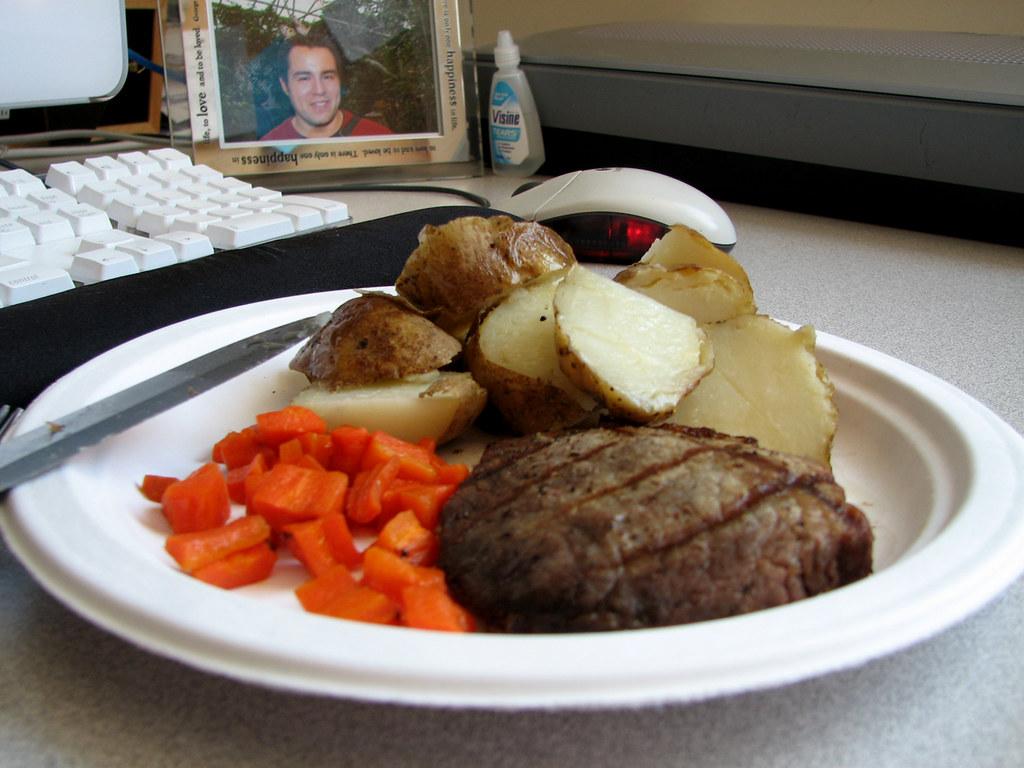
Illustrative licensed food photo, not an official Golden Corral product, portion or price.Steak Lunch. Photo: aliwest44 · Source · CC BY 2.0 · Display cropped to fit.
Take seafood allergy and availability questions separately
A nutrition entry is not a guarantee that a seafood dish is available locally, and it is not an allergy-safety assessment. Consult the official website and confirm current offerings at your restaurant. Golden Corral's allergen statement describes concerns associated with changing offerings, shared preparation, and self-service. Cross-contact cannot be guaranteed absent, including when foods are served near one another or handled with shared equipment. Ask staff about ingredients and handling rather than relying on a dish name or nutrient profile. For budget planning, use the separate Golden Corral menu and prices guide, keeping cost questions distinct from nutrition and safety.
Finish with an honest seafood meal estimate
Review the exact seafood preparation, serving unit, estimated amount, included accompaniments, extra sauces, sides, beverages, and any return trip before relying on the total. If a match or portion remains uncertain, say so and avoid treating a tiny difference between meals as decisive. You can update the nutrition calculator after seeing the buffet rather than forcing the available food into a plan made beforehand. A useful seafood estimate is one you can explain in ordinary terms using identifiable dishes and realistic portions. Keep published serving values separate from your own scaling assumptions, and let the comparison support an enjoyable meal without claiming that self-served food has been measured precisely.
See the full Golden Corral menu
Prices, calories and macros for every item, or build a meal in the calculator.
Sources and corrections
Nutrition figures on Well.now come from official US restaurant sources, linked on each brand page with a last-checked date. Prices use verified local amounts first, then clearly labeled sourced estimates; Varies appears when neither is available. See our sources and methodology, or email be@well.now with a correction.

About the Well.now Editorial Team
This article was written and fact-checked by the Well.now Editorial Team. We check nutrition claims against each chain's official US information and never publish prices we cannot confirm. Well.now is independent and not paid by any restaurant. Read our editorial policy.