 Nutrition
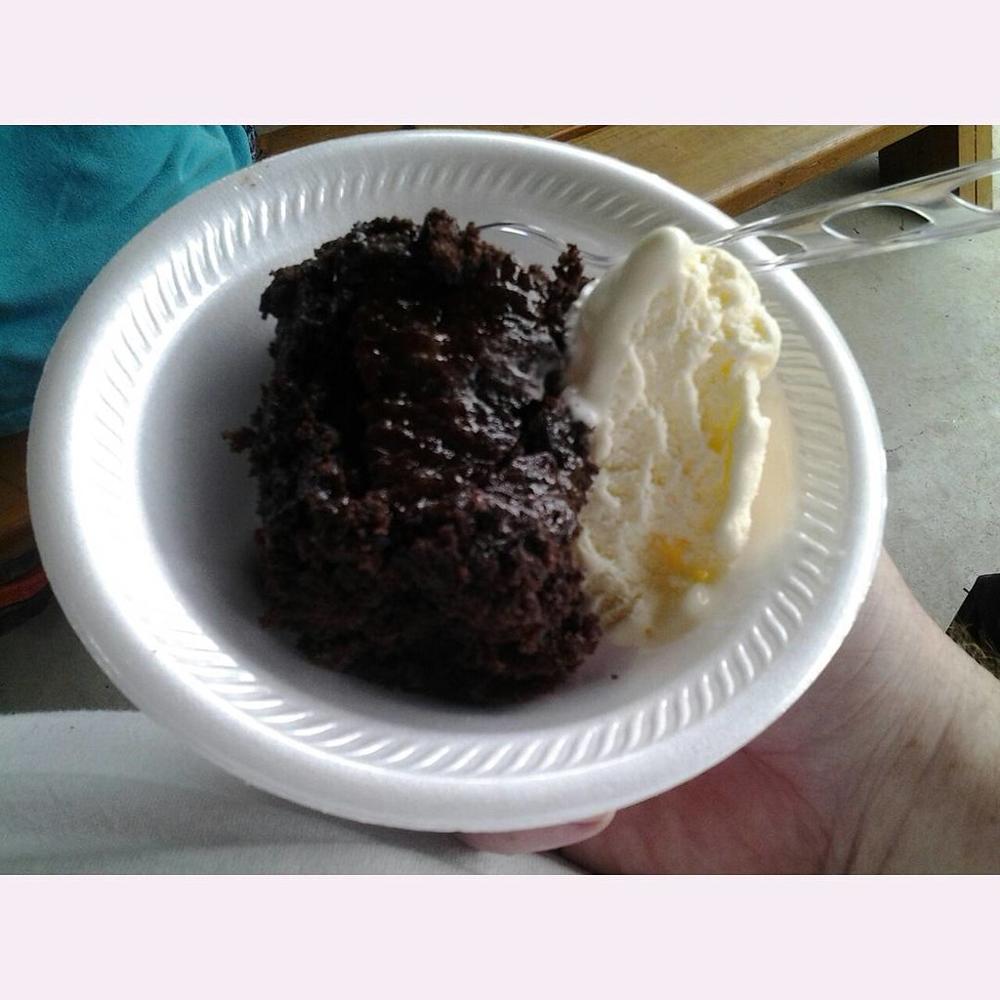
Illustrative licensed food photograph, not an official Golden Corral product or evidence of US portions, current availability or prices.Chocolate lava cake with ice cream. #food #foodpics #instafood #dessert #cake #like #like4like #l4l #likes4likes #photooftheday #love #likeforlike #likesforlikes #liketeam #likeback #likebackteam #instagood #likeall #likealways #liking #SquareInstaPic. Photo: RJ Bailey · Source · CC BY 2.0 · Display cropped to fit.
Published servings for this topic
| Food / serving | Calories | Protein | Carbs | Fat | Sodium |
|---|---|---|---|---|---|
| Carne Asada (4 oz)113g | 170 cal | 24 g | 1 g | 7 g | 400 mg |
| Chuck Tips (3 oz)85g | 140 cal | 21 g | 0 g | 5 g | 250 mg |
| Meatloaf (All Beef) (1 Piece)116g | 220 cal | 15 g | 10 g | 13 g | 610 mg |
| Pot Roast (1/2 cup)130g | 150 cal | 15 g | 8 g | 7 g | 320 mg |
| Prime Rib (3 oz)85g | 280 cal | 18 g | 1 g | 22 g | 350 mg |
| Ribeye (3 oz)85g | 170 cal | 23 g | 0 g | 9 g | 440 mg |
Official US nutrition database checked 2026-11-15. No separate nutrition effective date confirmed. These are published recipe servings, not weighed buffet portions or guaranteed local offerings. Plate totals are calculated estimates. Blank allergen records do not mean allergen-free. Unconfirmed admission prices remain Varies.
Golden Corral official nutrition database ↗What this guide covers
- Steak nutrition starts with the exact dish
- Understand the source and its date label
- Concrete source servings to compare
- Separate grilled steak from other steak-named foods
- Check whether the serving is weight or count
- Use protein as one part of the comparison
- Compare calories without ignoring the portion
- Do not infer sodium from appearance
- Treat butter, gravy, and sauces carefully
- Build sides around your preferred steak
- Check lower-carb assumptions against the entry
- Include drinks and the rest of the meal
- Make another steak serving a separate decision
- Confirm availability and ask about handling
- Keep the final estimate explainable
Steak nutrition starts with the exact dish
Searching for Golden Corral steak nutrition can produce a less straightforward answer than expected because steak is not one uniform menu entry. The published information includes differently named beef preparations, and the word steak can appear in dishes with coatings, sauces, chopped meat, or accompaniments. Your first task is to identify the food being served, not to choose a generic steak value. Read the station label and compare it with the complete source name. Once the preparation is matched, the serving amount becomes the next question. This sequence keeps the estimate grounded in the meal you actually choose rather than a familiar category that may describe something quite different.
Understand the source and its date label
Golden Corral's official nutrition page publishes serving descriptions, gram weights, calories, protein, sodium, and other nutrients for listed dishes. This guide follows the supplied dataset edition labeled checked November 15, 2026; no separate nutrition-data effective date is confirmed. A published steak entry describes its reference serving, while the total for the steak and sides you assemble is a calculated estimate. That distinction remains important even when the entrée is served to you at a station, because the piece you receive may not exactly match the reference amount. Keep the source values intact and adjust only the estimated quantity when building your meal.
Concrete source servings to compare
The source lists Ribeye (3 oz) at 170 calories, 23 grams protein, 0 grams carbohydrate, 9 grams fat and 440 milligrams sodium, with a stated weight of 85g. The source lists Prime Rib (3 oz) at 280 calories, 18 grams protein, 1 grams carbohydrate, 22 grams fat and 350 milligrams sodium, with a stated weight of 85g. These are exact published reference servings, not measurements of the food on your buffet plate. Keep the different weights visible rather than ranking unequal amounts as though they were identical. Select the matching entries in the calculator to compare the whole meal, including any separately added toppings. The resulting plate total remains a calculated estimate because self-served quantities can differ from the source. Current local availability must also be confirmed separately; a database listing is not a promise that the dish is on today’s buffet.
Separate grilled steak from other steak-named foods
Do not treat every result containing steak as an alternative name for the same entrée. A chicken-fried steak preparation, a chopped steak, and a grilled beef preparation can represent different foods and serving units. Choosing the wrong result can make the rest of the calculation misleading even if your portion multiplier is carefully considered. Read descriptors that identify coatings, toppings, onions, mushrooms, or other included ingredients. If the buffet label simply says steak, ask staff for the preparation name rather than assuming it matches the first search result. The calculator guide explains why exact matching should come before any attempt to compare totals or optimize a plate.

Illustrative licensed food photograph, not an official Golden Corral product or evidence of US portions, current availability or prices.So sweat!! #dessert #cake #instagood #iphonesia. Photo: Ciokka · Source · CC BY 2.0 · Display cropped to fit.
Check whether the serving is weight or count
Some beef entries use a stated weight, while others describe an individual prepared item. Those units should not be exchanged casually. One piece in your hand is not automatically one published serving if the source is weight-based, and a cut piece of a count-based entrée may not resemble a complete listed item. Read the serving description and gram weight together. If the amount you receive appears larger than the reference, reflect that in the estimate rather than treating the default calculator quantity as a guarantee. The portion-size guide offers a broader explanation of why thickness, shape, and overlapping slices can make visual weight judgments uncertain.
Use protein as one part of the comparison
Steak may be your preferred protein anchor, but compare the published protein value for the exact preparation and serving rather than assigning a generic meat value. A higher protein listing may partly reflect a larger reference portion. If your question is which preparation differs for the same amount of food, compare equivalent quantities where supported by the source. If your question is what your dinner contributes, use the amount you expect to eat. Review calories, sodium, and other relevant nutrients alongside protein. The high-protein foods guide develops this method without assuming that the largest meat serving or highest protein total is automatically the best choice for every meal.
Compare calories without ignoring the portion
A steak-centered meal can vary because of both the entrée preparation and the amount served. Compare the same preparation at different realistic quantities if portion size is your main decision. Alternatively, hold the rest of the meal constant while comparing two exact beef entries. Avoid changing the steak, sides, drink, and dessert simultaneously, then crediting the whole difference to the steak. The Golden Corral nutrition calculator can help organize those comparisons. For a broader explanation, see the calories guide. The result should remain an estimate for your meal, especially when the steak portion is judged visually rather than measured against the published reference.

Illustrative licensed food photograph, not an official Golden Corral product or evidence of US portions, current availability or prices.#food #foodporn #yum #instafood #dessert #cake #like #like4like #l4l #likes4likes #photooftheday #love #likeforlike #likesforlikes #liketeam #likeback #likebackteam #instagood #likeall #likealways #liking. Photo: RJ Bailey · Source · CC BY 2.0 · Display cropped to fit.
Do not infer sodium from appearance
A steak that looks plain does not reveal its published sodium value, and a pronounced seasoning flavor does not provide a numeric measurement. Use the exact dish entry and include the amount you eat. If sodium matters to your planning, compare the entire steak meal rather than the entrée alone. Sides, sauces, and later servings belong in the same review. Do not assume that declining table salt changes the sodium already represented in the prepared dish. The sodium guide explains how to compare realistic plates and avoid relying on broad labels such as grilled or unbreaded as substitutes for the source information.
Treat butter, gravy, and sauces carefully
First determine whether a topping or sauce is part of the named steak preparation. If it is included in the published entry, do not add the same component again automatically. If you add a separate serving at the buffet, include that addition using a matching entry and a realistic quantity. Choosing less of a separate sauce is easier to estimate than trying to subtract assumed ingredients from a complete recipe. Leaving some sauce on the plate does not reveal precisely how the remaining food differs from a plain steak entry. Keep the boundary clear between the published preparation, your extra additions, and any uncertainty about what the source includes.
Build sides around your preferred steak
Once the entrée is identified, choose sides that make the meal satisfying rather than treating the steak as the only relevant food. You might prefer one favorite comfort-food side and a vegetable preparation, or a different combination entirely. Match each dish accurately and serve deliberate amounts. If you want to compare a lighter-feeling plate with your usual meal, keep the steak fixed and change one side at a time. The lower-calorie plate guide offers a practical framework for this process. It does not require abandoning favorite foods; it helps you see whether a different combination or portion gives you a meal you would still choose willingly.
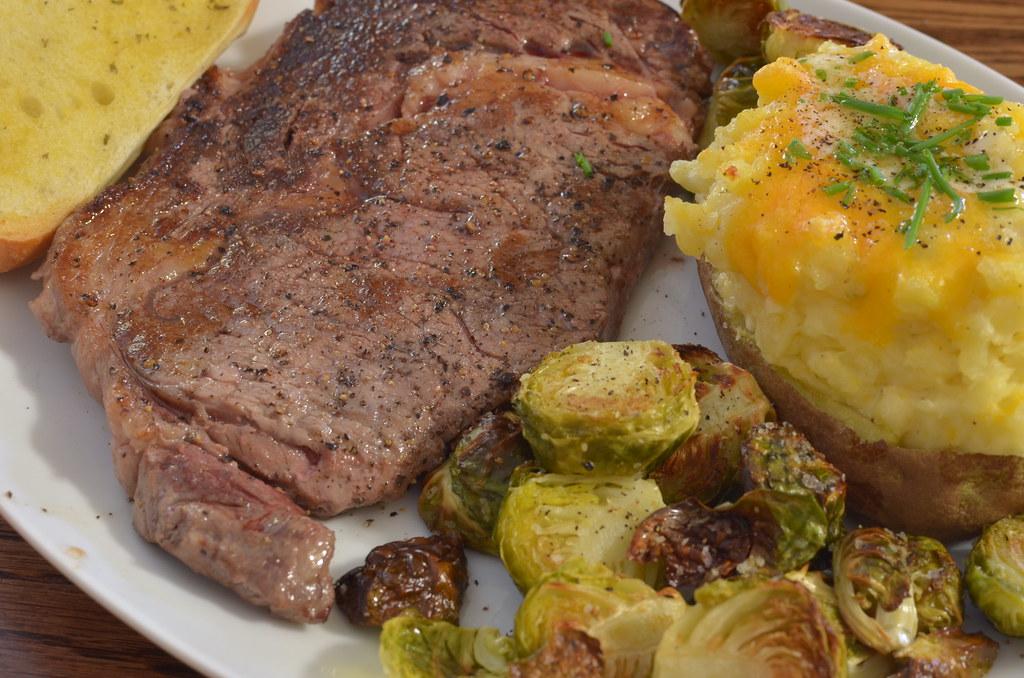
Illustrative licensed food photo, not an official Golden Corral product, portion or price.Mmm... steak and twice baked. Photo: jeffreyw · Source · CC BY 2.0 · Display cropped to fit.
Check lower-carb assumptions against the entry
A steak-based meal should not automatically be labeled lower-carb without checking the complete preparation and everything served with it. Coatings, sauces, mixed preparations, sides, and beverages can all change the comparison. Read the published carbohydrate field for the exact entrée rather than substituting a generic value for plain beef. If your approach allows a smaller serving of a favorite side, enter that amount rather than treating the choice as all or nothing. The lower-carb options guide explains how to compare complete meals while avoiding assumptions about sugar-related labels or cooking methods. The relevant question is how your actual plate fits your own approach, not whether steak as a category earns a blanket label.
Include drinks and the rest of the meal
A steak dinner estimate is incomplete if it stops at the plate. Include your beverage, refills, separate bread, salad additions, and dessert when those are part of the meal. Water is a straightforward option if you want food choices to remain the main variables, but another drink can be included when matched to its actual serving. Dessert should likewise be entered as the item and amount you choose rather than a generic finishing allowance. Keeping all components together helps you decide where your preferences lie. You may care more about a particular side or sweet finish than a larger steak portion, and the calculator can make that tradeoff clearer without making the decision for you.
Make another steak serving a separate decision
Before returning for more steak, consider whether you want a full additional serving or simply another taste. The next piece may differ from the first in size, so a separate entry can be clearer than doubling the original quantity automatically. Add any new sides or sauces as well. You do not need to return because the entrée is available, and you do not need to rule out more food if you still want it. The useful step is deciding intentionally and keeping the estimate connected to what you eat. A second trip remains part of the same meal, even when you use a clean plate or choose only the entrée.
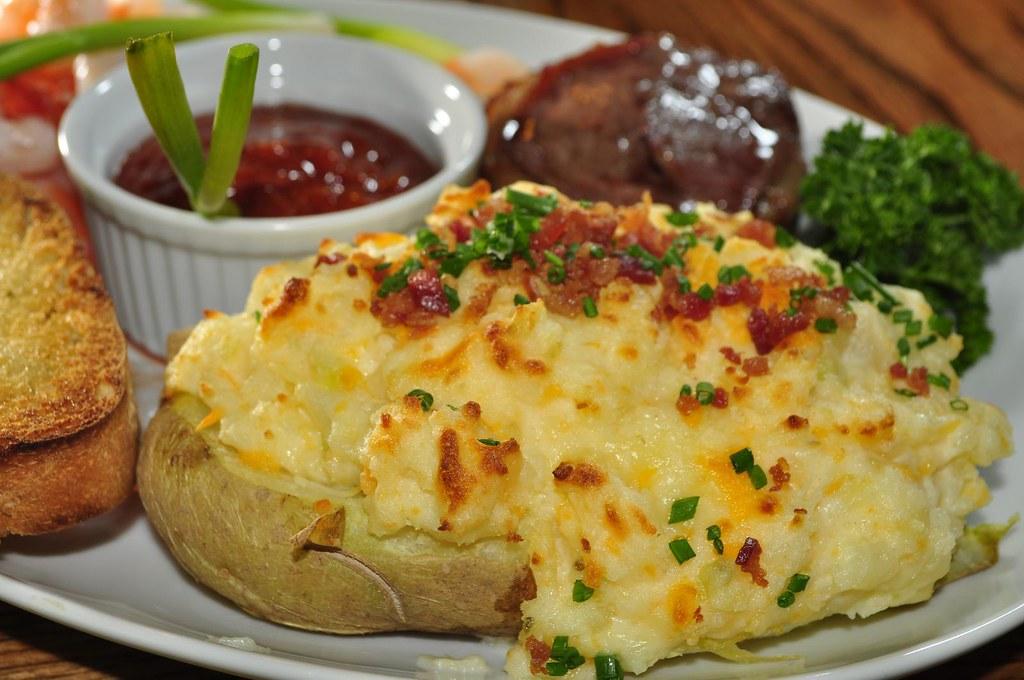
Illustrative licensed food photo, not an official Golden Corral product, portion or price.Mmm... twice baked. Photo: jeffreyw · Source · CC BY 2.0 · Display cropped to fit.
Confirm availability and ask about handling
A beef entry in the nutrition database does not guarantee that it is offered at every restaurant or during every service. Review the official website and confirm current options locally before relying on a steak meal you previously planned. For visit costs, use the separate Golden Corral menu and prices guide. If ingredient or allergy questions affect your choice, speak with staff rather than interpreting a plain-looking steak as safe. Golden Corral describes shared preparation concerns in its allergen statement. Cross-contact cannot be guaranteed absent, and nutrition values do not establish whether a particular grill, utensil, topping, or preparation meets your needs.
Keep the final estimate explainable
A useful steak nutrition estimate should be easy to describe: this exact preparation, approximately this amount, with these sides, additions, drinks, and any return serving. If the dish cannot be matched or the portion is highly uncertain, say so rather than forcing a precise total. Focus on meaningful comparisons, especially when a small displayed difference may be outweighed by variation in the steak piece itself. Revisit the nutrition calculator after seeing the buffet if your original plan changes. The aim is a steak-centered meal you enjoy and understand, with the restaurant's published serving values kept distinct from the calculated estimate for the food you actually choose.
See the full Golden Corral menu
Prices, calories and macros for every item, or build a meal in the calculator.
Sources and corrections
Nutrition figures on Well.now come from official US restaurant sources, linked on each brand page with a last-checked date. Prices use verified local amounts first, then clearly labeled sourced estimates; Varies appears when neither is available. See our sources and methodology, or email be@well.now with a correction.

About the Well.now Editorial Team
This article was written and fact-checked by the Well.now Editorial Team. We check nutrition claims against each chain's official US information and never publish prices we cannot confirm. Well.now is independent and not paid by any restaurant. Read our editorial policy.